Fabrics
- heavyweight cotton jersey
- fleece
- rigid and washed denim
- nylon
- cotton duck canvas
→ 01 / Men
Bold looks born on the street
Urban style built on sneakers, oversized fits and graphic pieces — rooted in skate, hip-hop and sneaker culture.
The short answer
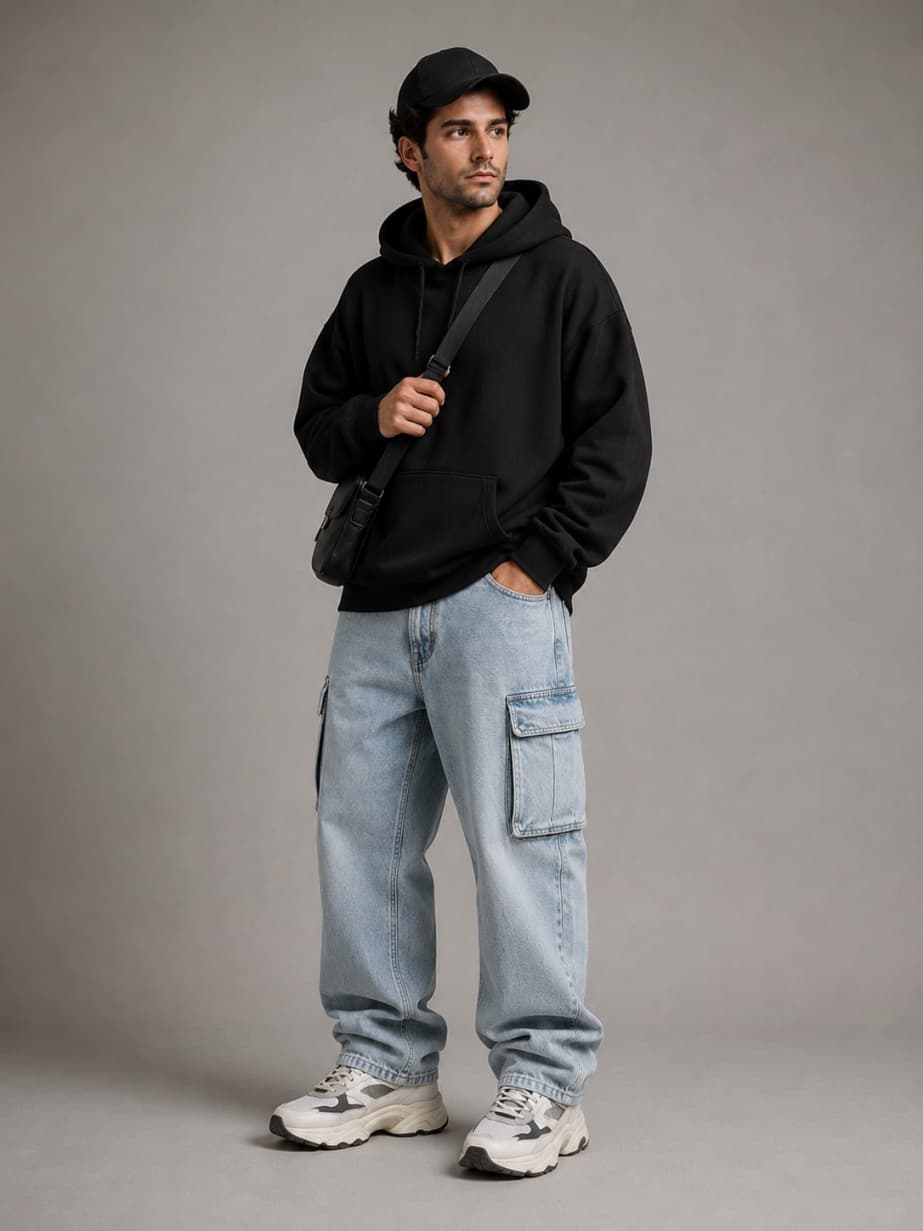
Streetwear for men starts at the sneakers and works up: baggy denim or cargos, a graphic tee or oversized hoodie, and a puffer, bomber or workwear jacket over it. Black, grey and washed denim with one loud element. The most common mistake is thinking it is about cost — proportion matters far more than the resale price of anything you are wearing.
One piece oversized, one piece not, and the sneakers get the last word.
Updated September 22, 2026
→ 02 / What defines it
→ 03 / Where it comes from
Streetwear did not come from fashion houses. It came from three scenes that were all making clothes for themselves. In 1970s New York, hip-hop crews turned sportswear, workwear and the right sneakers into a visible code that outsiders could not read. In early-1980s California, a surfboard shaper named Shawn Stussy started putting his signature on T-shirts, and skate brands followed the same logic: small runs, sold to people already in the scene. In 1990s Tokyo, the Ura-Harajuku designers added deliberate scarcity and the drop model was born. Basketball supplied the rest — once signature sneakers became collectible in the mid-1980s, the shoe stopped being an accessory and became the center of the outfit. Luxury houses spent the 2010s buying into all of it, but the underlying rule never changed: the clothes are supposed to signal that you know something.
→ 04 / Streetwear outfit ideas
Year-round
Why it works: The trouser has to stack correctly on the shoe — one fold above the laces, no puddling. Get that right and the rest of the outfit can be plain.
Cold
Why it works: Hood pulled out over the jacket collar and the hoodie hem visible below it. Two deliberate overlaps are what make three layers look planned.
Cool
Why it works: Workwear is streetwear’s oldest source, so the pieces sit together naturally. Keep it to one work-derived garment or it turns into a costume.
Warm
Why it works: A wide-leg short with a shorter top keeps the proportion the style depends on. A camp-collar shirt worn open is the one pattern that always works.
Year-round
Why it works: Losing the graphic is what makes it read as evening. The jacket becomes the loud piece and the shoes stay the anchor.
Year-round
Why it works: A matching set only works when the fit is right at the shoulder and at the ankle. One accessory stops it reading as something you slept in.
→ 05 / Outfit examples
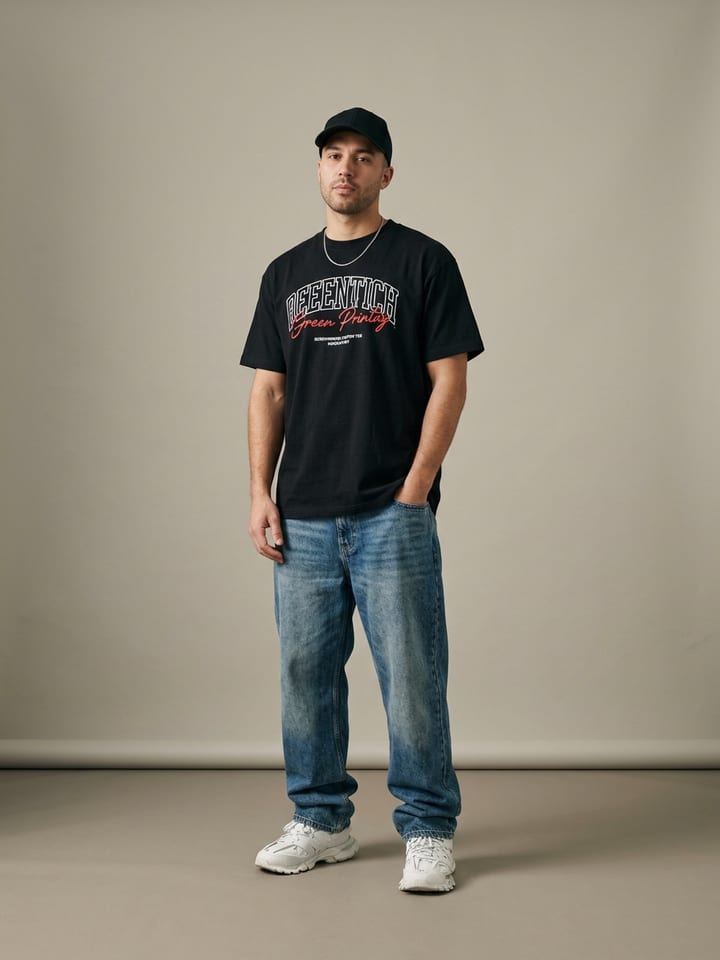
Baggy denim stacked on statement sneakers.
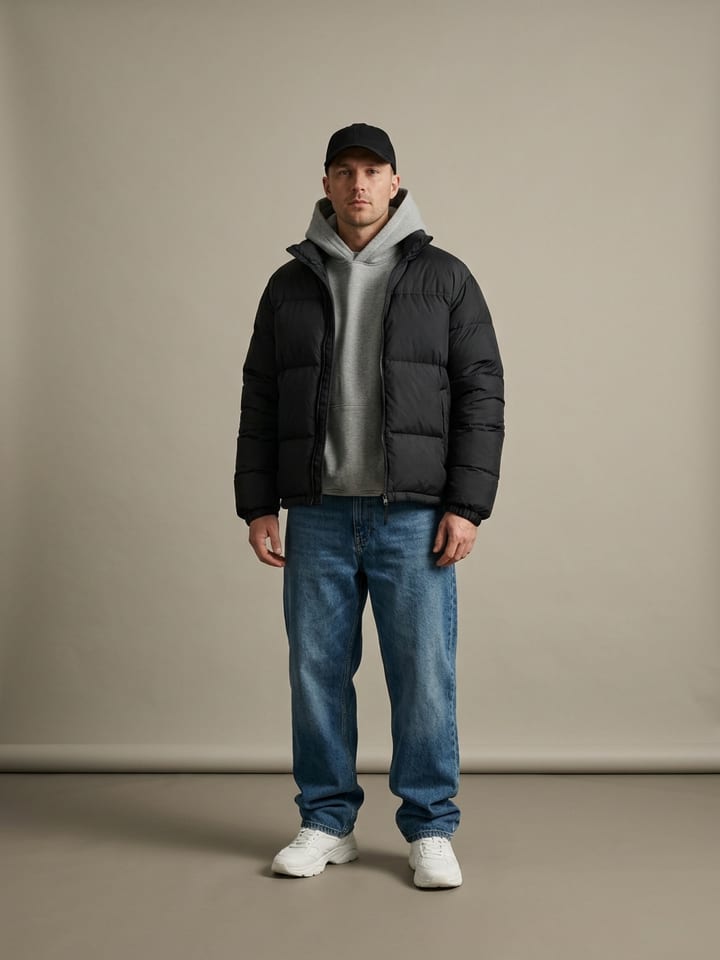
A puffer over an oversized hoodie, hems stacked.
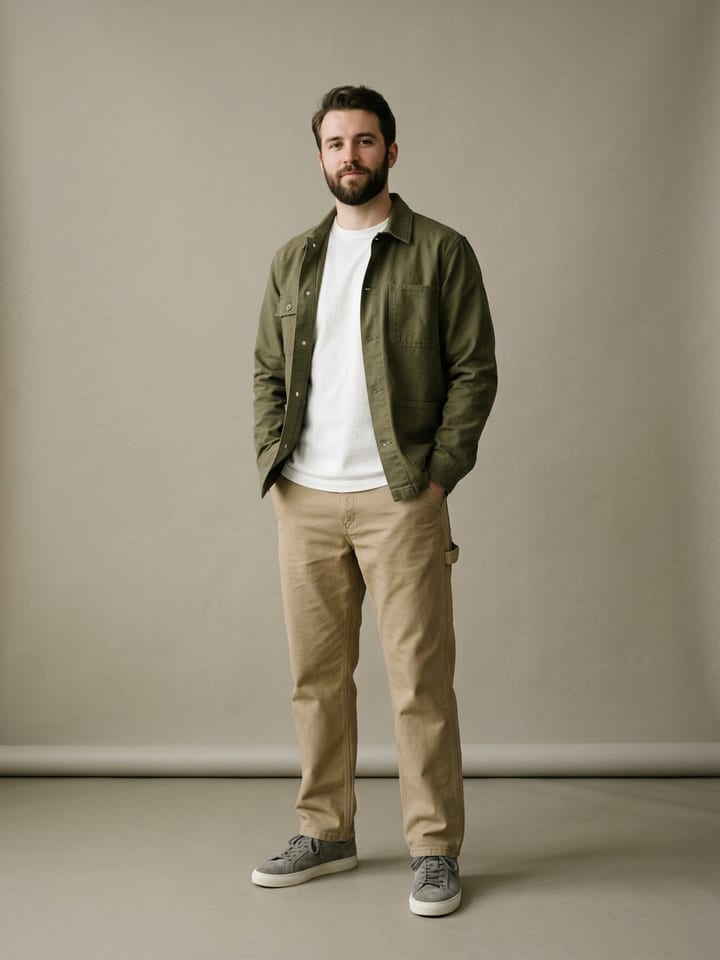
A chore jacket over a heavyweight tee and carpenter pants.
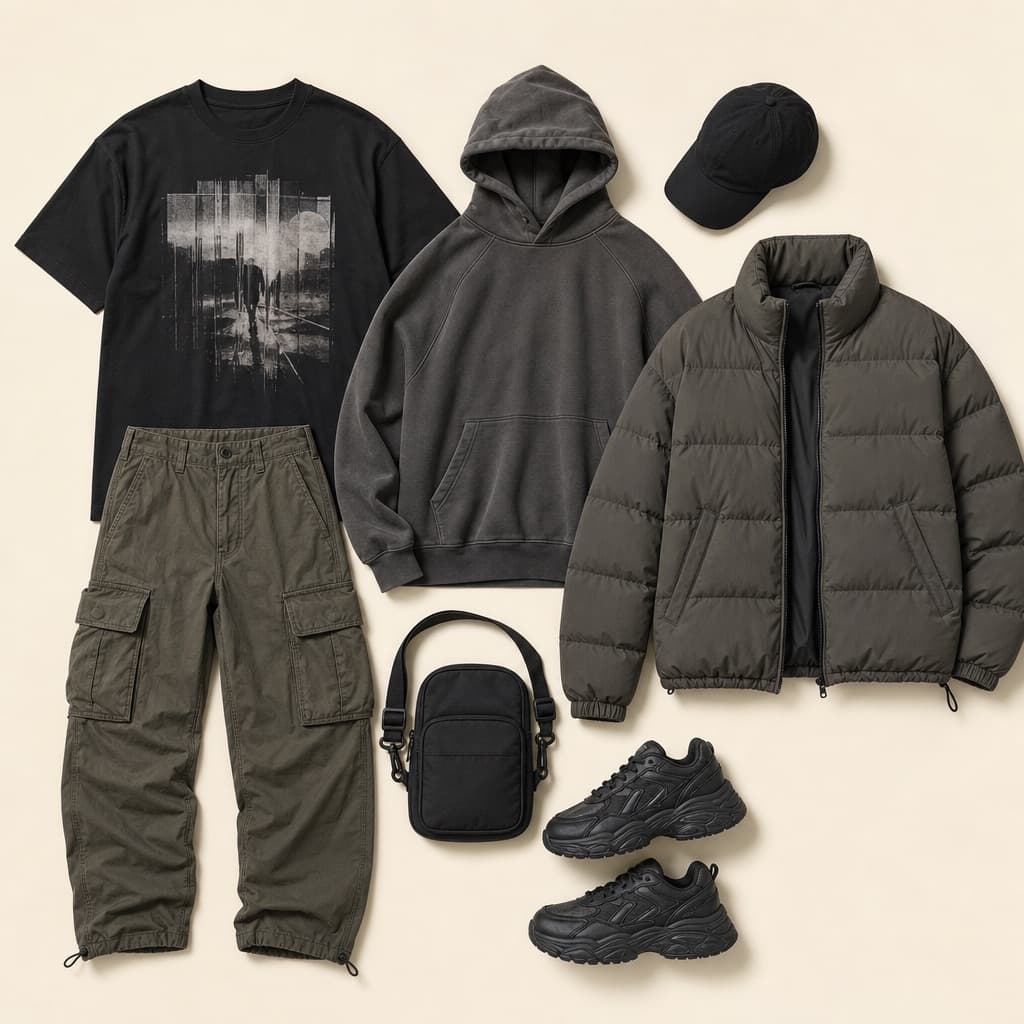
→ 06 / Key pieces · Men
→ 07 / Starter capsule
→ 08 / Palette & fabrics
Anything that looks like office clothing — worsted wool, pointed leather shoes, a dress belt. Skip artificially distressed graphics too. The palette here is hard and flat, so pastels and muddy earth tones tend to sink the outfit instead of lifting it.
→ 09 / Across the seasons
A bomber or coach jacket over the same tee and denim. Nothing else about the outfit has to move.
Cargo shorts, boxy tees, low sneakers. With fewer layers, the shoe and the cap carry all of the personality.
The style’s best season — hoodie, chore jacket, denim, boots. Everything in the capsule can be worn at once.
A serious puffer and real boots. Keep the hoodie underneath instead of adding a second heavy layer on top.
→ 10 / Where it goes wrong
Skinny jeans under an oversized hoodie. The inverted triangle is the most dated silhouette the style has.
Instead: Straight or wide leg with a single stack on the shoe. The bottom half needs volume for the top half to make any sense.
Buying hype instead of fit. A resale-priced sneaker in the wrong shape does nothing for the outfit it is supposed to anchor.
Instead: Match the shoe’s bulk to the trouser’s width — chunky sneaker under a wide leg, low profile under a slimmer one.
Head-to-toe logos. A branded cap, jacket, shoe and bag all cancel each other out.
Instead: Let one item speak. Everything else plain, ideally in black, grey or washed denim.
Treating it as permanently teenage. The same graphics and fits at forty as at eighteen is what makes people say they aged out of it.
Instead: Keep the proportions and raise the materials: a leather or wool jacket, plain heavyweight tees, and one excellent sneaker.
→ 11 / How to start this week
→ 12 / Style icons, and what they actually wore
Bright, boxy fits with an obvious hat, worn consistently enough that the hat became the reference. He made playing with proportion the normal thing to do.
Layered neutrals with one unexpected texture — a fur collar, a leather trouser, an archive jacket. The clearest modern argument that streetwear can be styled like tailoring.
A tracksuit, a bucket hat and shell-toe sneakers with fat laces in the mid-1980s. Close to the original recipe, and every revival since is a version of it.
→ 13 / This might be you if...
→ 14 / Often confused with
→ 15 / Mixes well with
→ 16 / FAQ
Streetwear for men is urban style built on sneakers, oversized fits, and graphics — skate, hip-hop, and collabs worn as culture, not as gym kit.
Do build the outfit around the sneakers. Do go oversized on the tee or hoodie. Do use a puffer, cargo, cap, or bag as the statement, not five statements at once.
Don’t treat it as generic casual denim. Don’t wear performance tights as trousers. Don’t add a leather oxford and expect it to still read as street.
Men can wear Streetwear in the city, at shows, on weekends, and anywhere sneaker culture is the language. Leave it off for conservative offices and formal events.
Typical colors for men’s Streetwear are black, white, grey, plus one loud accent, in fleece, heavy cotton, and nylon. The sneaker can be the only bright thing.
A common Streetwear mistake for men is drowning in oversized pieces with no proportion, or mixing office shoes with a hyped hoodie. Pick a hero and cut the rest.
Two minutes of swiping tells you whether Streetwear is genuinely your Style DNA — or whether the sneakers are doing all the work on their own.
Take the style quizYou are cordially invited
Modesona is your personal stylist — free, instant, and built around everything already hanging in your wardrobe.


Free · No card required · iOS & Android