Fabrics
- washed linen
- chambray
- corduroy
- moleskin
- waxed cotton
- hand-knit wool
→ 01 / Men
Countryside soft life
Dressing like your life is homemade bread and a garden — prairie dresses, small florals and natural fabrics with storybook softness.
The short answer
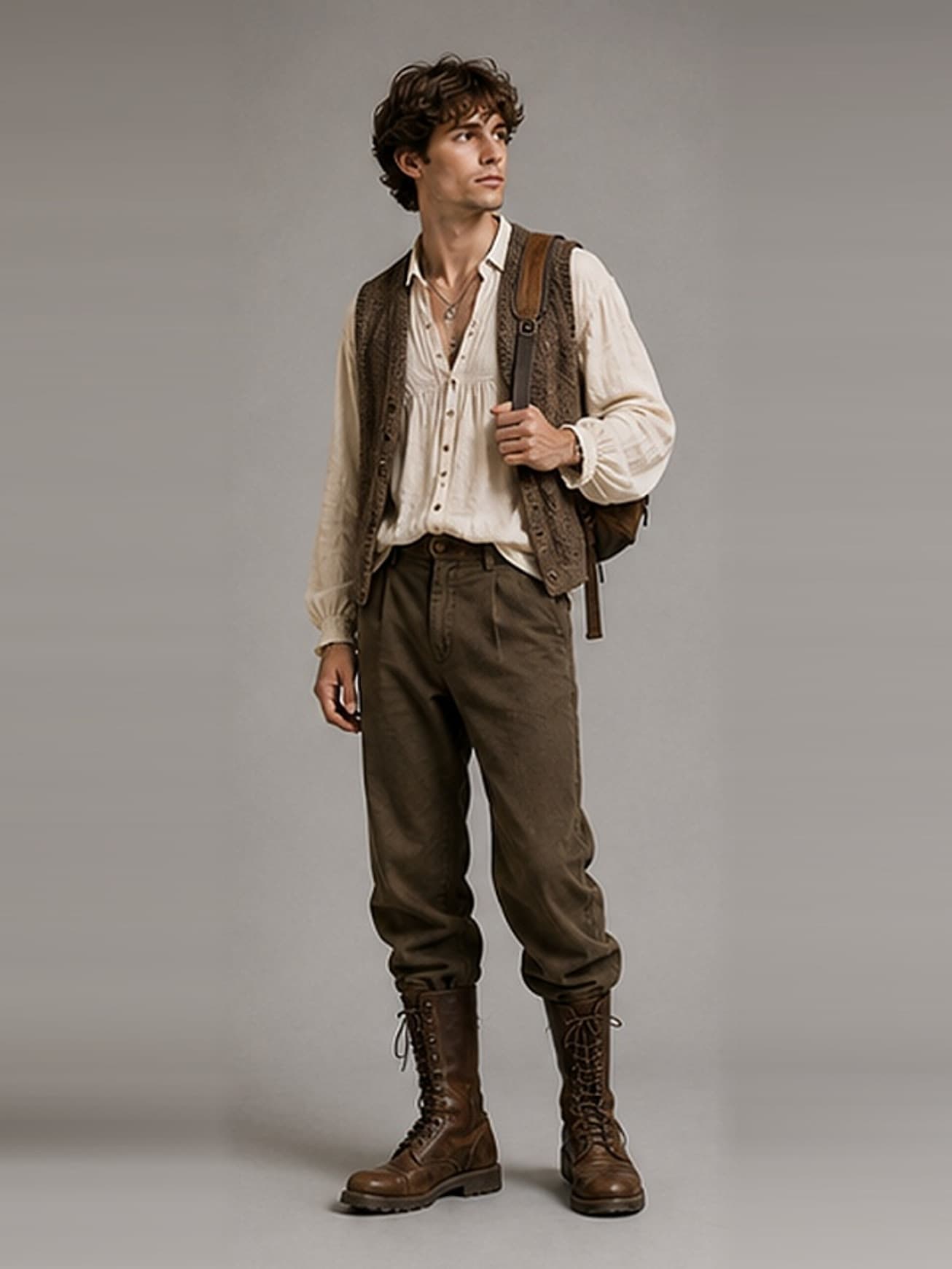
Cottagecore for men isn’t a softened copy of the women’s wardrobe — it’s rural workwear from before it was industrialized: a collarless grandad shirt, corduroy or moleskin trousers, a hand-knit fisherman sweater, a waxed jacket and leather boots. Ecru, sage, olive and brown, all natural fiber, everything cut for doing something outdoors.
If it couldn’t survive an afternoon in a garden, it isn’t cottagecore.
Updated September 22, 2026
→ 02 / What defines it
→ 03 / Where it comes from
The name is new — it surfaced on Tumblr and went mainstream during the 2020 lockdowns, when a lot of people stuck indoors started dressing for a life they didn’t have — but almost nothing in the wardrobe is. The silhouettes come from Victorian and Edwardian rural working dress: high necks, pinafores, aprons, sleeves gathered so the arm can move, hems long enough to protect the leg on a wet path. The philosophy comes from the Arts and Crafts movement, which argued that a handmade object was worth more than a factory-perfect one precisely because you could still see the hand in it. The commercial template came from Laura Ashley, whose sprigged cottons and prairie dresses sold this exact fantasy through the 1970s, and from the Gunne Sax dresses that did the same in America. Taylor Swift’s folklore gave the current revival a soundtrack. The thread running through all of it is the same: these are clothes for people who make things and go outside, and they stop working the moment they can’t do either.
→ 04 / Cottagecore outfit ideas
Year-round
Why it works: Three pieces, and the whole look rests on the collar: a grandad or band collar is the single detail that moves a plain shirt out of an office and into the countryside.
Cold
Why it works: A heavy hand-knit under a waxed jacket is the whole English and Irish rural uniform and it has never needed updating. The wax keeps the wool dry, which is why the two have always been worn together.
Cool
Why it works: The knitted vest is the most useful men’s layer here: it adds texture and color at the chest without the bulk of a sweater, and it leaves the shirt sleeves visible.
Warm
Why it works: Linen in heat is a functional decision before it’s an aesthetic one. Roll the sleeves properly to the forearm rather than shoving them up, and let the trousers hang wide.
Cool
Why it works: This is the honest version of the style and the one everything else borrows from. Every piece is chosen for durability, which is exactly why it looks right when you’re doing nothing.
Cold
Why it works: This wardrobe dresses up through fabric weight rather than tailoring. A finer knit under a jacket-cut overshirt is as formal as it goes, and it is enough almost everywhere it needs to be.
→ 05 / Outfit examples
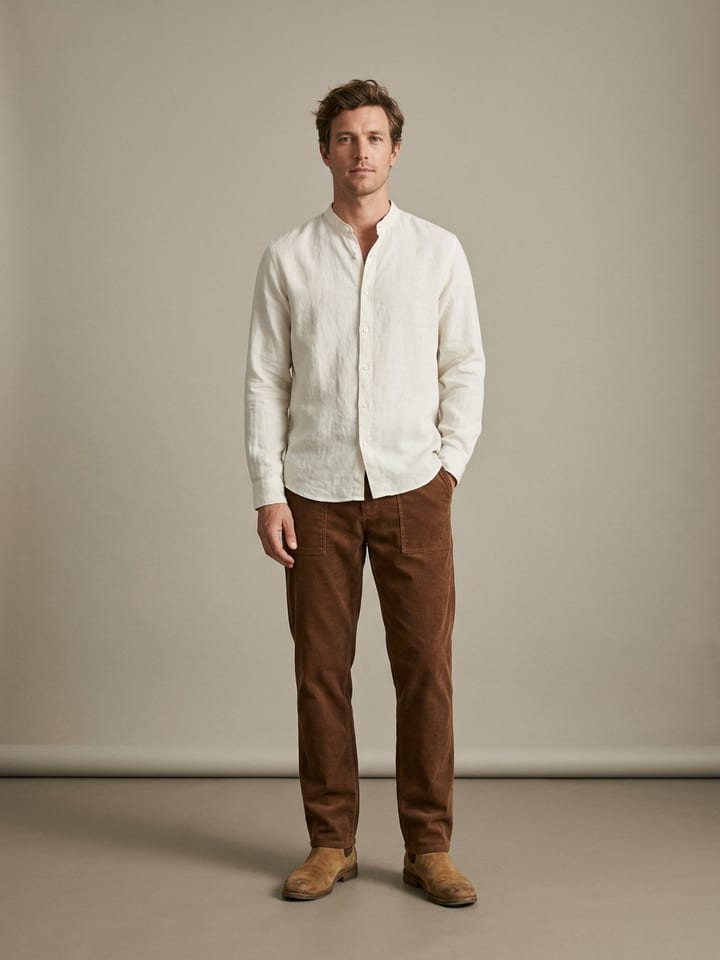
A collarless shirt with corduroy trousers and suede boots.
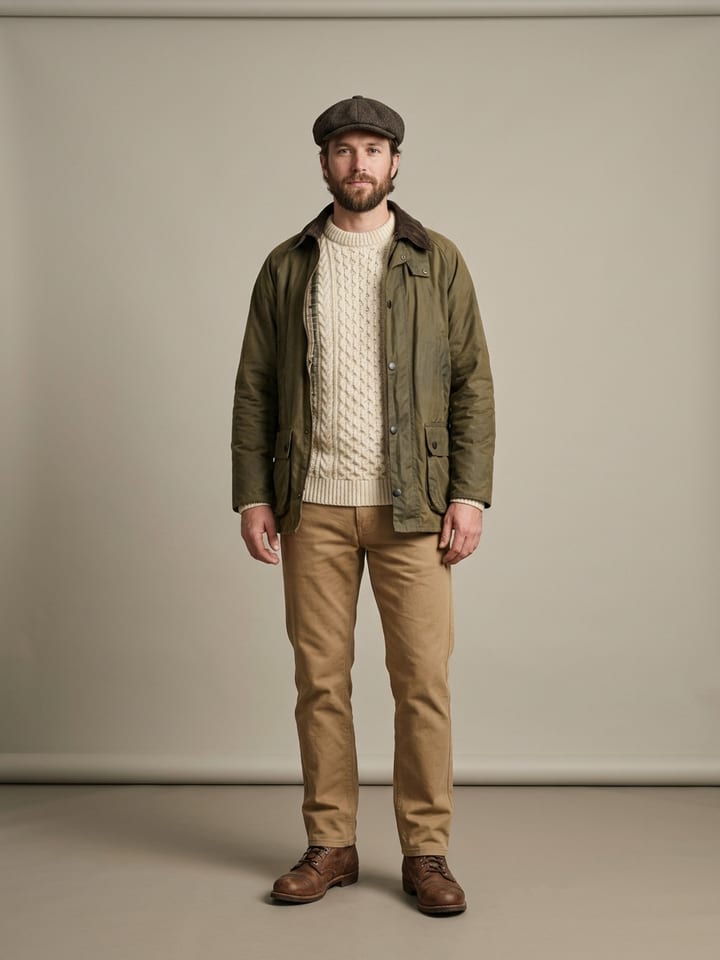
A cream fisherman knit under a waxed jacket.
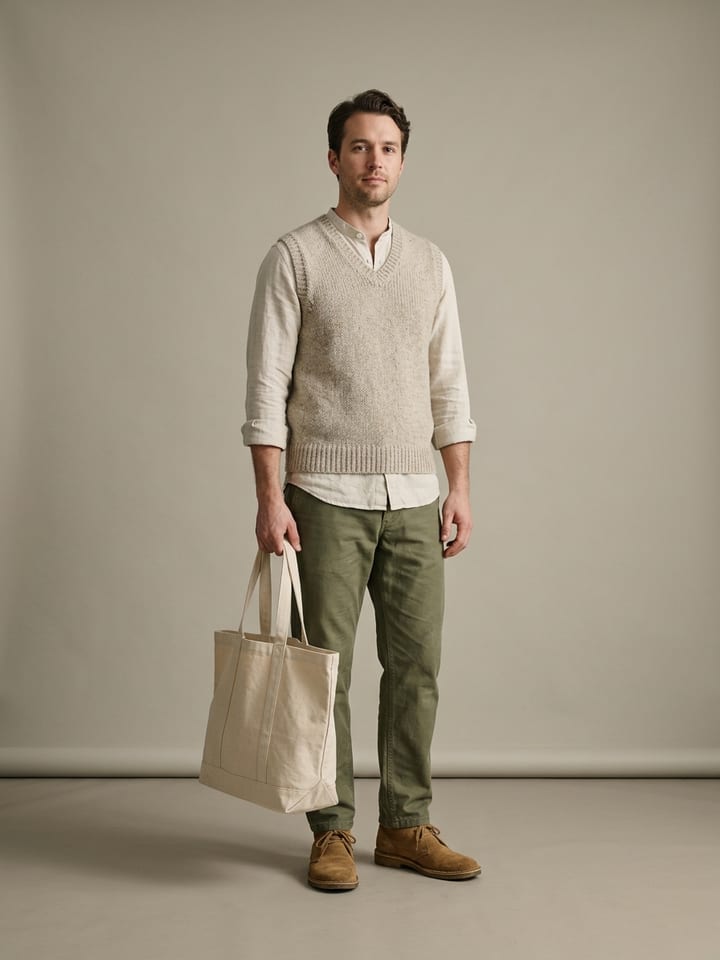
A knitted vest over a rolled-sleeve linen shirt.
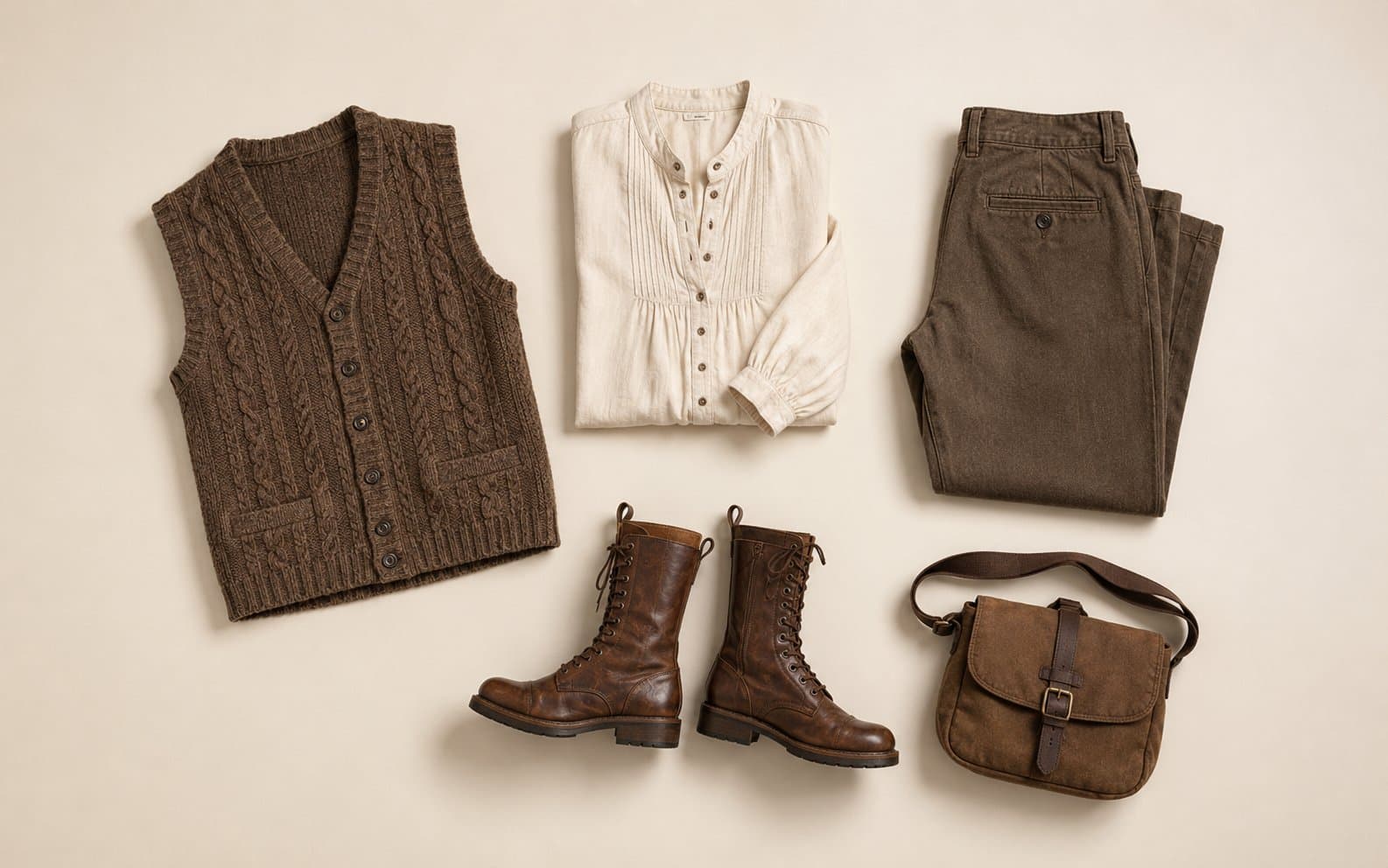
→ 06 / Key pieces · Men
→ 07 / Starter capsule
→ 08 / Palette & fabrics
Technical outerwear in any form — a nylon shell over a hand-knit cancels everything the knit was doing. Avoid black as well: it has almost no history in rural clothing and it makes the natural dyes around it look flat. Bright white reads new, where ecru and cream read worn.
→ 09 / Across the seasons
Linen shirt, knitted vest, corduroy trousers. Add the waxed jacket in the morning and lose it by lunch.
Linen top to bottom, sleeves rolled, legs wide. Straw instead of a cap, and plimsolls or leather sandals instead of boots.
Corduroy, moleskin, tweed and the heavy knits. The season this wardrobe was built for, and the easiest one to dress in.
Knit over shirt under a waxed or wool jacket, with proper boots. Layer for the weather and the style takes care of itself.
→ 10 / Where it goes wrong
Buying the dress-up version. A ruffled poet shirt with a waistcoat is a period costume, and everyone in the room can tell.
Instead: Stay with clothes that had a job: work shirts, knits, corduroy, waxed cotton. The reference should be a farm, not a stage.
Synthetic knits standing in for hand-knits. Acrylic cables come out smooth and perfectly even, which is the exact opposite of the point.
Instead: Wool, ideally with some visible irregularity. Secondhand fisherman sweaters cost less than new acrylic and look better on day one.
Modern athletic shoes. White running shoes under corduroy break the outfit at the ground, where it’s most visible.
Instead: Suede or leather boots, plimsolls in summer, rubber boots when it’s wet. All three cost less than the sneakers.
Everything box-fresh. New wax, new suede and a new knit all at once reads as a catalog page rather than a wardrobe.
Instead: Buy one piece at a time and let it age. Waxed cotton and suede both look better in year three than year one.
→ 11 / How to start this week
→ 12 / Style icons, and what they actually wore
The patchwork JW Anderson cardigan he wore to a 2020 rehearsal, which set off a knitting craze online and put handmade knitwear back into men’s wardrobes almost overnight.
Loose linen shirts, unbuttoned waistcoats, soft neckwear and no visible tailoring effort. Costume that reads as clothing, which is the entire trick in this style.
Wool trousers, braces, a collarless shirt with the sleeves rolled, and boots worn into a river. The American version of the same rural wardrobe.
→ 13 / This might be you if...
→ 15 / Mixes well with
→ 16 / FAQ
Cottagecore for men is unhurried rural dressing: a collarless linen shirt, cord or canvas trousers, a hand-knit sweater, suede boots, maybe a flat cap.
Do keep fibers natural and colors creamy or sage. Do let a knit or linen shirt be the tell. Do keep shoes practical — boots, not patent.
Don’t wear a full farmer costume. Don’t mix in gorpcore shells and trail runners as the base. Don’t pick neon florals.
Men can wear Cottagecore on weekends, in the country, at markets, and in creative work. A linen shirt still works in town; the cap-and-waistcoat set may not.
Typical colors for men’s Cottagecore are cream, sage, butter, and soft brown, in linen, cotton, and wool. Nothing should look technical or logo-loud.
A common Cottagecore mistake for men is looking costumed — tweed plus cap plus pipe energy — or pairing linen with gym sneakers. Practical boots keep it honest.
Two minutes of swiping tells you whether Cottagecore is genuinely your Style DNA — or a wardrobe you like the idea of more than the reality.
Take the style quizYou are cordially invited
Modesona is your personal stylist — free, instant, and built around everything already hanging in your wardrobe.


Free · No card required · iOS & Android