Fabrics
- washed linen
- cotton lawn and poplin
- crochet
- cotton lace
- corduroy
- hand-knit wool
→ 01 / Women
Countryside soft life
Dressing like your life is homemade bread and a garden — prairie dresses, small florals and natural fabrics with storybook softness.
The short answer
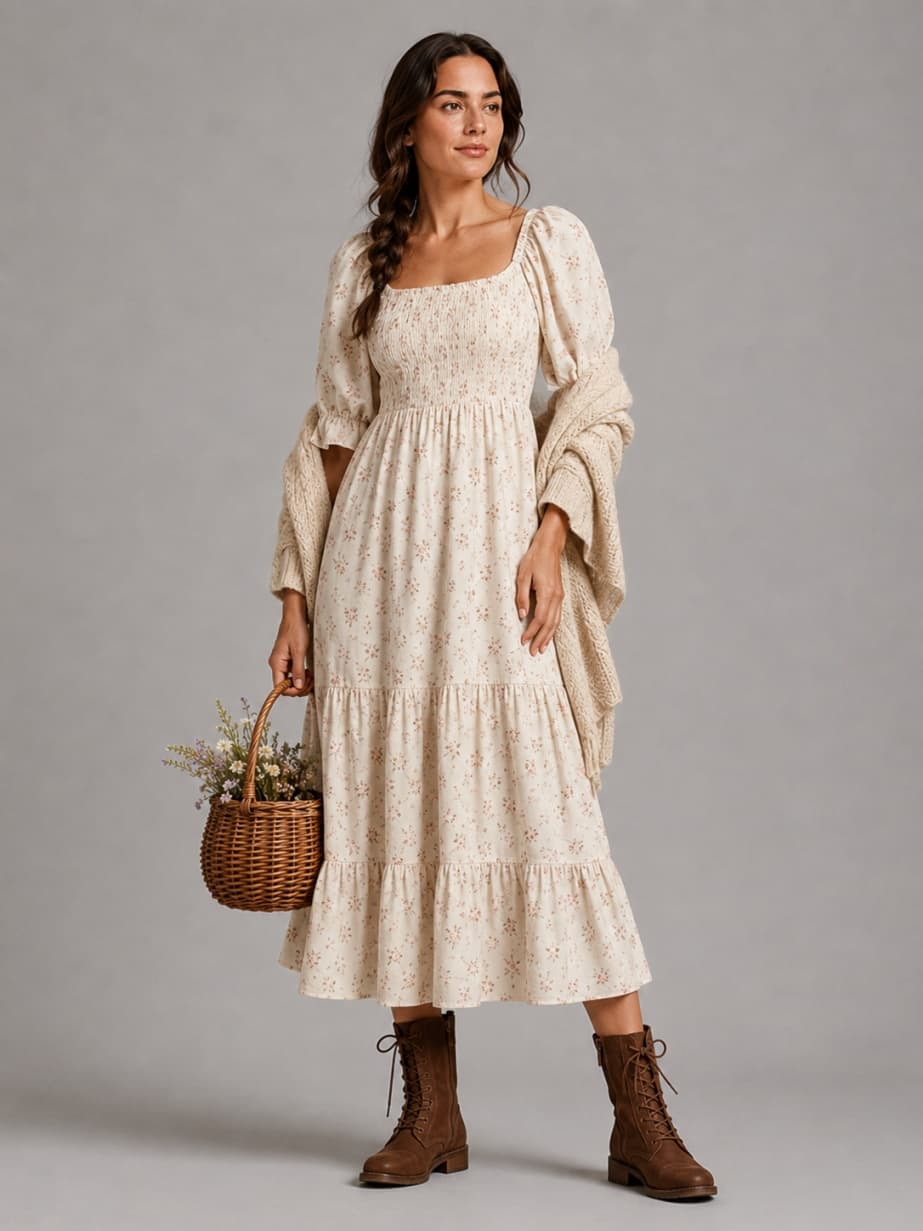
Cottagecore style for women is a prairie or peasant silhouette in natural fabric: a small-print floral midi, a puff-sleeve blouse, a gingham skirt, a hand-knit layer and boots you could walk a field in. The palette is cream, sage and butter yellow, and the whole thing rests on texture — linen, cotton, crochet and lace rather than anything synthetic.
If it couldn’t survive an afternoon in a garden, it isn’t cottagecore.
Updated September 22, 2026
→ 02 / What defines it
→ 03 / Where it comes from
The name is new — it surfaced on Tumblr and went mainstream during the 2020 lockdowns, when a lot of people stuck indoors started dressing for a life they didn’t have — but almost nothing in the wardrobe is. The silhouettes come from Victorian and Edwardian rural working dress: high necks, pinafores, aprons, sleeves gathered so the arm can move, hems long enough to protect the leg on a wet path. The philosophy comes from the Arts and Crafts movement, which argued that a handmade object was worth more than a factory-perfect one precisely because you could still see the hand in it. The commercial template came from Laura Ashley, whose sprigged cottons and prairie dresses sold this exact fantasy through the 1970s, and from the Gunne Sax dresses that did the same in America. Taylor Swift’s folklore gave the current revival a soundtrack. The thread running through all of it is the same: these are clothes for people who make things and go outside, and they stop working the moment they can’t do either.
→ 04 / Cottagecore outfit ideas
Warm
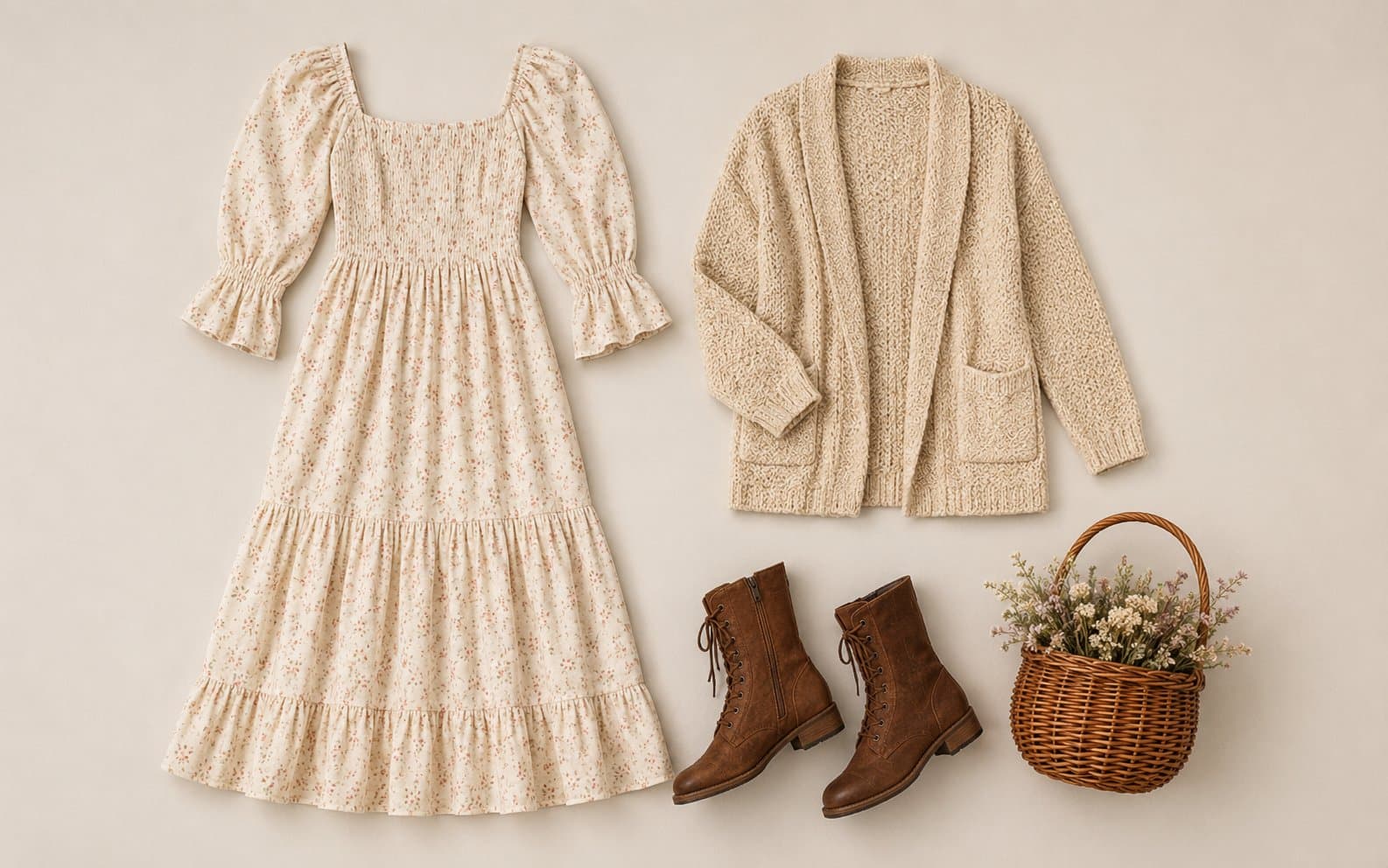
Why it works: One dress, one bag, one pair of boots is genuinely the entire outfit, which is this style’s best practical argument. Let the print carry it and keep every accessory a raw material: leather, straw, wood.
Cool
Why it works: Separates give you the same look with a waist you can actually define. The cardigan goes over rather than under, so the sleeve volume of the blouse stays visible.
Cold
Why it works: Tights are what make a midi skirt survive below freezing, and they let the style keep its length instead of retreating into trousers. Keep them opaque, in cream, brown or black.
Year-round
Why it works: The rural reference survives in the fabric and the color while the shapes stay office-legible. No print and no puff sleeve, and it still doesn’t feel like someone else’s clothes.
Warm
Why it works: The pinafore exists to protect the clothes underneath, and wearing it for that reason is the whole difference between the style and a photograph of it.
Cool
Why it works: This wardrobe dresses up by adding lace and subtracting print, never by adding shine. A locket or a thin gold chain is as much jewelry as the look needs.
→ 05 / Outfit examples
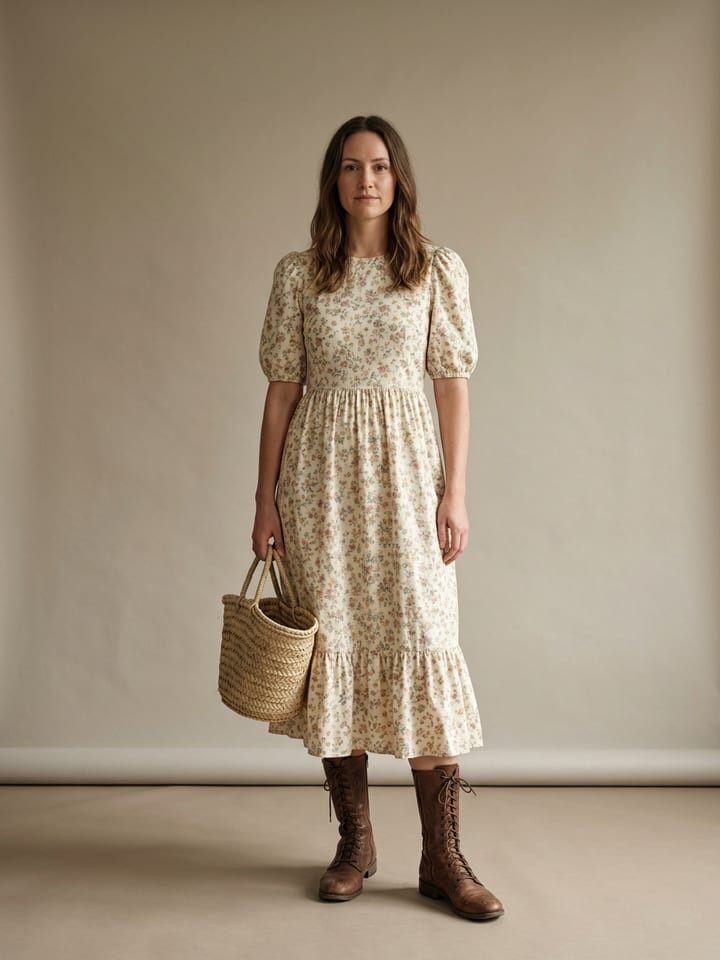
A small-print floral prairie midi with a basket bag.
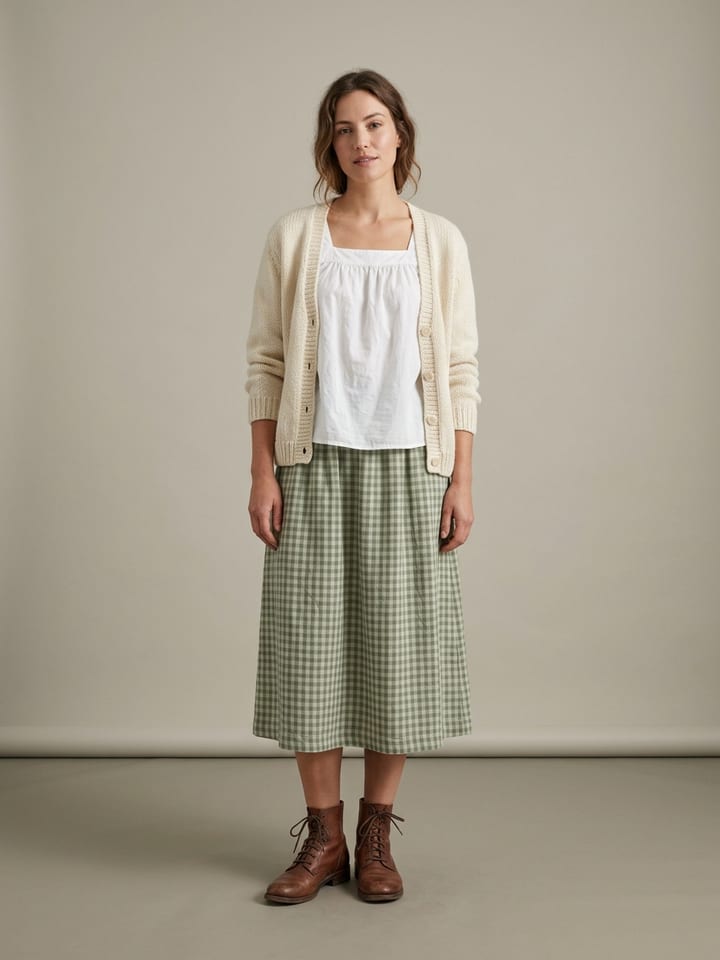
A puff-sleeve blouse with a gingham skirt and a hand-knit cardigan.
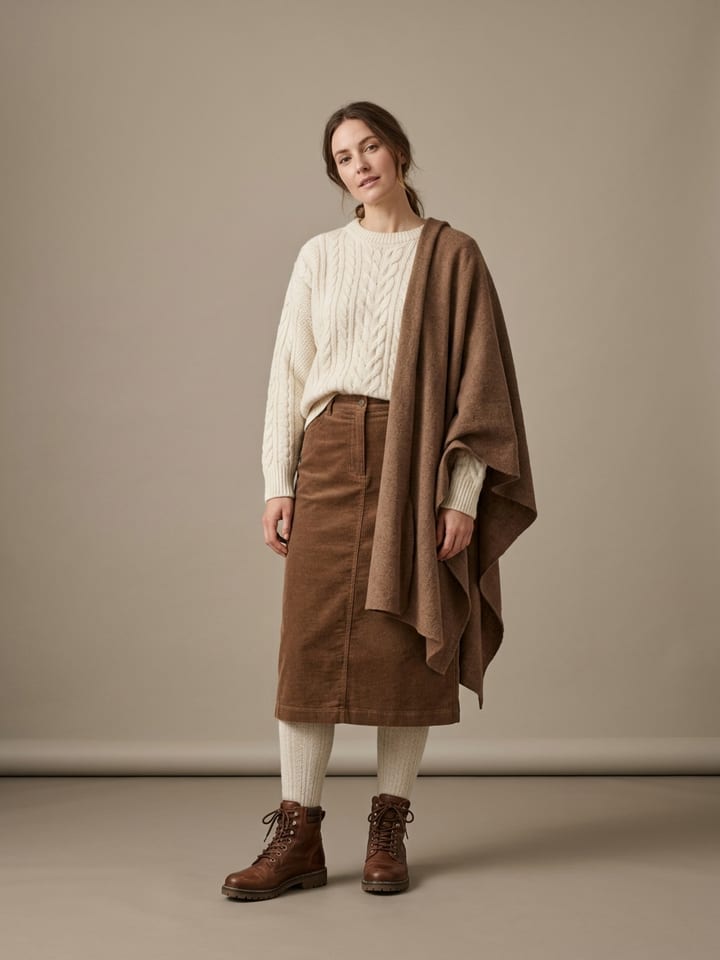
A cream cable knit over a corduroy midi skirt.
→ 06 / Key pieces · Women
→ 07 / Starter capsule
→ 08 / Palette & fabrics
Anything that reads as engineered: neon, true black, and hard primary color. Synthetics are the bigger problem, because polyester chiffon and shiny satin break the premise — this style is an argument for natural fiber as much as it is a set of shapes. Large graphic prints fail too; the florals need to be small and slightly faded.
→ 09 / Across the seasons
The style’s home season. Floral cotton, a cardigan you can take off by noon, and boots that don’t mind wet grass.
Linen and lightweight cotton, with length working as sun protection rather than modesty. A straw hat earns its place here more than any other accessory.
Corduroy, wool and heavier knits, with the prints getting smaller and darker. Add tights and the same skirts keep working.
Knit over knit, hems still long. A wool coat in cream or brown over a floral dress is the one combination that stops this looking like a summer style.
→ 10 / Where it goes wrong
Buying the fantasy in polyester. A mass-produced prairie dress in crease-free synthetic looks exactly like what it is, especially in daylight.
Instead: Fewer pieces, in real linen or cotton. A dress that wrinkles is a dress that reads handmade.
Volume everywhere. A tiered maxi under an oversized cardigan over a puff-sleeve blouse becomes a shape with no person inside it.
Instead: Define one line — waist, wrist or neckline. A belt over the dress, or a fitted knit tucked into the skirt, is usually enough.
Modern shoes. Running sneakers under a prairie dress undo the reference faster than anything else in the outfit.
Instead: Lace-up leather boots, plain flat sandals, clogs or rubber boots. Anything that would have made sense on a wet path.
Costume-grade detailing. Bonnets, visible corset lacing and full-length aprons cross from style into historical reenactment.
Instead: One period detail per outfit — the sleeve, the print, or the boots — and let everything else be plain modern clothing.
→ 11 / How to start this week
→ 12 / Style icons, and what they actually wore
Cream knits, long coats, heavy plaid and a braid, photographed in a forest. The reference most people are actually picturing when they say cottagecore.
Sprigged cotton, high collars, long sleeves and full skirts, sold as an escape from city life. The 1970s ran this exact fantasy, and the dresses still turn up secondhand for very little.
Ink-stained shirts, a loose waistcoat, layered skirts and boots worn hard. Costume design that shows the working half of the aesthetic instead of only the picnicking half.
→ 13 / This might be you if...
→ 15 / Mixes well with
→ 16 / FAQ
Cottagecore for women is countryside soft life: prairie dresses, small florals, puff sleeves, and natural fabrics that look homemade even when they are not.
Do choose a prairie midi, a puff-sleeve blouse, or gingham, then ground it with boots or Mary Janes. Do keep prints small and fabrics linen, cotton, crochet, or lace. Do add at most one basket or shawl.
Don’t stack a bonnet, basket, prairie dress, and ribbon until it is a period drama. Don’t use shiny polyester florals. Don’t treat it as interchangeable with satin coquette bows.
Women can wear Cottagecore to weekends, gardens, creative work, markets, and autumn walks. City-proof it with a jacket and boots; skip the full pastoral set for corporate Monday.
Typical colors are cream, sage, butter yellow, dusty rose, and soft brown, in linen, cotton, crochet, and lace. Women’s cottagecore palettes should look a little sun-washed.
A common Cottagecore mistake for women is costume stacking, or a large loud floral that reads 70s party instead of garden. Small print, natural fiber, one rustic accessory.
Two minutes of swiping tells you whether Cottagecore is genuinely your Style DNA — or a life you like looking at more than living.
Take the style quizYou are cordially invited
Modesona is your personal stylist — free, instant, and built around everything already hanging in your wardrobe.


Free · No card required · iOS & Android