Fabrics
- cashmere
- tweed
- silk
- fine wool
- cotton poplin
- suede
→ 01 / Women
Quiet luxury, zero logos
Wealth that whispers — heritage fabrics, impeccable fit and total logo silence, dressed like the money is old enough not to mention it.
The short answer
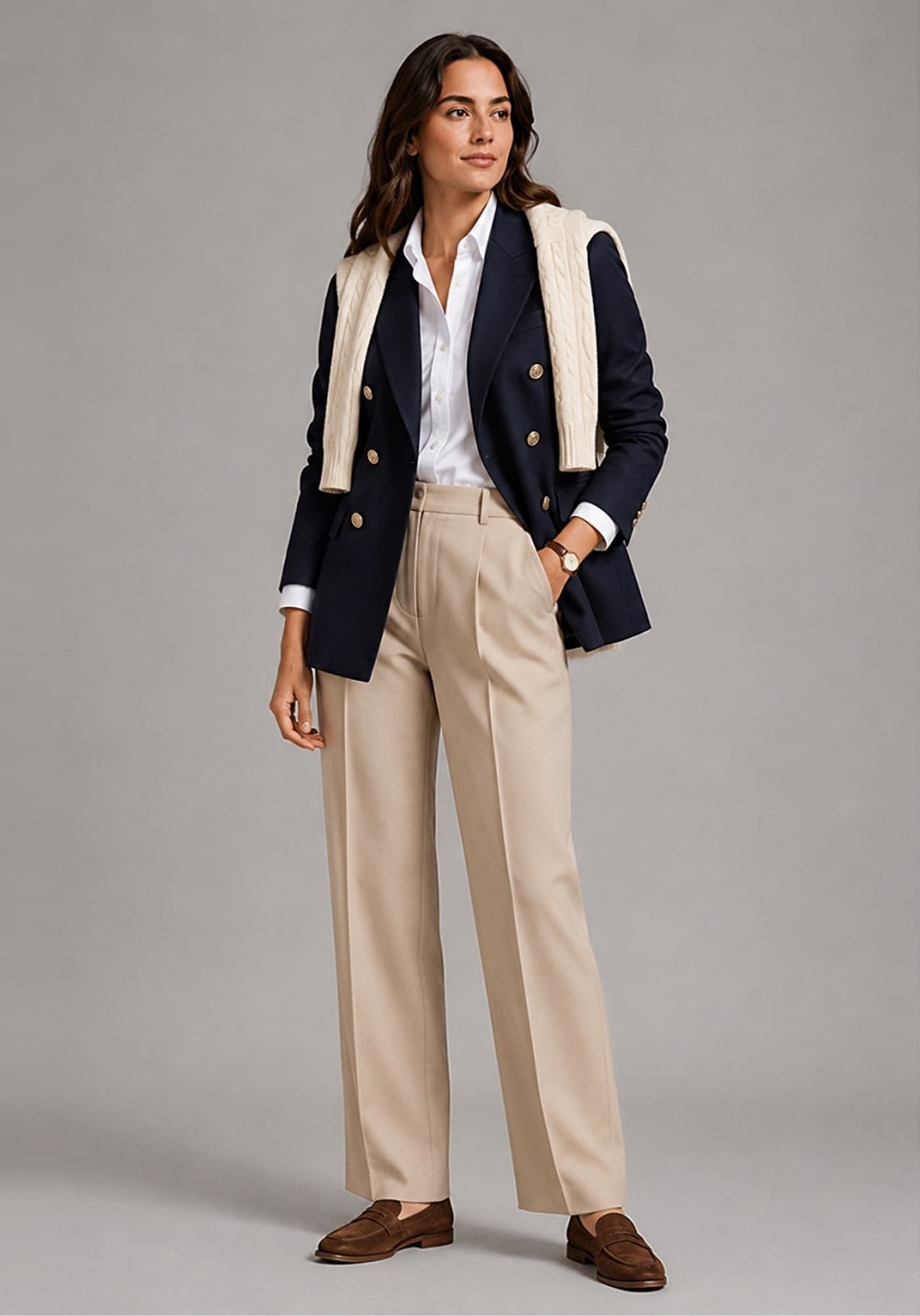
Old money style for women means heritage fabric, relaxed tailoring and a palette that never raises its voice: cream, navy, camel and forest green in cashmere, silk and fine wool. No logos, no trend pieces, nothing tight. The fit is easy and the quality is the only signal.
Nothing announces itself: no logo, no shine, and nothing that looks bought this morning.
Updated September 21, 2026
→ 02 / What defines it
→ 03 / Where it comes from
Old money is not a trend; it is what upper-class Anglo-American clothing looked like before anyone was selling it back to us. The codes come from places that predate fashion marketing — the boat house, the shooting field, the tennis club, the university quad. Because the clothes were bought to last a generation and worn in front of people who already knew your name, they were never designed to announce anything: the label sat inside the jacket and the fabric did the talking. That is the entire rule. A logo is an argument, and old money never argues. When the look fails today, it is because someone dressed the idea of wealth — new, matching, photographed — instead of the habit of it.
→ 04 / Old Money outfit ideas
Year-round
Why it works: The template. Tonal from top to bottom, one notch looser than feels natural, and the only shine in the outfit comes from the leather.
Warm
Why it works: Old money summer is covered, not bare. The scarf is there for wind off the water, and that function is exactly why it doesn’t read as costume.
Cool
Why it works: The midi length does the work. Anything above the knee reads younger and newer; a hem with weight and movement is what makes it look inherited.
Cold
Why it works: A chunky knit under a clean coat. The texture contrast is the only interest in the outfit, so the colors have to stay inside one family.
Year-round
Why it works: No evening sparkle. Dinner here is the daytime outfit in better fabric, with one piece of jewelry you own properly instead of three you don’t.
Year-round
Why it works: Every item either creases well or not at all. Matching your bag to your shoes is dated; matching it to your coat is not.
→ 05 / Outfit examples
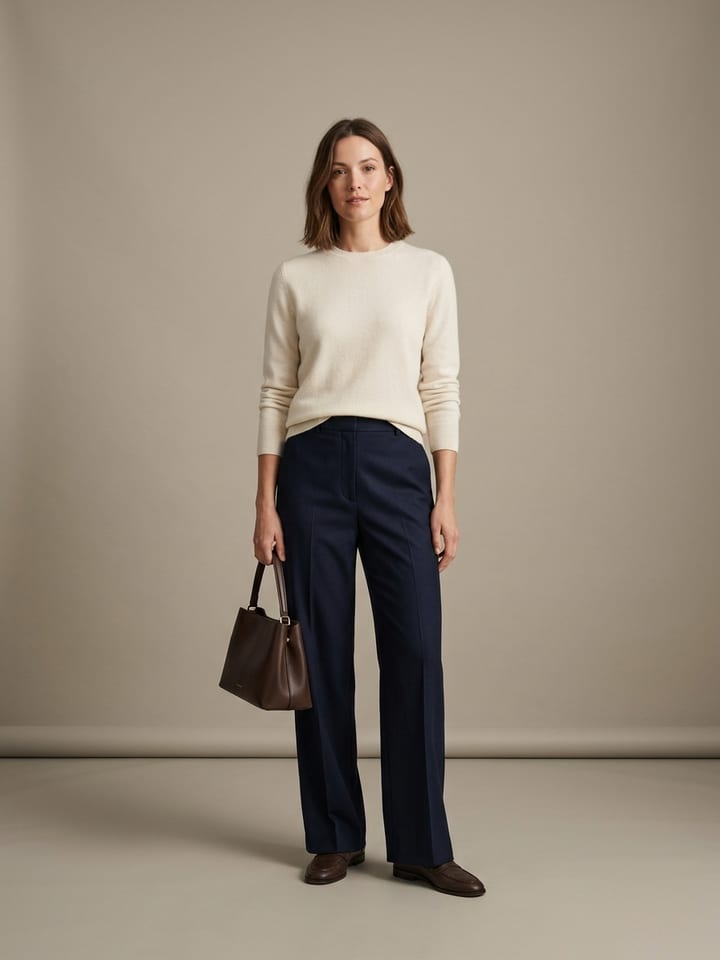
Cream cashmere over navy wide-leg trousers, with leather loafers.
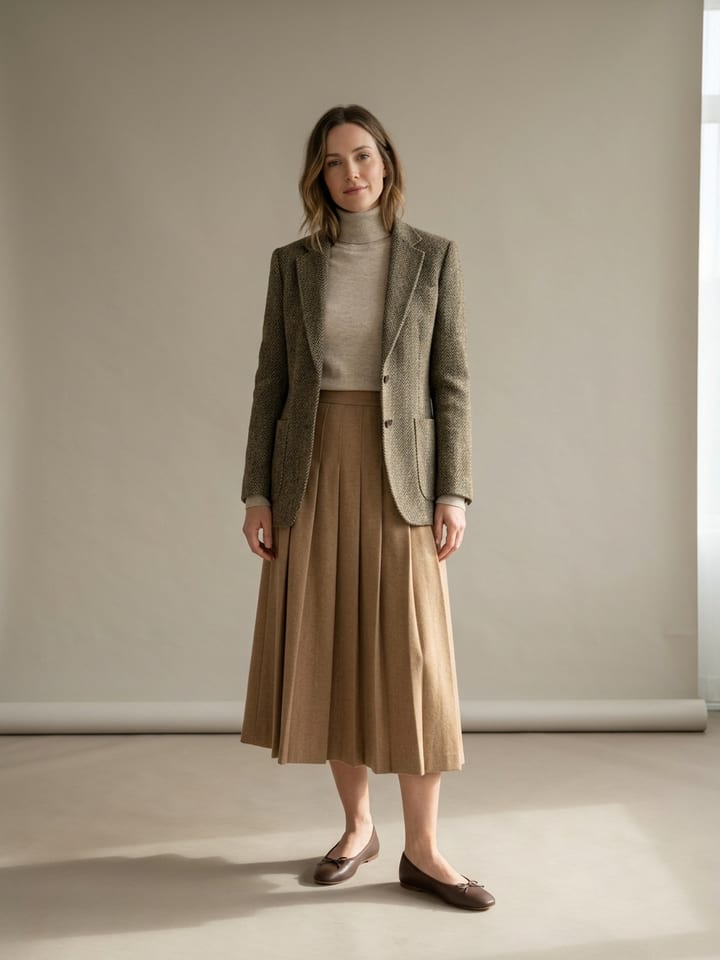
A camel pleated midi skirt under a tweed blazer.
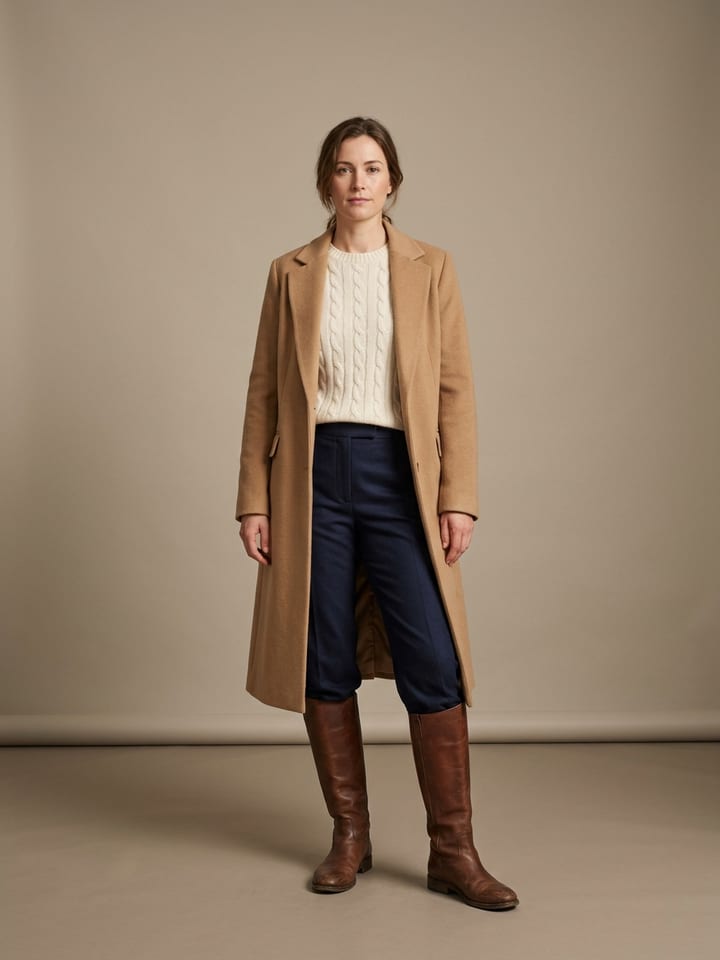
Cable knit and wool trousers under a camel overcoat.
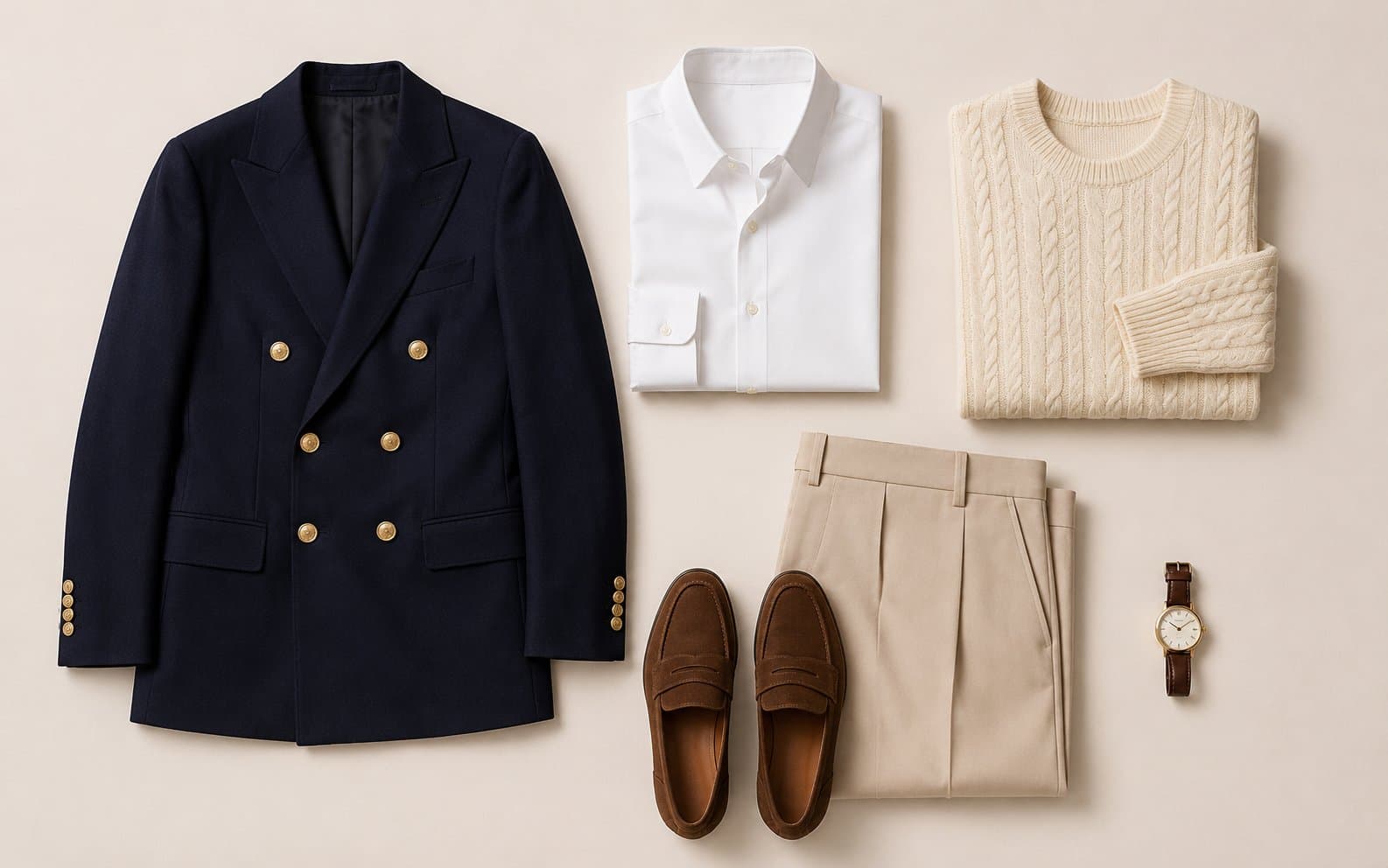
→ 06 / Key pieces · Women
→ 07 / Starter capsule
→ 08 / Palette & fabrics
Black as a default, cold blue-based brights, and anything that looks freshly dyed. If a color would be described as a pop, it is the wrong color. Visible logos and shiny hardware void the whole look even in the right shade.
→ 09 / Across the seasons
A trench over the same knit and trousers. Cream and navy will carry the entire season.
Linen, cotton and silk in cream, white and navy. Never neon, never sheer, and shoulders stay covered at lunch.
Tweed, camel and forest green arrive. This is the season where the style looks most like itself.
One excellent overcoat worn over everything for ten years. It matters more than the rest of the wardrobe combined.
→ 10 / Where it goes wrong
Dressing the television version. A head-to-toe old money outfit bought in one order looks like a costume, because nothing in it has any history.
Instead: Build it at the rate you would inherit it. One good coat, then one good knit, worn with clothes you already own.
Logo-adjacent luxury. Monogram canvas, loud hardware and initialed belts are new-money signals in expensive packaging.
Instead: Plain leather, hidden closures, no branding anyone can read. If people can name the bag across a room, it is the wrong bag.
Tight tailoring. Body-con dresses and skinny fits belong to a different kind of money — this look is built on ease, not effort.
Instead: Size up in the trousers, keep the shoulder exact, and pay for the hem. Loose everywhere except the shoulder.
Synthetic “cashmere-feel” knits. They pill within a month and catch the light, which is the one thing this palette cannot hide.
Instead: Fewer pieces, natural fibers. One real cashmere crewneck outperforms four acrylic ones and outlives them by a decade.
→ 11 / How to start this week
→ 12 / Style icons, and what they actually wore
A slip dress with flat sandals and no jewelry, or a grey coat over black trousers. She proved the look survives with almost nothing in it.
Cotton shirt, full skirt, silk scarf, plain flats — off duty rather than on a red carpet. The scarf is the detail everyone copies and most overdo.
The modern reading: an oversized navy blazer, a white shirt, gold hoops and nothing branded. Evidence the codes still work without the estate.
→ 13 / This might be you if...
→ 14 / Often confused with
→ 16 / FAQ
Old Money style for women is quiet luxury: heritage fabrics, relaxed tailoring, a muted palette, and no visible logos — wealth that does not introduce itself.
Do choose cashmere, silk, fine wool, and a structured leather bag. Do keep tailoring impeccable but not tight. Do mute the colors across the whole outfit. Do hide branding.
Don’t wear logos, loud jewelry, or bodycon shine. Don’t confuse it with preppy crests and bright rugby stripes. Don’t pick stiff fast-fashion “quiet luxury” polyester.
Women can wear Old Money style to lunch, travel, offices, weekends, and family events. It is the wrong energy for club nights, gyms, and logo-heavy streetwear rooms.
Typical colors are cream, navy, camel, and forest green, in cashmere, tweed, silk, and fine wool. Women’s old-money palettes should look inherited, not neon.
A common Old Money mistake for women is the logo belt with a “quiet” knit, or tailoring that is too tight and too new. Soften the fit and silence the brand.
The quiz takes two minutes and tells you whether quiet luxury is your actual Style DNA — or a look you admire on other people.
Take the style quizYou are cordially invited
Modesona is your personal stylist — free, instant, and built around everything already hanging in your wardrobe.


Free · No card required · iOS & Android