Fabrics
- worsted wool
- tweed
- cotton poplin
- silk
- cashmere
- polished calf leather
→ 01 / Women
Timeless and refined
Elegant, structured pieces that ignore trends — a wardrobe that would have worked 20 years ago and will work in 20 more.
The short answer
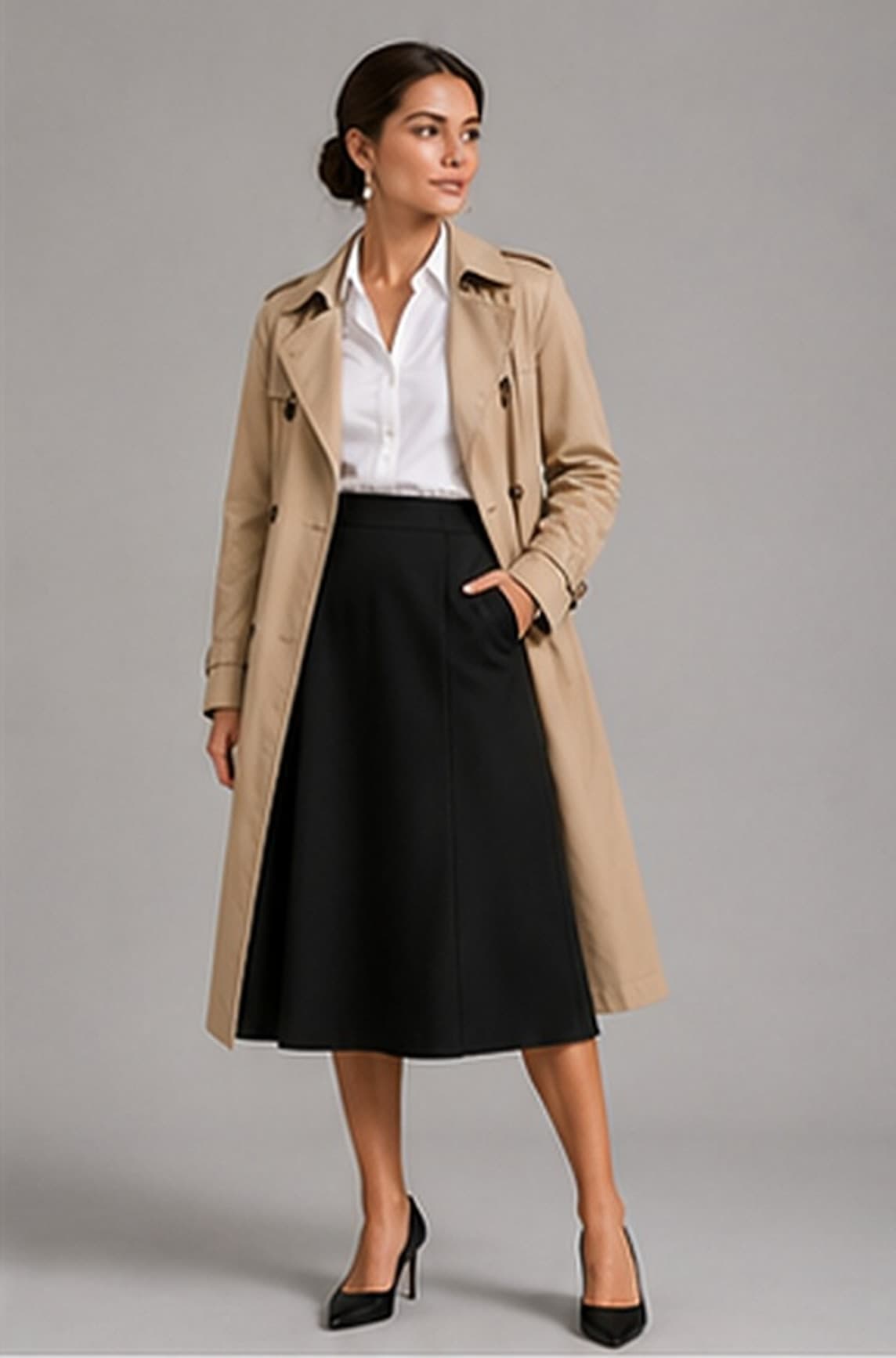
Classic style for women is structured tailoring in a tight neutral palette: a trench, a white button-down, tailored trousers or a pencil skirt, and a real leather shoe. Navy, camel, white, burgundy and charcoal do all the work. Nothing is oversized, nothing is distressed, and the accessories are small, few, and usually gold or pearl.
If you can date a piece to a particular year, it does not belong in this wardrobe.
Updated September 22, 2026
→ 02 / What defines it
→ 03 / Where it comes from
Classic dressing is the residue of two centuries of formal wear, and almost every piece in it can be traced back to a job. The trench coat began as a British officer’s raincoat in the First World War, which is why it still carries epaulettes and a storm flap nobody uses. The blazer and the navy suit descend from naval and city uniforms. The button-down collar came off the polo field around the turn of the twentieth century, the buttons added to stop the points flapping. Women’s classic was assembled later and more deliberately: Chanel put women into jersey and a plain black dress in the 1920s, Dior rebuilt the waist in 1947, and American sportswear made the shirtdress and the pencil skirt ordinary. What survived all of that is what still works — shapes designed around function, refined for decades, and then simply left alone.
→ 04 / Classic outfit ideas
Year-round
Why it works: The most repeatable outfit in the style. Tuck the shirt fully and use the belt — a visible waist is what separates classic from merely neat.
Cool
Why it works: Knit instead of a blouse keeps the silhouette smooth under the jacket. The hem sits at or just below the knee; higher reads trend, much lower reads costume.
Year-round
Why it works: The trench is a complete outfit on its own, which is why everything under it can be plain. Tie the belt rather than buckling it and the coat keeps its shape.
Year-round
Why it works: The little black dress works because it is undecorated. One piece of jewelry, one shoe, no pattern — anything more and the dress stops being the point.
Warm
Why it works: Classic does not go sleeveless easily. A shirtdress keeps a collar and a waist in the heat, which is exactly what the style needs to survive July.
Cold
Why it works: Tonal camel and cream reads far more expensive in winter than contrast does, and the gloves are the detail that makes the coat look owned rather than bought.
→ 05 / Outfit examples
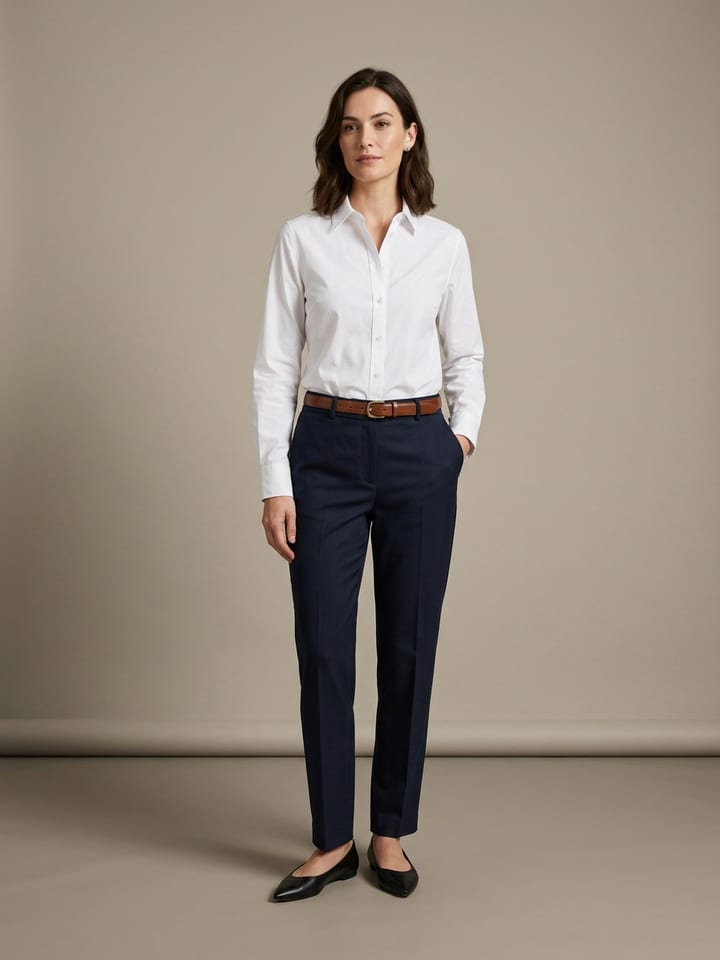
A white button-down tucked into navy tailored trousers.
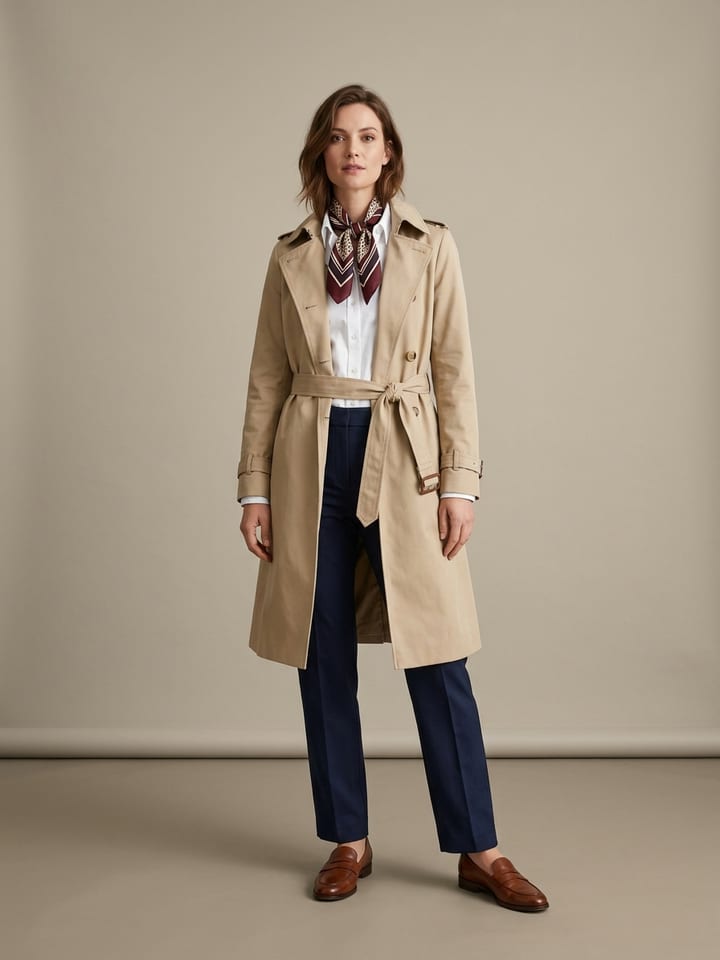
A belted trench over a white shirt and straight trousers.
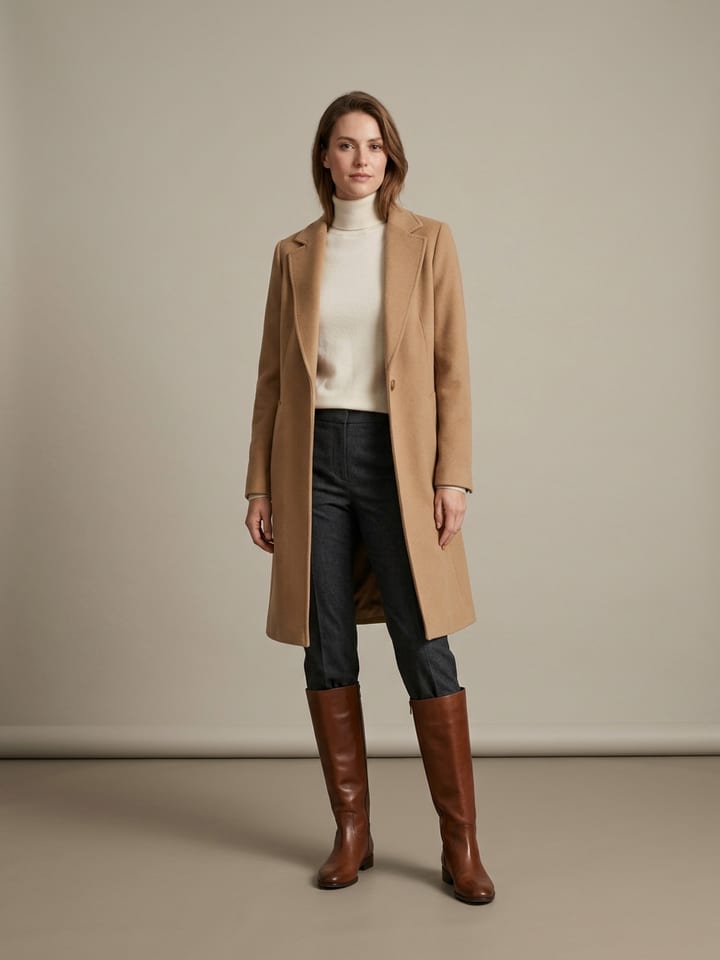
A camel coat over a cream turtleneck and wool trousers.
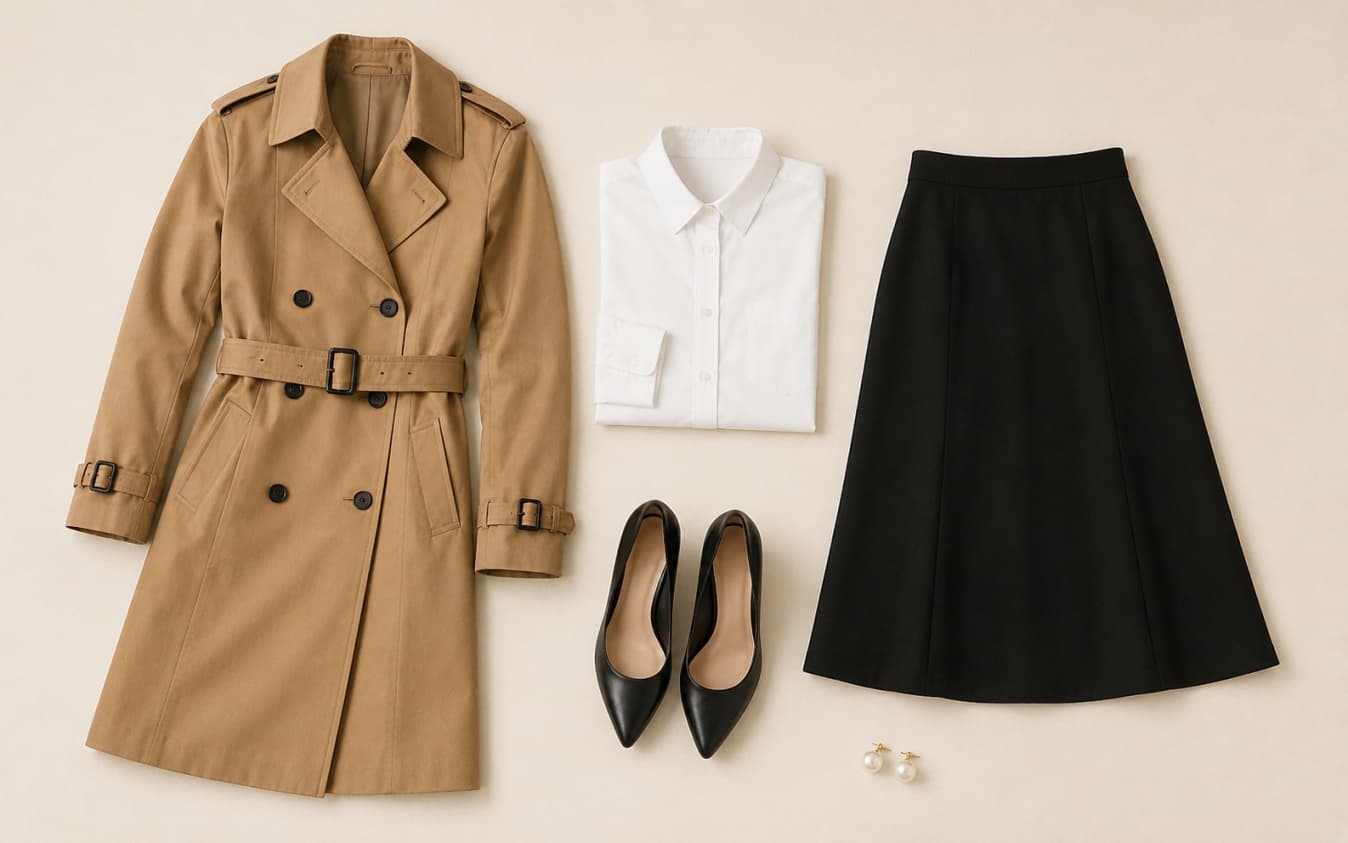
→ 06 / Key pieces · Women
→ 07 / Starter capsule
→ 08 / Palette & fabrics
Neon, tie-dye, heavy distressing and anything with visible stretch. Patterns are allowed only if they are old — stripe, houndstooth, a small polka dot. If a color or print arrived in the last two years, it will date the outfit that was supposed to outlive it.
→ 09 / Across the seasons
Trench weather, and the season the whole wardrobe was built for. White shirt, navy trousers, and nothing else needs to change.
Cotton and silk in white, navy and camel. Keep either a collar or a waist in every outfit — without one, classic flattens into plain.
Tweed, wool and burgundy arrive. Swap the flats for boots and put the blazer over everything already in rotation.
One excellent coat worn daily over the same trousers and knits. Classic does not have a winter wardrobe; it has a coat.
→ 10 / Where it goes wrong
Confusing classic with conservative. A shapeless beige twinset is not timeless, it is invisible.
Instead: Structure is the point, not modesty. A defined shoulder, a marked waist and a deliberate hem are what make it look chosen.
Cheap versions of expensive shapes. A trench in stiff synthetic or a blazer with fused lining holds the wrong shape and telegraphs it.
Instead: Own fewer, better. One wool coat and one real trench outrank six seasonal jackets and will still be in rotation in ten years.
Over-accessorizing. Pearls plus a scarf plus a brooch plus a statement bag turns the outfit into a period reference.
Instead: Two accessories maximum, and one of them is usually the belt. The other can be earrings, a scarf, or the watch — not all three.
Ignoring the hem and the sleeve. Trousers dragging on the floor or a jacket cuff swallowing your hand undo tailoring you already paid for.
Instead: Budget for alterations from the start. Sleeve at the wrist bone, trouser breaking once, skirt sitting at the knee.
→ 11 / How to start this week
→ 12 / Style icons, and what they actually wore
Off screen: flat ballet shoes, cropped cigarette trousers, a plain boatneck top, hair pulled back. Almost nothing in the outfit, which is exactly why it never dated.
A belted coat dress in one solid color, nude heels, small gold earrings. The institutional version — repetitive, unbranded, and legible from fifty feet away.
A menswear jacket over high-waisted trousers with a plain shirt in the 1940s. She showed that classic tailoring can borrow from men without becoming a costume.
→ 13 / This might be you if...
→ 14 / Often confused with
→ 15 / Mixes well with
→ 16 / FAQ
Classic style for women means elegant, structured pieces that ignore trends — a wardrobe that would have worked 20 years ago and will work in 20 more. Think trench coats, white shirts, tailored dresses, and discreet jewelry.
Do invest in structure: a trench, a tailored dress, a white button-down. Do keep colors coordinated and accessories quiet — pearls, leather, a good watch. Do choose quality over quantity.
Don’t chase loud logos or seasonal gimmicks. Don’t confuse classic with stiff costume dressing. Don’t pile on trendy accessories that break the line of a good coat.
Women can wear Classic style to work, weddings, dinners, travel, and any day they want to look considered. It is weakest at the gym, festivals, and anything that needs technical fabric.
Typical colors are navy, camel, black, white, and burgundy, in wool, tweed, silk, and leather. A women’s classic palette stays neutral so pieces last for years.
The usual Classic mistake for women is looking dated instead of timeless — too many matching sets, fussy prints, or cheap shine. Edit. One excellent coat beats five average ones.
Two minutes of swiping tells you whether Classic is genuinely your Style DNA — or a wardrobe you admire in photographs but never actually reach for.
Take the style quizYou are cordially invited
Modesona is your personal stylist — free, instant, and built around everything already hanging in your wardrobe.


Free · No card required · iOS & Android