Fabrics
- worsted wool
- grey flannel
- tweed
- oxford cotton
- cashmere
- polished calf leather
→ 01 / Men
Timeless and refined
Elegant, structured pieces that ignore trends — a wardrobe that would have worked 20 years ago and will work in 20 more.
The short answer
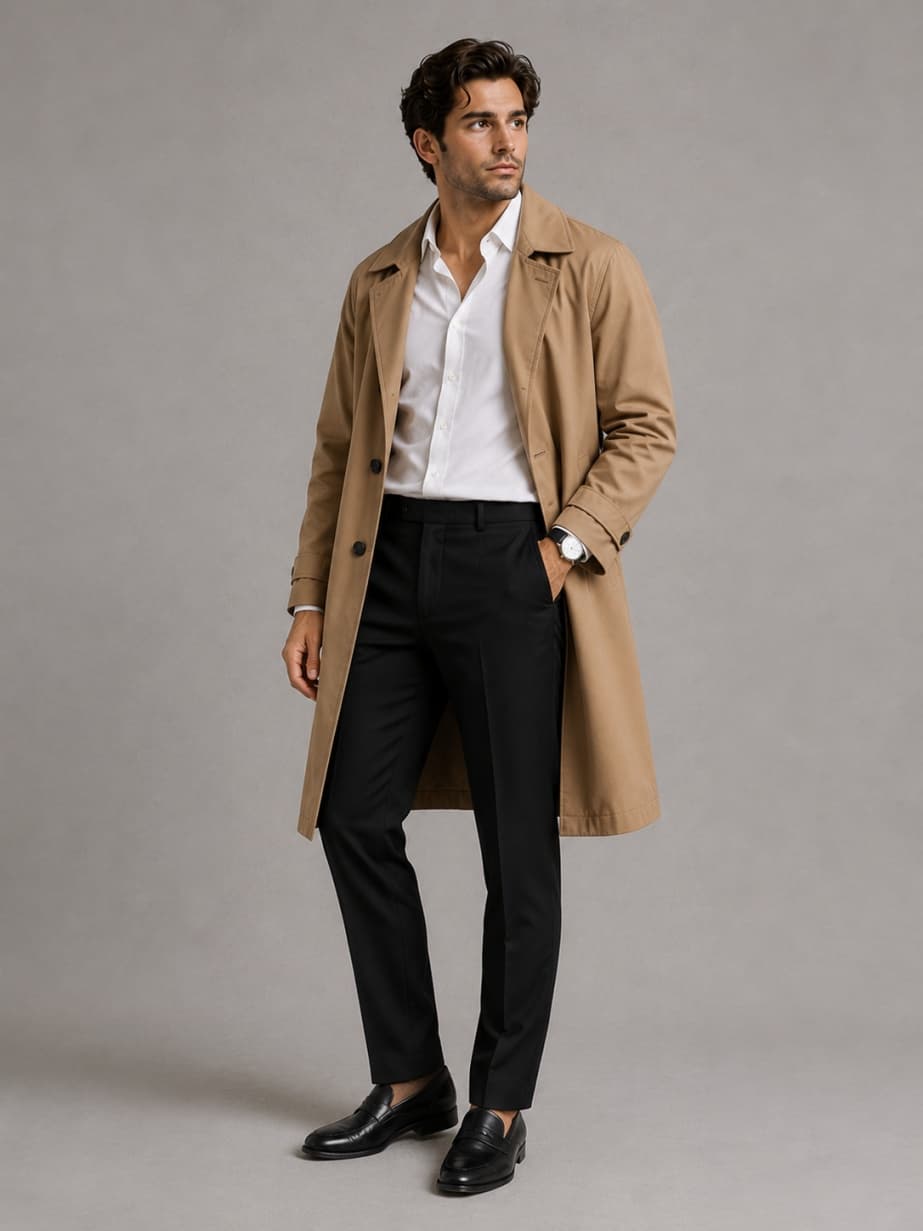
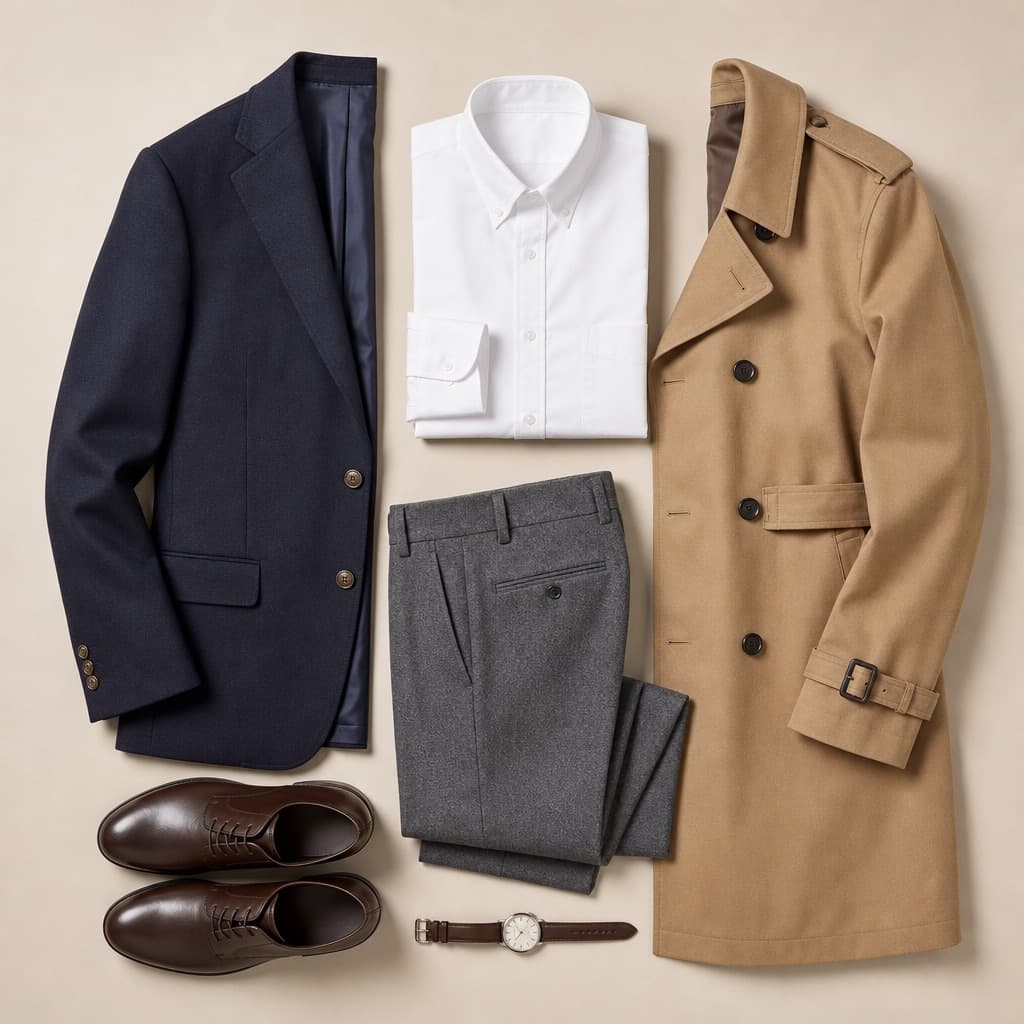
Classic style for men is a navy suit or sport coat, oxford shirts, grey wool trousers, a trench or camel overcoat, and brown leather shoes. The palette stops at navy, grey, white, camel and burgundy. Fit is where the budget goes: an altered mid-range jacket beats an untouched expensive one every time.
If you can date a piece to a particular year, it does not belong in this wardrobe.
Updated September 22, 2026
→ 02 / What defines it
→ 03 / Where it comes from
Classic dressing is the residue of two centuries of formal wear, and almost every piece in it can be traced back to a job. The trench coat began as a British officer’s raincoat in the First World War, which is why it still carries epaulettes and a storm flap nobody uses. The blazer and the navy suit descend from naval and city uniforms. The button-down collar came off the polo field around the turn of the twentieth century, the buttons added to stop the points flapping. Women’s classic was assembled later and more deliberately: Chanel put women into jersey and a plain black dress in the 1920s, Dior rebuilt the waist in 1947, and American sportswear made the shirtdress and the pencil skirt ordinary. What survived all of that is what still works — shapes designed around function, refined for decades, and then simply left alone.
→ 04 / Classic outfit ideas
Year-round
Why it works: Navy before grey, and grey before anything else. A plain dark tie keeps the outfit from reading as a uniform without adding a pattern to argue with.
Year-round
Why it works: The most versatile combination men’s classic has. Jacket and trousers must differ visibly in shade and texture, or it reads as a suit that lost a fight.
Cold
Why it works: The overcoat has to be long enough to cover the jacket’s hem. A coat that stops short of the jacket is the most visible error in winter tailoring.
Cool
Why it works: Knit over a collar instead of a tie is how classic relaxes without becoming smart casual. The collar stays visible, and that is the whole distinction.
Warm
Why it works: Lose the tie before you lose the jacket. An open collar under a jacket is still classic; a tie with no jacket never is.
Year-round
Why it works: Charcoal reads later in the day than navy does. One deep color in the tie is all the evening decoration this wardrobe allows itself.
→ 05 / Outfit examples
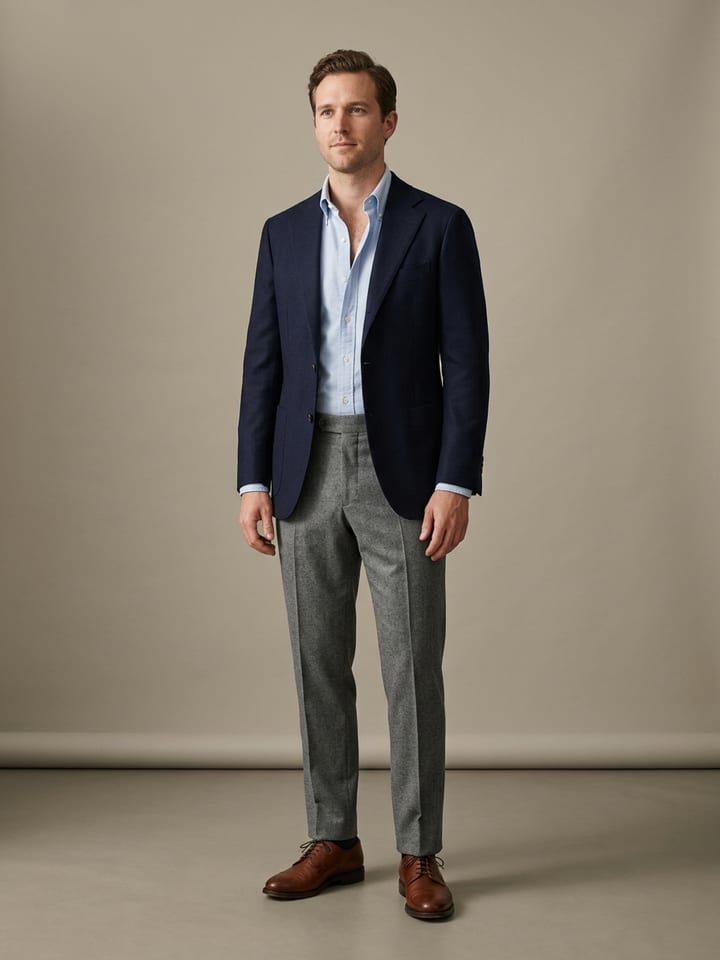
A navy sport coat over grey flannel trousers.
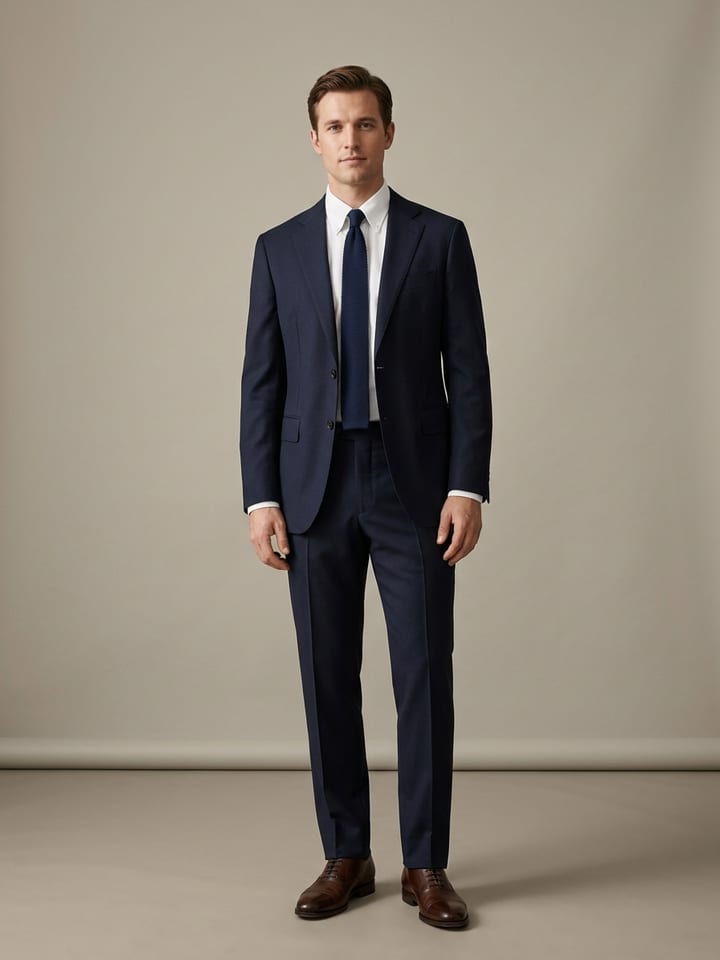
A navy two-piece with a white shirt and a knit tie.
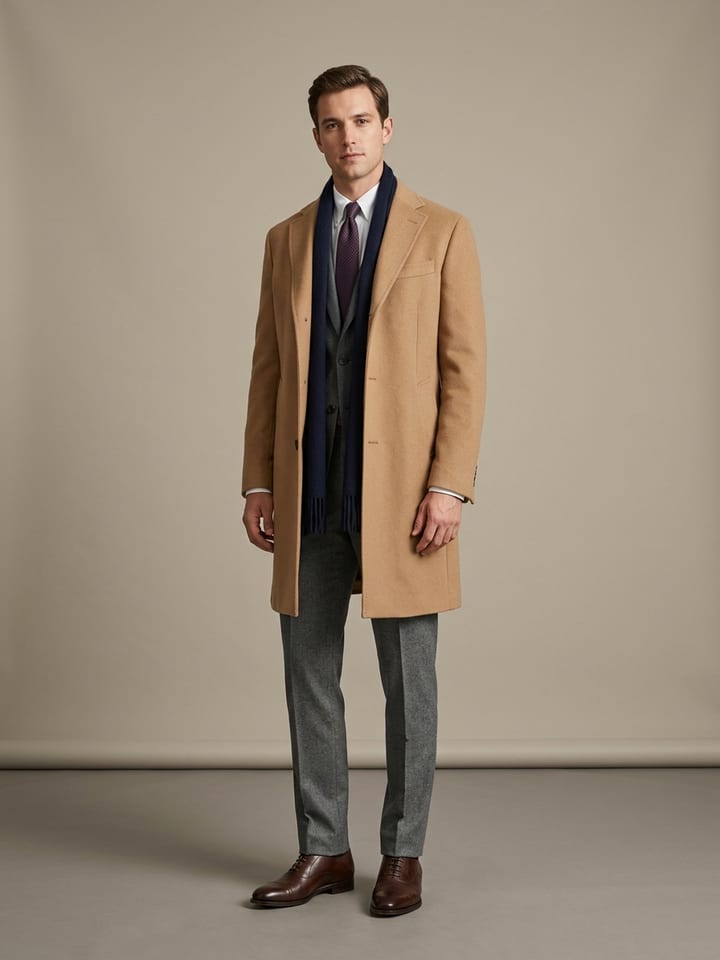
A camel overcoat long enough to cover the jacket.
→ 06 / Key pieces · Men
→ 07 / Starter capsule
→ 08 / Palette & fabrics
Black suits outside of funerals and black tie, shiny or sharkskin cloth, and shirts with contrast collars and cuffs. Loud novelty ties, square-toed shoes and a wallet-shaped bulge in the jacket all break the line the tailoring was paying for.
→ 09 / Across the seasons
Trench over the sport coat and lighter wool underneath. Blue and grey carry the season without a single new purchase.
Unlined jackets, cotton and linen blends, open collars. Sleeves stay long — a short-sleeved shirt under a jacket never reads classic.
Flannel, tweed and burgundy. The wardrobe’s home season, and the only time all the textures work together at once.
One long overcoat over everything, a cashmere scarf, and leather soles swapped for rubber if the streets demand it.
→ 10 / Where it goes wrong
Buying the jacket too small. A gaping collar, buttons pulling into an X and sleeves cropped to the wrist bone are a slim-fit habit, not classic tailoring.
Instead: The chest should close comfortably with a flat hand inside. Have the waist taken in afterward — that alteration is the cheap one.
Never visiting a tailor. Off-the-rack sleeve and trouser lengths fit almost nobody, and both are visible from across a room.
Instead: Two alterations on day one: jacket sleeves showing about half an inch of shirt cuff, trousers with a single light break.
Black shoes with everything. Black leather under navy or grey flannel flattens the whole outfit and kills the warmth in the palette.
Instead: Brown does most of the work — dark brown oxfords with the suit, suede for the weekend. Keep black for the most formal end only.
Accessory creep. A pocket square, a tie bar, a lapel pin and a bracelet at once turns tailoring into a hobby.
Instead: One deliberate detail per outfit. Usually it should be the watch, and the watch should be plain.
→ 11 / How to start this week
→ 12 / Style icons, and what they actually wore
Mid-grey suit, white shirt, plain tie, pockets kept empty so the line stayed flat. He argued for clothes you stop noticing after ten seconds, which is still the best definition of the style.
Soft-shouldered American tailoring, horn-rimmed glasses, a tie with no pattern worth describing. Authority built entirely out of fit and restraint.
Narrow lapels, immaculate white shirts, and jackets that fit exactly through the shoulder. Evidence that precision rather than expense is what photographs as elegant.
→ 13 / This might be you if...
→ 14 / Often confused with
→ 15 / Mixes well with
→ 16 / FAQ
Classic style for men means elegant, structured pieces that ignore trends — navy sport coats, oxfords, grey wool trousers, and a proper coat. The point is longevity, not novelty.
Do buy structure and cloth: a navy jacket, oxford shirts, grey trousers, leather derbies. Do keep accessories discreet. Do tailor the shoulder and the trouser break.
Don’t wear loud logos, skinny trendy cuts, or athletic sneakers with a sport coat. Don’t let the shirt balloon. Don’t treat classic as a rented tuxedo you only dust off for weddings.
Men can wear Classic style to the office, dinners, ceremonies, and travel days when a coat has to earn its keep. Leave it home for the gym, the trail, and club nights.
Typical colors for men’s Classic style are navy, camel, black, white, and burgundy, in wool, tweed, and leather. Neutrals are the whole game.
The usual Classic mistake for men is poor fit — a boxy jacket or puddling trousers — or mixing in one streetwear piece that breaks the register. Tailor first.
Two minutes of swiping tells you whether Classic is genuinely your Style DNA — or a wardrobe you like the idea of more than the reality of.
Take the style quizYou are cordially invited
Modesona is your personal stylist — free, instant, and built around everything already hanging in your wardrobe.


Free · No card required · iOS & Android