Fabrics
- fine merino
- cotton poplin
- tropical wool
- smooth calf leather
- brushed cotton
→ 01 / Men
Less, but better
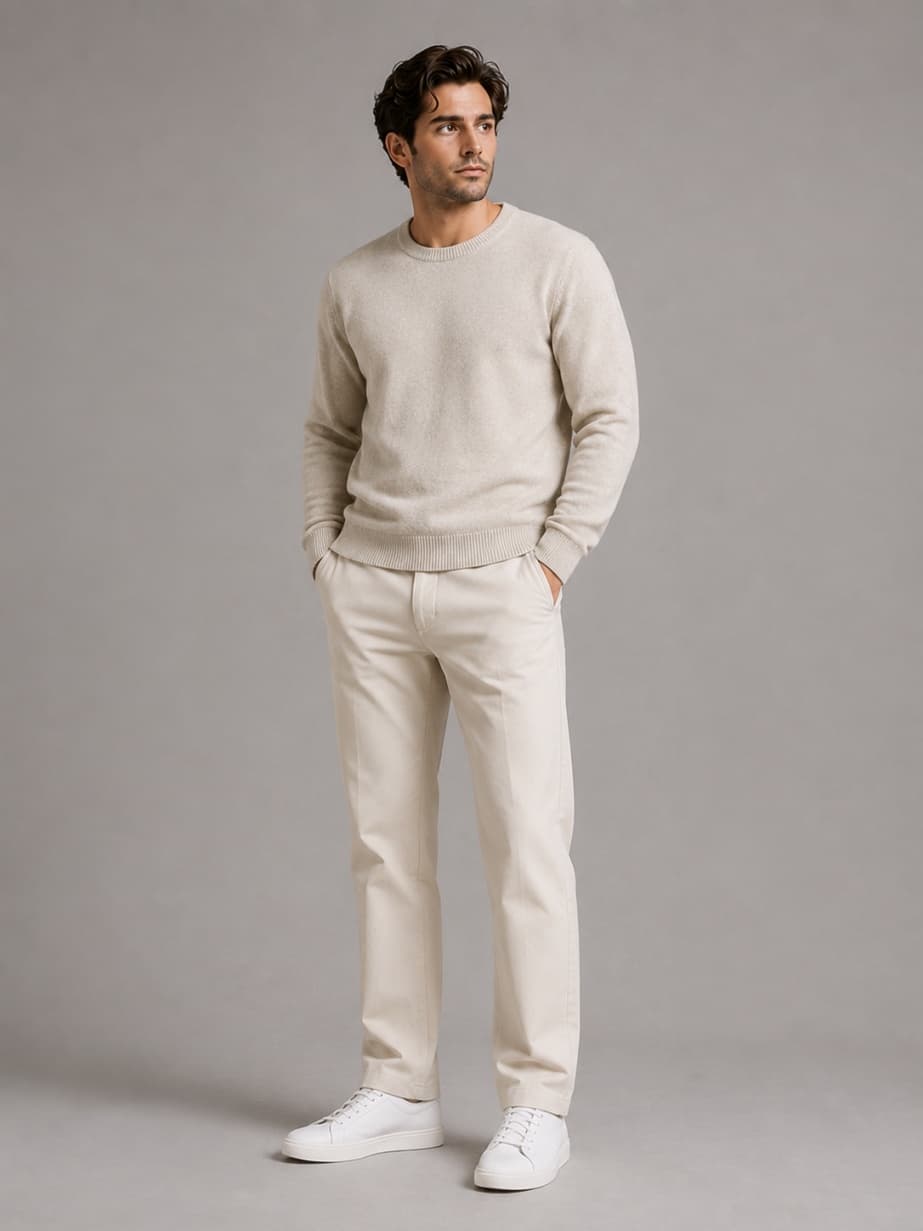
Clean lines, neutral colors, zero logos — the outfit disappears so the silhouette and fabric can speak.
The short answer
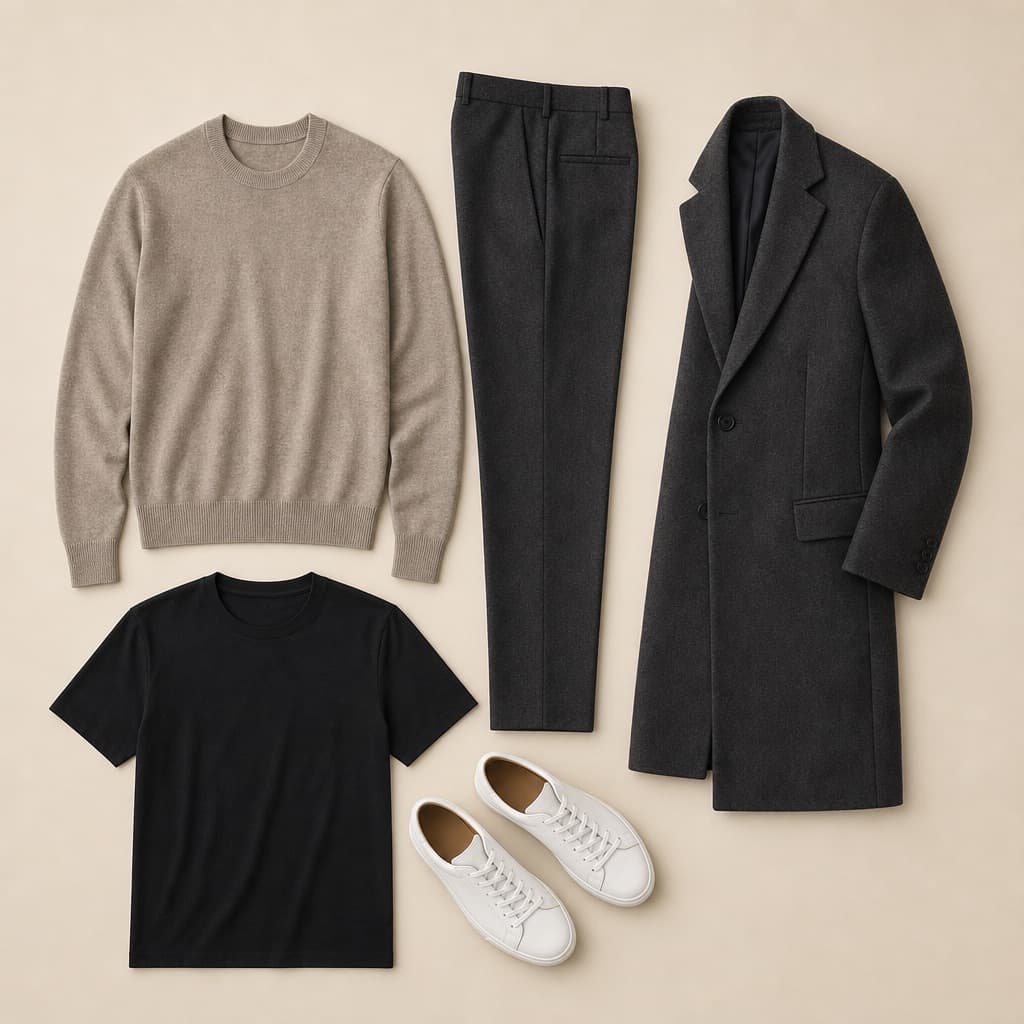
Minimalist style for men is a merino crewneck or plain tee, tapered wool trousers or dark jeans, an overcoat, and plain leather sneakers. Black, white, grey and stone, with no logos, no prints and no visible hardware. It is the least forgiving style there is: with nothing to look at, everyone is looking at the fit.
Remove one thing at a time until the next removal would break the outfit. That is the outfit.
Updated September 22, 2026
→ 02 / What defines it
→ 03 / Where it comes from
Minimalist dress is a reaction, and it has happened more than once. Halston emptied out American evening wear in the 1970s with jersey, cashmere and almost no seams. Japanese designers arriving in Paris in the early 1980s — Rei Kawakubo and Yohji Yamamoto — replaced decoration with cut, black cloth and asymmetry, and were called austere for it. The 1990s then pushed back on the previous decade’s volume and logos: Jil Sander, Helmut Lang and Calvin Klein built entire houses on flat fabric, long lines and nothing printed. Phoebe Philo’s Céline did it again for the 2010s, and today’s quiet luxury is the latest echo. The common thread is not a color. It is that when there is nothing to look at, every choice becomes visible: the shoulder seam, the drape of the cloth, the exact length of a sleeve.
→ 04 / Minimalist outfit ideas
Year-round
Why it works: Three pieces inside one color family. The trouser tapers just enough to sit clean on the shoe without gripping the calf.
Year-round
Why it works: The coat does the work a jacket would. Keeping the tee completely plain is what makes it read as a decision rather than an accident.
Cool
Why it works: One flat wash, no distressing, no contrast stitching. Denim belongs here as long as it is the plainest denim you can find.
Warm
Why it works: Matte cotton in two shades of off-white. A shirt with a soft collar and no chest pocket is the most useful summer piece in this wardrobe.
Year-round
Why it works: All black in three fabrics. The whole effect depends on knit, wool and leather reading differently while the color does not change at all.
Cold
Why it works: Long coat, short everything else. A scarf is allowed if it is one solid color, and gloves should disappear rather than contrast.
→ 05 / Outfit examples
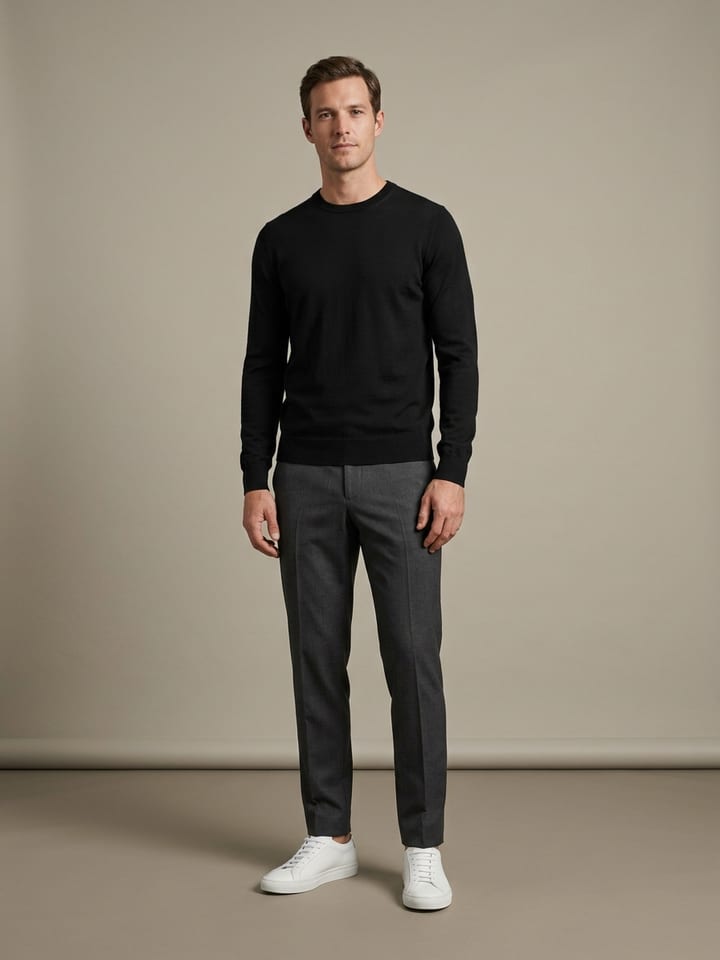
A black crewneck over charcoal tapered trousers.
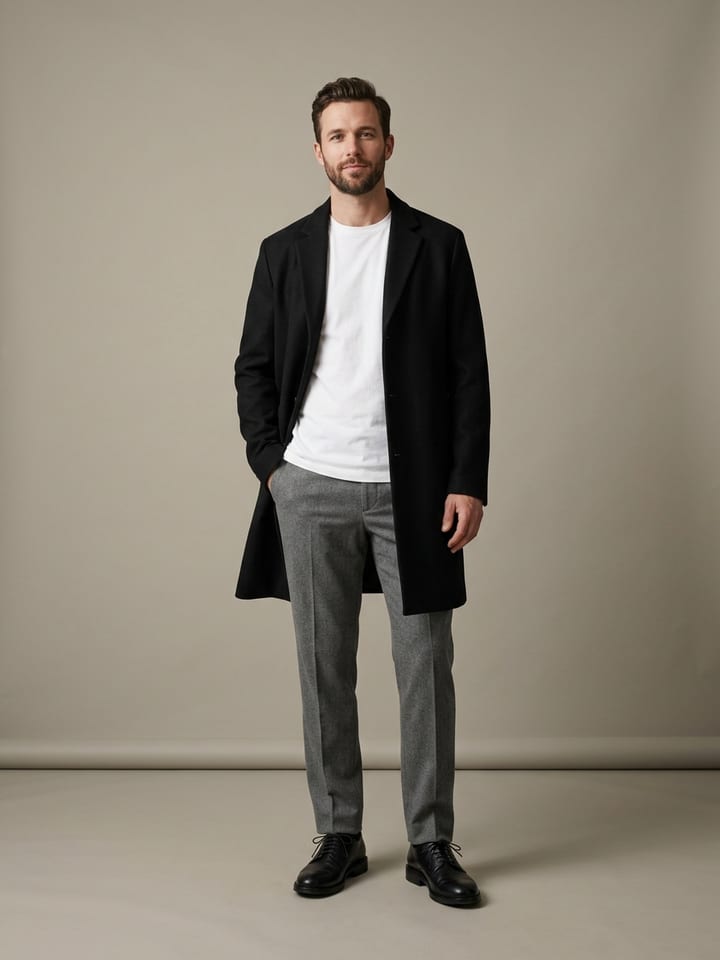
An unstructured overcoat instead of a jacket.
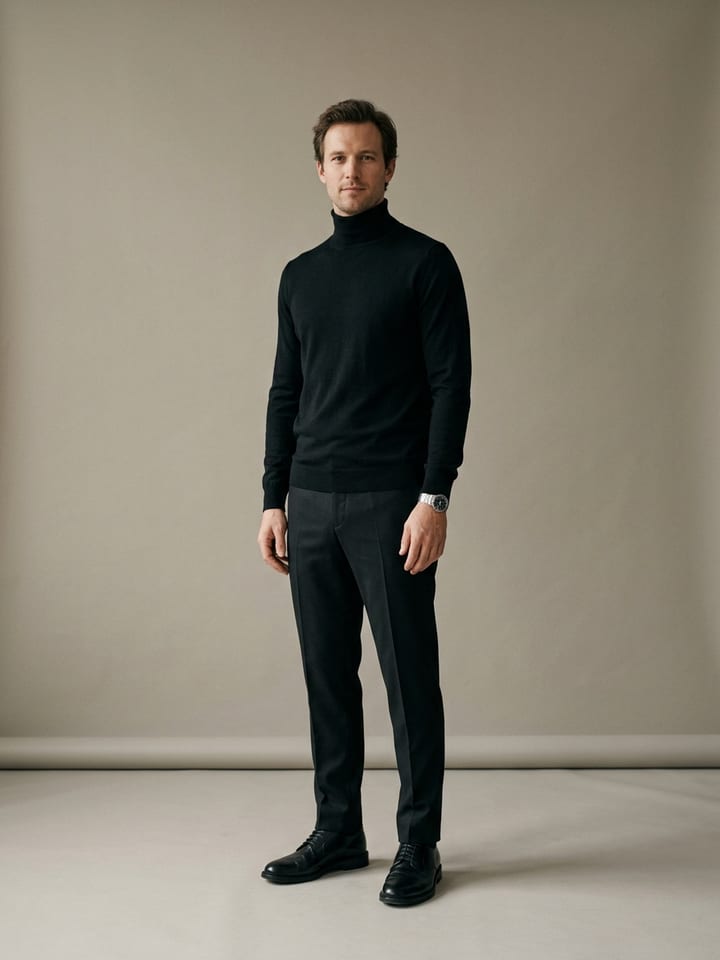
All black in three different fabrics.
→ 06 / Key pieces · Men
→ 07 / Starter capsule
→ 08 / Palette & fabrics
Logos of any size, contrast stitching, chrome hardware, and technical fabric with a sheen. Graphic tees are out by definition. If there is a second bright color anywhere in the outfit, the outfit has already stopped being minimalist.
→ 09 / Across the seasons
One unlined coat, one crewneck, one trouser. The wardrobe barely registers that the season changed.
Poplin, plain cotton and matte leather. Shorts only if they are tailored and solid — drawstrings and cargo pockets are the wrong language here.
Merino, wool and a long coat in charcoal or stone. This is where the style looks most like itself.
Layer thin, not thick. Two fine knits under a good coat beat one bulky sweater that destroys the shoulder line.
→ 10 / Where it goes wrong
Mistaking the style for all black. Black on black on black in the same flat fabric reads as a uniform, not as a wardrobe.
Instead: Vary texture instead of color. A knit, a woven trouser and a leather shoe in one shade already give the outfit depth.
Plain but badly fitted. A boxy tee and a slightly too-long trouser look careless the moment there is nothing else to look at.
Instead: Shoulder seam on the bone, hem grazing the shoe. Alterations matter more in this style than in any other.
Hardware creep. A branded belt buckle, a chunky diver’s watch and a logo sneaker are three loud objects in a silent outfit.
Instead: Plain belt, slim steel watch, unbranded shoe. Nothing on you should be identifiable from across a room.
Buying cheap because the clothes are simple. Flat colors expose pilling, pulling and shine faster than anything patterned.
Instead: Half the number of pieces at twice the quality. In a wardrobe this small each item gets worn far more often anyway.
→ 11 / How to start this week
→ 12 / Style icons, and what they actually wore
The same black rollneck, straight jeans and grey sneakers for two decades. An extreme case, but the clearest argument anyone has made for a personal uniform.
Black, loose, layered and cut asymmetrically. Proof that minimalism can be about shape and proportion rather than about neatness.
A plain dark suit without a tie, or a black tee with straight jeans and boots. Consistent enough over thirty years that photographs are hard to date.
→ 13 / This might be you if...
→ 14 / Often confused with
→ 15 / Mixes well with
→ 16 / FAQ
Minimalist style for men means less, but better: clean lines, neutrals, no logos. A merino crewneck, tapered trousers, and an overcoat are the whole argument.
Do keep the palette strict and the silhouettes clean. Do hide branding. Do spend on cloth and fit, not on decoration.
Don’t add graphics, cargo clutter, or statement sneakers. Don’t treat minimalist as “I only own hoodies.” Don’t let pants bag or shirts billow.
Men can wear Minimalist style to work, travel, and daily life as a uniform. Skip it when the brief is festive, athletic, or logo-driven streetwear.
Typical colors for men’s Minimalist style are black, white, grey, beige, and stone, in merino, poplin, and leather. Monochrome is a feature, not a lack.
A common Minimalist mistake for men is confusing empty with intentional — cheap black everything with no shape. The silhouette has to be doing work.
Two minutes of swiping tells you whether Minimalist is genuinely your Style DNA — or whether you only own black because it is easy.
Take the style quizYou are cordially invited
Modesona is your personal stylist — free, instant, and built around everything already hanging in your wardrobe.


Free · No card required · iOS & Android