Fabrics
- cashmere
- flannel
- tweed
- oxford cotton
- linen
- suede
→ 01 / Men
Quiet luxury, zero logos
Wealth that whispers — heritage fabrics, impeccable fit and total logo silence, dressed like the money is old enough not to mention it.
The short answer
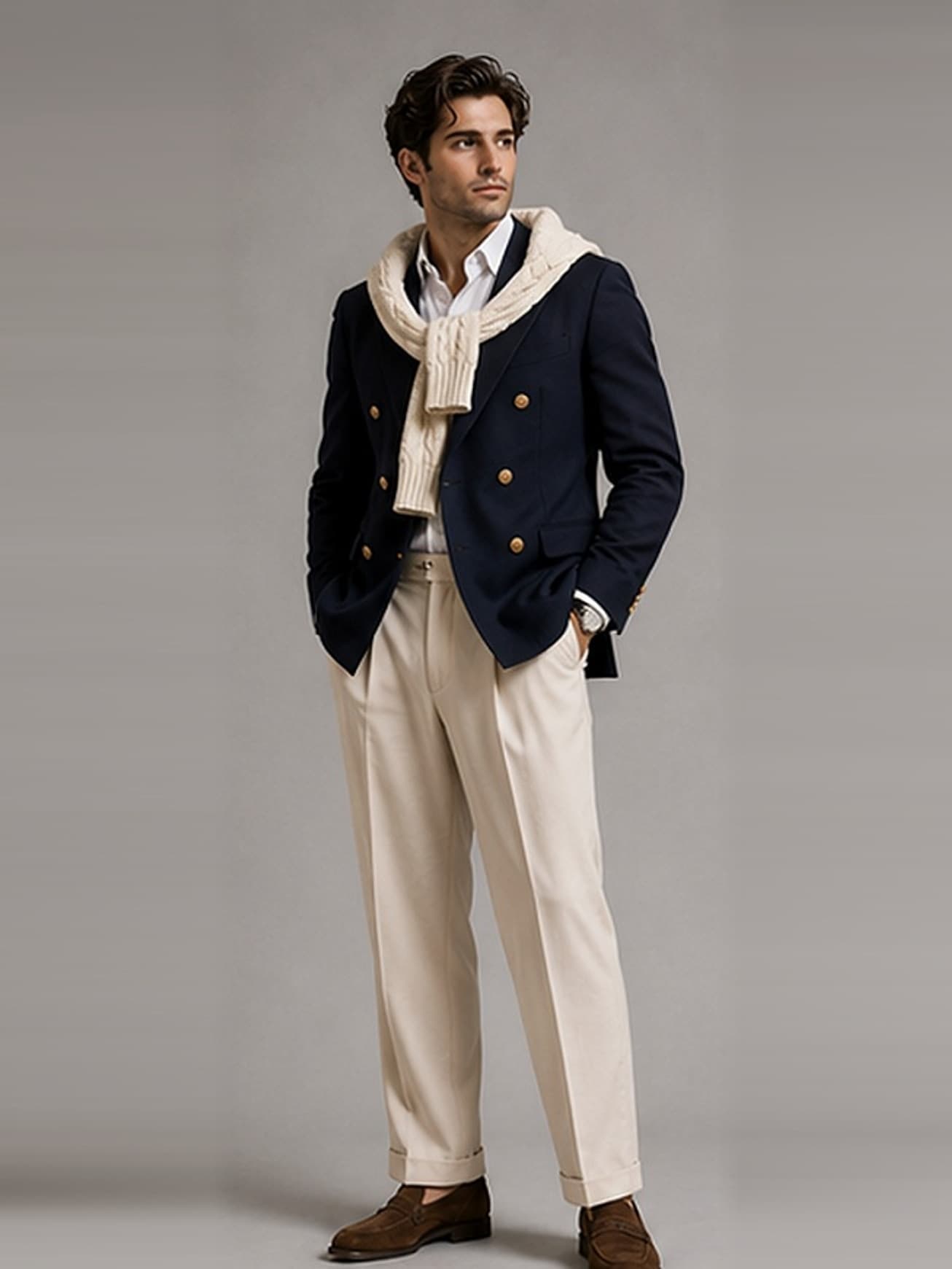
Old money style for men is soft-shouldered tailoring, heritage fabric and a strictly muted palette: navy, cream, camel and forest green in wool, cashmere and cotton. No logos, no tight fits, no shine. The blazer is unstructured, the shoes are brown, and the watch is old.
Nothing announces itself: no logo, no shine, and nothing that looks bought this morning.
Updated September 21, 2026
→ 02 / What defines it
→ 03 / Where it comes from
Old money is not a trend; it is what upper-class Anglo-American clothing looked like before anyone was selling it back to us. The codes come from places that predate fashion marketing — the boat house, the shooting field, the tennis club, the university quad. Because the clothes were bought to last a generation and worn in front of people who already knew your name, they were never designed to announce anything: the label sat inside the jacket and the fabric did the talking. That is the entire rule. A logo is an argument, and old money never argues. When the look fails today, it is because someone dressed the idea of wealth — new, matching, photographed — instead of the habit of it.
→ 04 / Old Money outfit ideas
Year-round
Why it works: The soft shoulder is everything: this jacket should look worn in, not fitted this morning. No tie is needed as long as the collar holds its own shape.
Cool
Why it works: The shoulder knit is the most copied and most mocked detail in the look. It works when the knit is real wool and everything else in the outfit is deliberately boring.
Cold
Why it works: Brown, not black, from the knee down. Wearing country colors in the city is the oldest move in this wardrobe and still the most reliable.
Warm
Why it works: Linen is supposed to crease. Pressing it flat is the tell that you bought the look this year rather than lived in it for ten.
Year-round
Why it works: Knit under blazer rather than shirt and tie is the most useful evening swap in the wardrobe, and it reads calmer and older than a suit.
Year-round
Why it works: Nothing here needs pressing on arrival. An unstructured coat folds into the overhead bin and still comes out looking like a coat.
→ 05 / Outfit examples
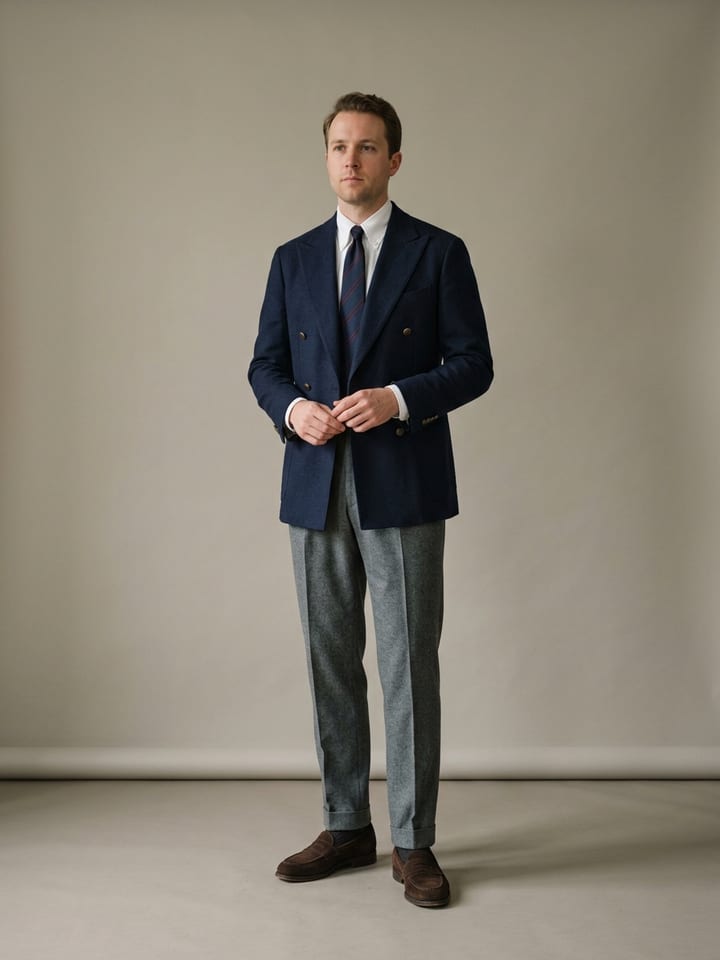
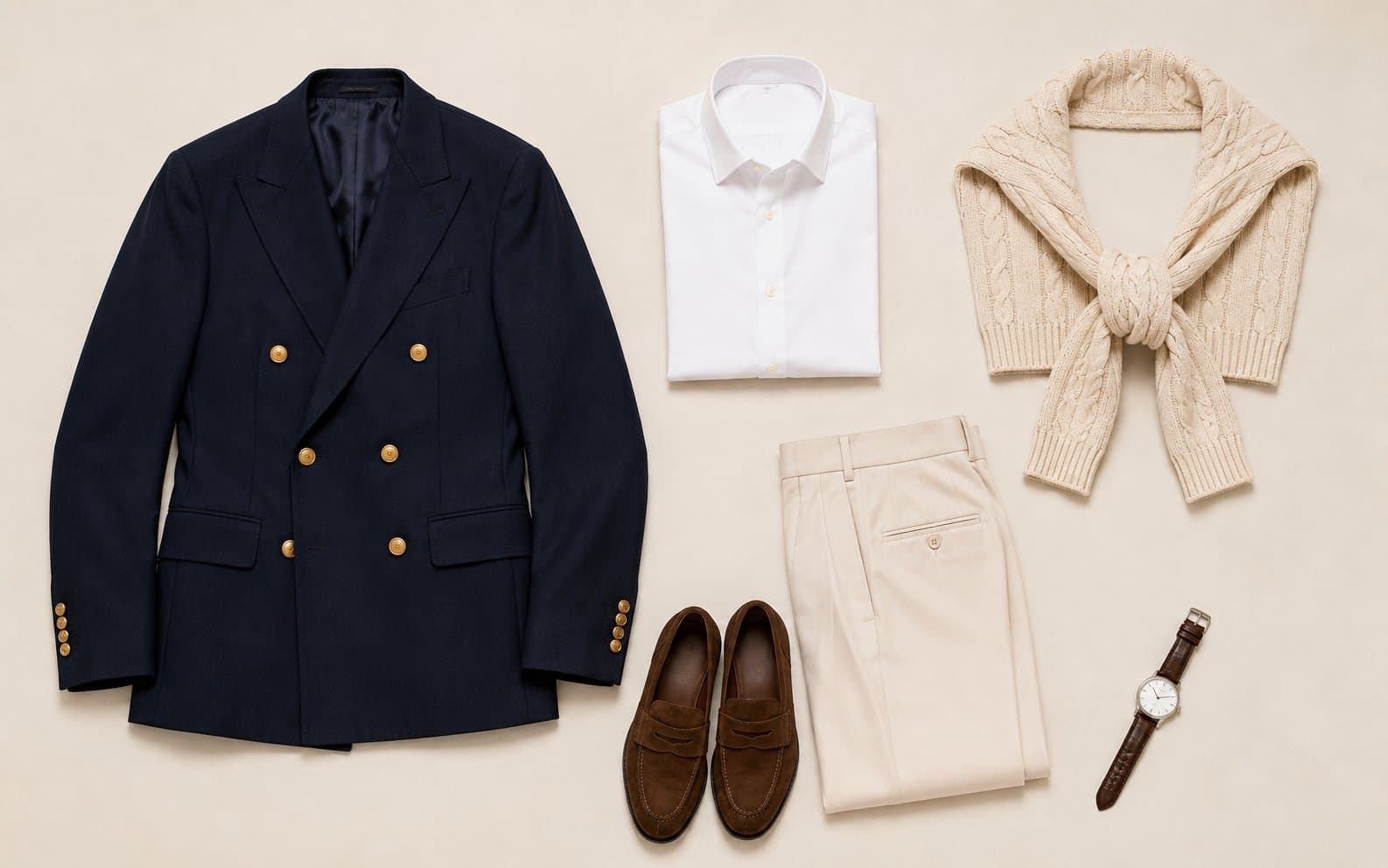
Navy double-breasted blazer, oxford shirt, grey trousers.
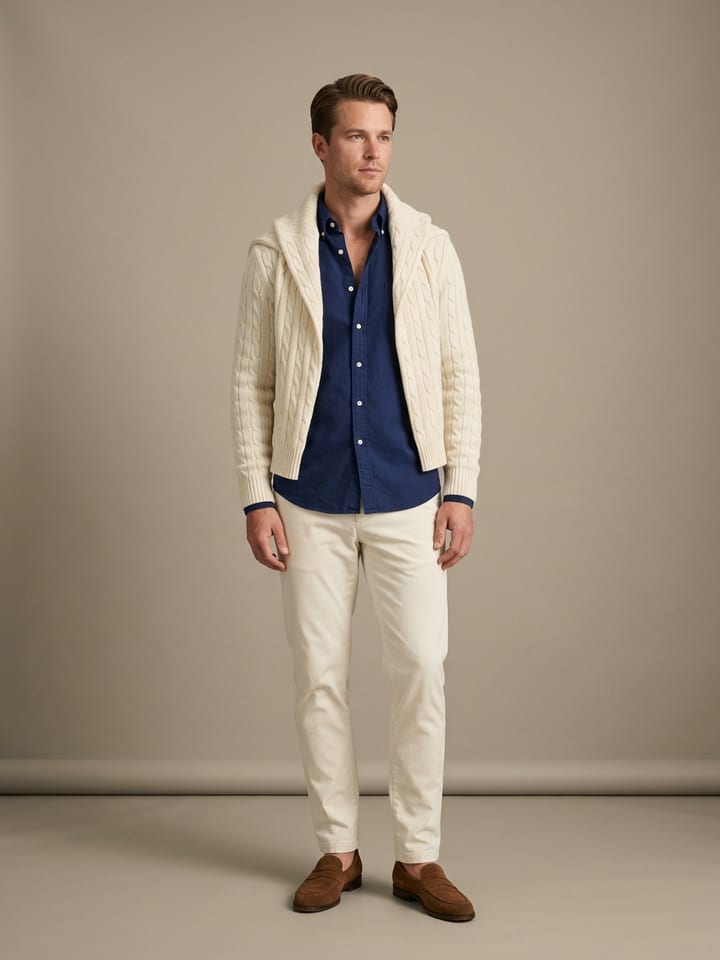
A cable knit over the shoulders with cream chinos.
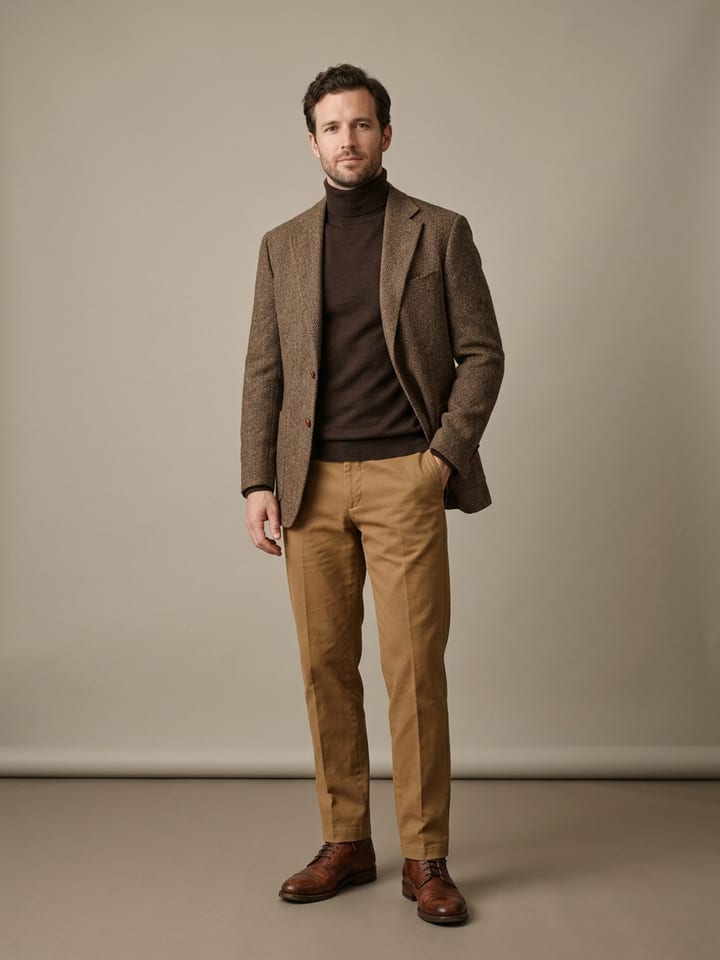
Tweed jacket, merino rollneck, brown leather boots.
→ 06 / Key pieces · Men
→ 07 / Starter capsule
→ 08 / Palette & fabrics
Black suits, shiny ties and any blue that looks electric. Nothing chrome either — no buckle you can spot across a room, and no glossy black shoes with casual clothes.
→ 09 / Across the seasons
Cotton blazer, oxford shirt, loafers without socks. Lose the wool and keep the shoulder.
Linen and cotton in cream and navy. Shorts are allowed at the coast and nowhere else.
Tweed, flannel and brown suede — the season the entire wardrobe was originally designed around.
One camel or navy overcoat over everything, with a cashmere scarf. Buy it once, properly, then stop.
→ 10 / Where it goes wrong
Buying the whole outfit at once. Head-to-toe old money straight out of one shop is the clearest possible signal that it isn’t.
Instead: Start with the navy blazer and wear it with clothes you already own for a month before you add anything else.
Over-fitted tailoring. A jacket pulling at the button with sleeves cropped to the wrist bone is a modern slim suit, not this.
Instead: Soft shoulder, room through the chest, sleeve ending where your thumb joint starts. Comfort is the entire point.
Logo watches and monogrammed belts. Recognizable hardware is the precise opposite of the signal you are going for.
Instead: A plain leather belt with a small buckle, and an old, simple watch. Nobody at the table should be able to name either.
Black shoes with everything. Black leather against chinos or jeans kills the warmth the whole palette depends on.
Instead: Brown and tan carry this wardrobe: suede loafers, leather boots, and a belt that roughly matches them.
→ 11 / How to start this week
→ 12 / Style icons, and what they actually wore
Button-down collar worn outside the jacket lapel and a watch over the shirt cuff. Deliberate small errors — the rules he broke are what everyone remembers.
A two-button sack suit with soft shoulders, sunglasses, and no tie at the weekend. The American template the whole aesthetic keeps returning to.
Six-hundred-dollar plain caps and unbranded quarter-zips. The show that turned “no logo” into a mainstream signal, and the reason this style trends at all.
→ 13 / This might be you if...
→ 14 / Often confused with
→ 16 / FAQ
Old Money style for men is quiet luxury: a navy double-breasted blazer, cable knit, pleated trousers, suede loafers, and a watch — no logos, ever.
Do buy cloth and fit, not graphics. Do keep the palette cream, navy, camel, forest. Do let a knit sit on the shoulders if you must gesture at the club. Do polish the shoes, not the branding.
Don’t wear oversized street logos. Don’t mix in athletic sneakers. Don’t confuse it with loud preppy crests. Don’t button a blazer so tight it looks rented.
Men can wear Old Money style to offices, lunches, travel, and weekends that still notice shoes. Leave it out of nightclubs that want shine and gyms that want mesh.
Typical colors for men’s Old Money style are cream, navy, camel, and forest green, in cashmere, tweed, and fine wool. Muted is the flex.
A common Old Money mistake for men is counterfeit quiet luxury — shiny black logo loafers with a polyester blazer. The fabric has to be the tell, not the trademark.
The quiz takes two minutes and tells you whether quiet luxury is your actual Style DNA — or a look you admire on other people.
Take the style quizYou are cordially invited
Modesona is your personal stylist — free, instant, and built around everything already hanging in your wardrobe.


Free · No card required · iOS & Android