Fabrics
- silk satin
- sequin and bead
- velvet
- metallic knit
- crepe
- fine merino
→ 01 / Women
Dressed to be seen
Statement dressing with shine, structure and drama — the style that treats every exit like an entrance.
The short answer
Glam style for women is one high-shine or high-drama piece — satin, sequin, velvet, or a sculpted silhouette — carried by real tailoring and a finished shoe. The palette stays tight: black, cream, burgundy and plum with a single metal. It is the only style where hair, nails and makeup genuinely count as part of the outfit.
One piece carries the shine. Everything else is the frame that lets it read.
Updated September 22, 2026
→ 02 / What defines it
→ 03 / Where it comes from
Glamour began as a word for a spell — a Scots twist on “grammar”, meaning an enchantment that made people see something that wasn’t there — and the clothes have never really left that job. The modern vocabulary was assembled by the Hollywood studios of the 1930s, whose publicity departments needed actresses to photograph as something other than human: bias-cut satin poured over the body, fur at the shoulder, and beading that threw light straight back into a black-and-white lens. Disco gave it movement in the 1970s, when Halston’s jersey and lurex turned evening clothes into something you could dance in for six hours. The 1980s gave it scale, with Bob Mackie beading Cher into gowns closer to engineering than dressmaking. The televised red carpet did the rest and turned evening dressing into a spectator sport. All of which explains the rule glam keeps: it is built to be looked at, from a distance, under artificial light. Clothes designed for that logic will always look overdone at noon. That isn’t a flaw — it’s the brief.
→ 04 / Glam outfit ideas
Year-round
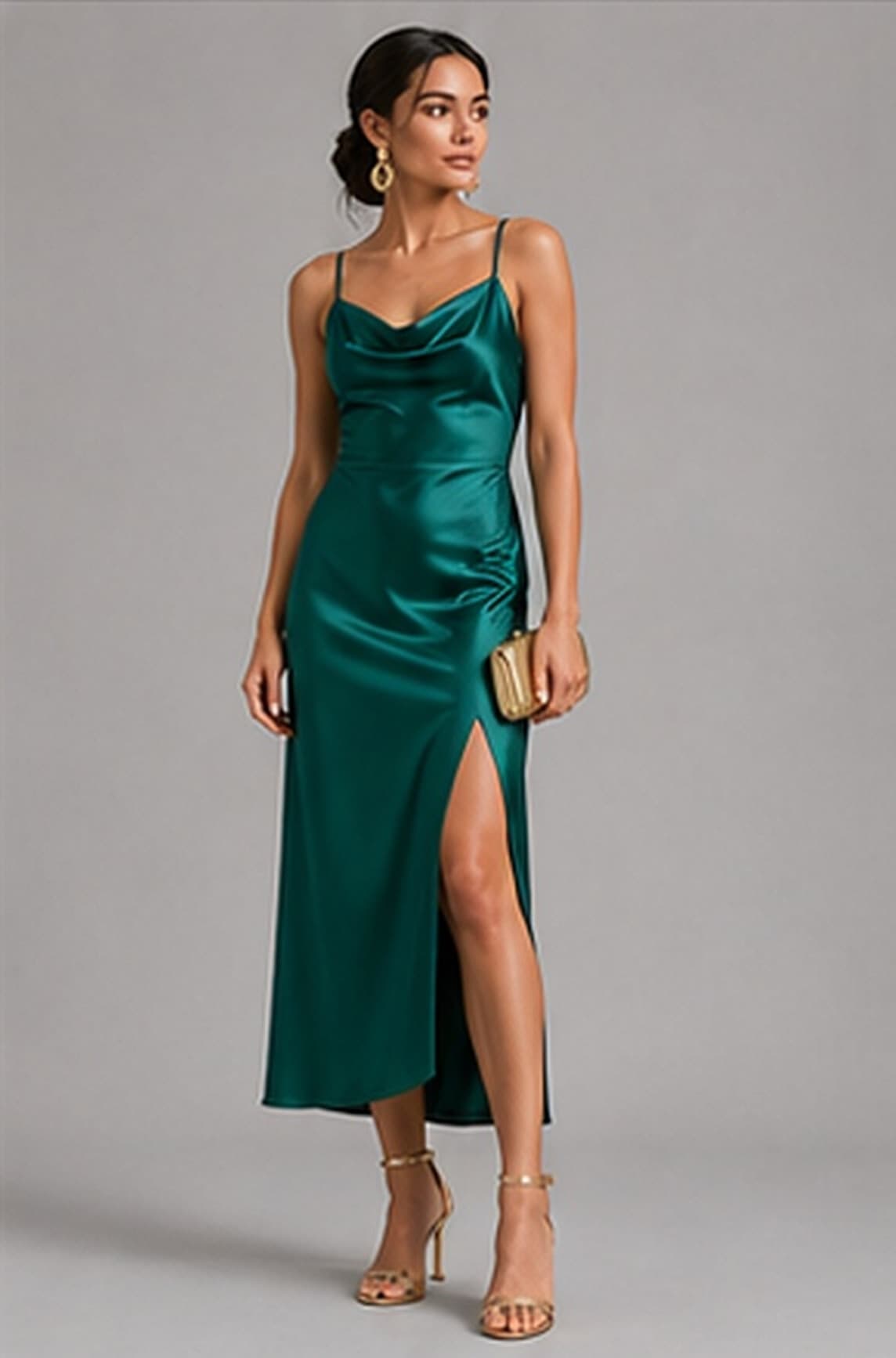
Why it works: The blazer is what turns a slip dress into an outfit rather than underwear — it gives the look a shoulder line and somewhere to put your hands. Take it off after the plates are cleared and the same outfit changes register.
Cold
Why it works: Sequins below the waist and something plain above is the safest way to wear shine in a room full of people you have to see again on Monday.
Warm
Why it works: Shine near the face gets read as intentional; shine on the legs in daylight rarely does. The wide trouser is what keeps a halter from tipping into swimwear.
Year-round
Why it works: A column reads taller and photographs cleaner than volume, and it survives an hour of sitting at a long table. Choose the single piece of jewelry before you leave, not while you’re standing at the door.
Year-round
Why it works: Daytime glam trades sparkle for shine: silk, polished leather and metal do the work while the silhouette stays tailored. This is how the style functions before dark without looking like last night.
Cold
Why it works: Velvet is shine you can wear in January — it holds light instead of bouncing it, so it stays rich under streetlights rather than flaring in every photo.
→ 05 / Outfit examples
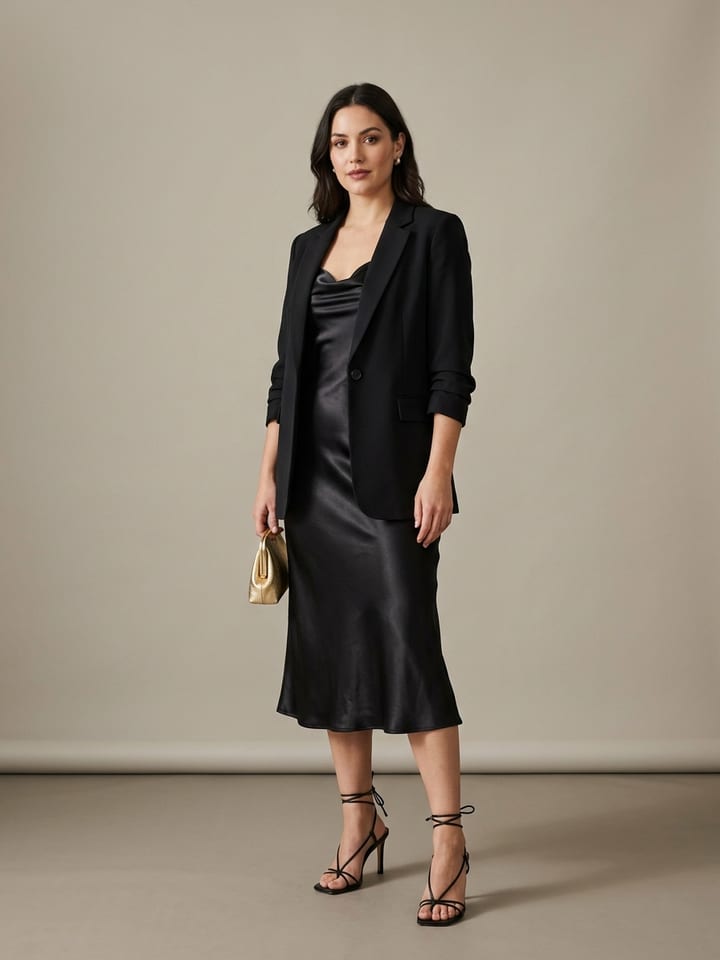
A black satin slip under a tailored blazer.
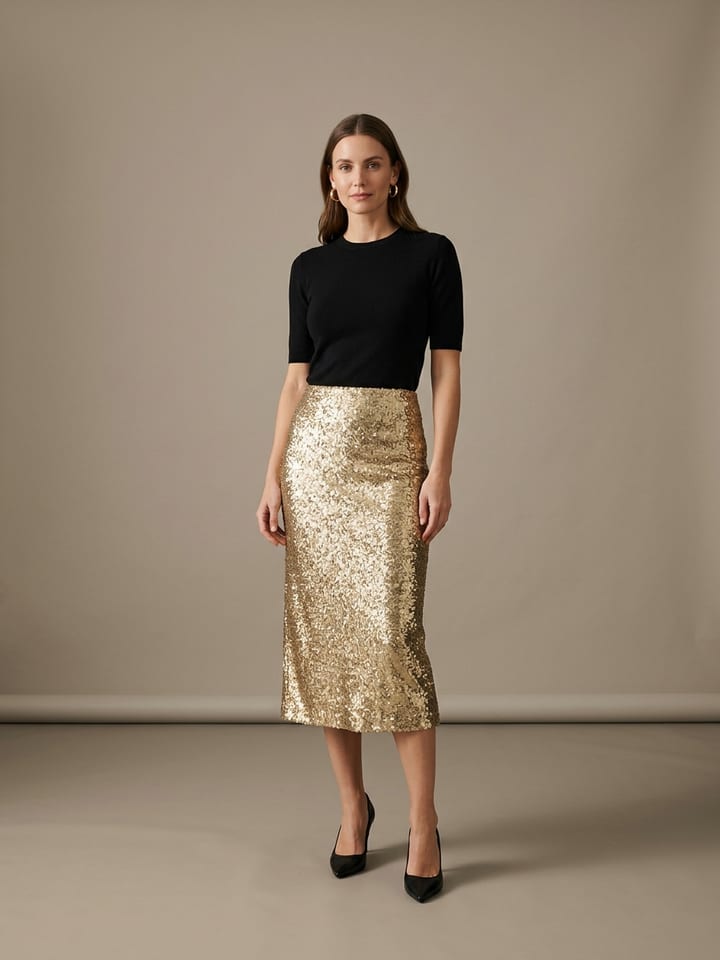
A sequin midi skirt with a plain black knit.
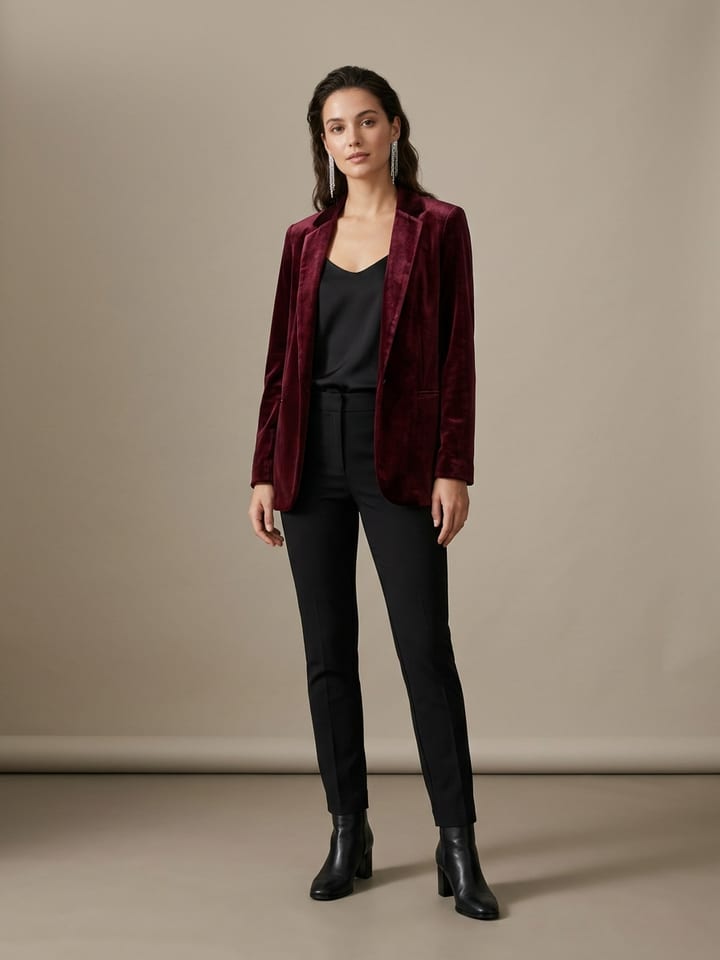
Burgundy velvet over black, with heeled boots.
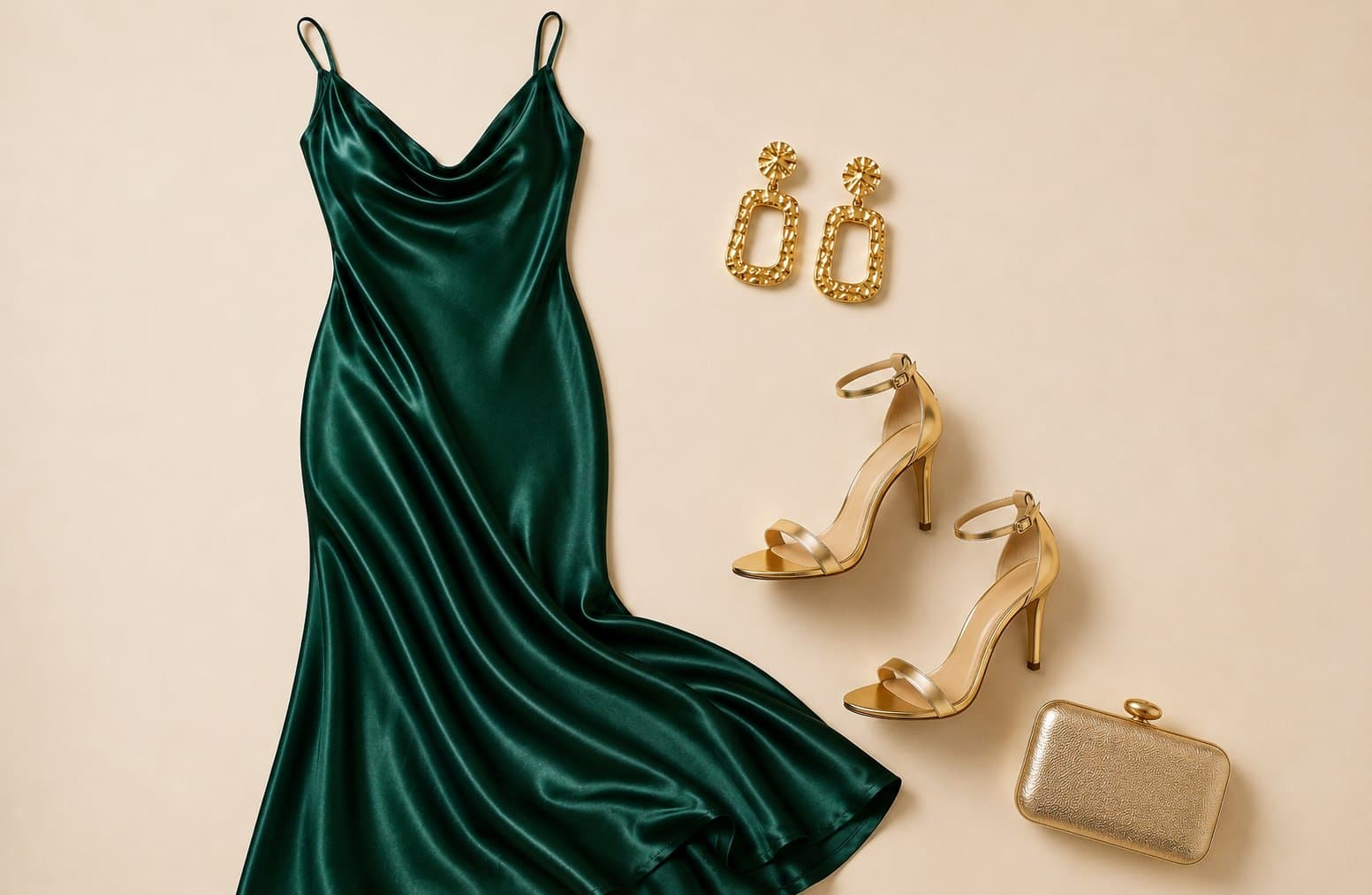
→ 06 / Key pieces · Women
→ 07 / Starter capsule
→ 08 / Palette & fabrics
Muddy mid-tones — sludge brown, dusty khaki, washed-out pastel — go dead under artificial light, which is the only light this style was designed for. Mixing gold and silver hardware in one outfit is the other reliable way to make an expensive look read cheap.
→ 09 / Across the seasons
Trade sequin for satin and heavy velvet for crepe. Lighter fabric, identical silhouette — glam thins out for spring rather than softening.
Metallic on top, matte below. Sandals are fine as long as they have a heel and a strap that stays where you put it.
Velvet and jewel tones arrive and the styling gets easier — a blazer over everything solves nine outfits out of ten.
Party season, so the discipline matters more, not less. One shine piece per outfit, and a coat good enough to be seen in the doorway.
→ 10 / Where it goes wrong
Shine on shine on shine. A sequin top with a metallic skirt and crystal heels cancels itself out — the eye has nowhere to land and the whole outfit flattens.
Instead: One shine piece, then matte everything else. Satin counts as shine, and so does anything beaded.
Buying the dress and stopping there. Glam is the only style where undone hair and bare nails actively work against the clothes.
Instead: Budget the last twenty minutes for hair, a lip and a manicure. It changes the outfit more than another dress would.
Shoes you’ll be carrying by eleven. A heel you can’t walk in becomes the story of the night, and not in a good way.
Instead: Test them on a hard floor for ten minutes at home. A lower block heel in the right shape beats a stiletto you abandon.
Fit left to chance. Shine fabrics report every pull and gap — satin especially shows a bra line, a tight hip and a long hem from across the room.
Instead: Have one dress properly altered instead of owning three that almost fit, and sort the underwear out before the night rather than during it.
→ 11 / How to start this week
→ 12 / Style icons, and what they actually wore
Bob Mackie beaded her into gowns that were closer to engineering than dressmaking — sheer panels, feather trim, and enough weight that she had to be sewn into them. The original argument that evening clothes can be a spectacle rather than a nice dress.
Bodysuits cut for movement with hard tailoring over the top: a sculpted jacket, sheer paneling underneath, one metal tone all the way down. Glam that still has to survive two hours on a stage.
Column and fit-and-flare gowns in strong color, waist always marked, jewelry always kept to one piece. Proof that glam is silhouette discipline as much as sparkle.
→ 13 / This might be you if...
→ 14 / Often confused with
→ 15 / Mixes well with
→ 16 / FAQ
Glam style for women is dressing to be seen: shine, structure, and drama, with hair and jewelry treated as part of the outfit, not extras.
Do pick a hero — satin, sequin, a bodycon or a statement blazer — and finish with heels and bold earrings. Do think in a full look. Do let one surface shine instead of five.
Don’t glam-up a hoodie and call it done. Don’t wear sequins to a 9 a.m. standup unless that is your job. Don’t let messy hair fight a polished dress.
Women can wear Glam style to nights out, parties, openings, and any entrance that is supposed to register. Save it from the grocery run and the hiking trail.
Typical colors are black, gold, silver, and jewel tones, in satin, sequin, velvet, and metallics. Women’s glam palettes can go dark or brilliant, never dusty-casual.
A common Glam mistake for women is competing textures — sequin plus metallic plus velvet plus logo bag — or daytime shine with sport sneakers. Edit the sparkle.
Two minutes of swiping tells you whether Glam is genuinely your Style DNA — or a mood you only visit for other people’s weddings.
Take the style quizYou are cordially invited
Modesona is your personal stylist — free, instant, and built around everything already hanging in your wardrobe.


Free · No card required · iOS & Android