How to Plan a Travel Capsule Wardrobe With an App
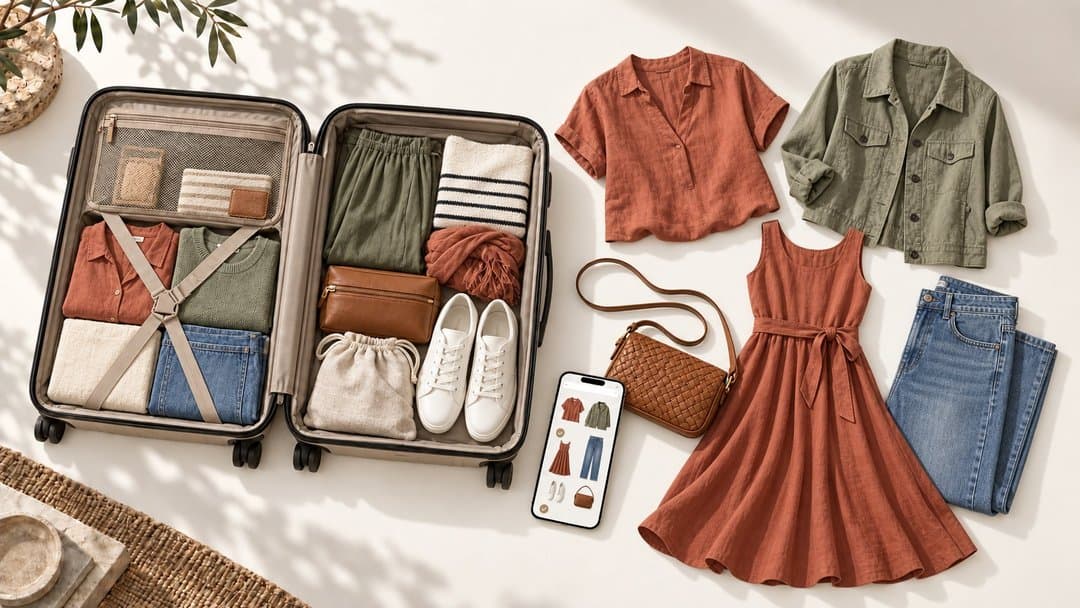
To plan a travel capsule wardrobe with an app, start with your itinerary, choose clothes you can wear in several combinations, and assign complete outfits to each day. Then turn those outfits into a packing checklist, counting each item only once.
A wardrobe app can help you see the pieces together and remember your combinations. The important decisions still come from your trip: what you’ll do, the weather you expect, and how often you’re comfortable rewearing clothes.
Here’s a practical way to plan, with a five-day example you can adapt using clothes you already own.
What is a travel capsule wardrobe?
A travel capsule wardrobe is a small selection of clothing chosen to work together throughout a trip. Pieces appear in multiple outfits, with enough variety to cover your activities and the conditions you expect.
There’s no required number of items. A weekend with one dinner reservation needs a different wardrobe from a week that includes hiking, work meetings, and swimming.
You also don’t need every top to match every bottom. You need enough complete, comfortable outfits for your actual plans.
1. Turn your itinerary into clothing requirements
Before opening your closet, make a short note for each day:
-
What will you be doing?
-
How much walking or sitting is involved?
-
Is there a dress code?
-
Will you have an opportunity to change?
-
Can you wash clothes and let them dry?
Check the destination’s forecast close to departure. Consider temperature changes across the day, rain, and any activities at a different elevation or location.
Translate those details into clothing needs. “Museum, walking tour, casual dinner” might call for one comfortable outfit with an optional evening layer. A formal event may need a separate outfit.
Start with the activities that are hardest to dress for. If a trip requires specific footwear or clothing, account for those pieces first.
2. Create a trip selection in your app
If your wardrobe app supports collections, tags, or packing lists, create a selection named after your trip. Otherwise, use its outfit-saving feature and keep a separate checklist in your notes.
Add only the clothes you’re considering. You can photograph them now or select them from an existing digital wardrobe.
Include shoes and outerwear early. These affect whether an outfit works, and they can take up considerable space in a bag.
For each piece, consider:
| Question | Why it matters |
|---|---|
| Have I worn it comfortably before? | Travel days are a poor time to discover that something rubs or pinches. |
| Does it work with other selected pieces? | Reusable combinations reduce the need for separate outfits. |
| Is it appropriate for the conditions? | A photo won’t tell you whether a fabric is warm enough or breathable. |
| Can I care for it during the trip? | Washing requirements and drying time affect whether rewearing is practical. |
| Does it serve a specific purpose? | This helps distinguish useful extras from vague “just in case” items. |
Use notes for details that aren’t visible in a clothing photo, such as “creases easily” or “comfortable for long walks.”
3. Choose pieces that connect your outfits
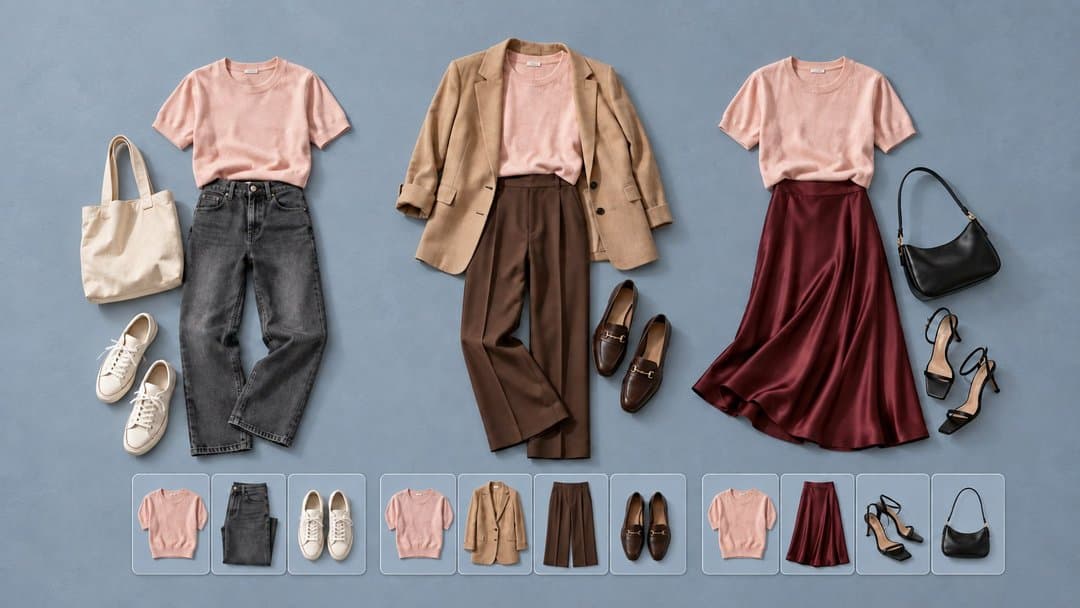
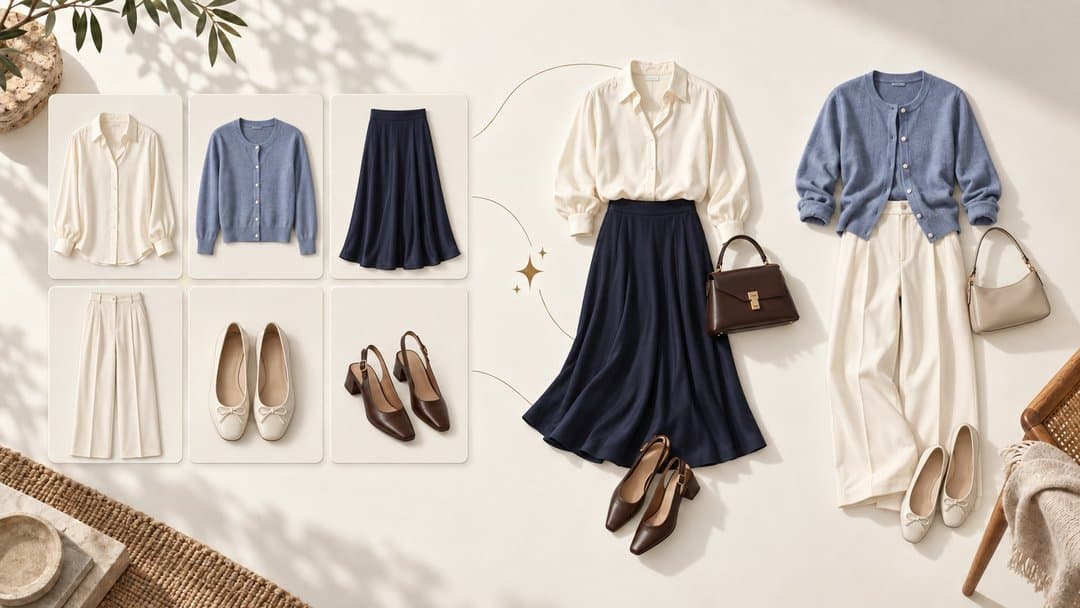
Start with a pair of bottoms and shoes you expect to wear often. Add tops that work with them, then introduce a second bottom and a useful layer.
A shared color palette can make this easier. Navy, cream, and olive might suit one person; black, pink, and gray might suit another. Use colors you already enjoy wearing together.
Test the connections between pieces:
-
Can your cardigan work over more than one top?
-
Can your walking shoes work with both bottoms?
-
Can a daytime outfit also suit a casual dinner?
-
Does a patterned piece coordinate with something already selected?
A piece with one use can still earn its place. A rain shell or formal outfit may be necessary even if it doesn’t contribute to several looks.
4. Plan complete outfits for each day
Arrange or save each outfit in your app, depending on its features. Include footwear and the layer you may need.
Use labels that explain the purpose:
-
Day 1 — flight and arrival.
-
Day 2 — outdoor sightseeing.
-
Day 3 — museum and dinner.
-
Day 4 — walking and shopping.
-
Day 5 — return journey.
If the app doesn’t have a calendar, numbered outfit names work well.
This is also the point to check your rewearing assumptions. A top worn on a hot, active day may need washing before you use it again. Plan according to your comfort and hygiene needs.
Example: a five-day city trip
This example assumes mild weather, casual activities, substantial walking, no formal events, and comfortable rewearing of pants and layers. It includes a small laundry opportunity before the final day if needed.
The core selection contains nine clothing pieces and two pairs of shoes:
| Category | Selected items |
|---|---|
| Four tops | White T-shirt, navy T-shirt, blue button-down, lightweight knit top |
| Two bottoms | Dark relaxed pants, olive pants |
| One warm layer | Gray cardigan |
| One weather layer | Lightweight rain jacket suitable for the forecast |
| One evening option | Casual dress |
| Two pairs of shoes | Walking sneakers, comfortable flats |
Underwear, socks, sleepwear, and personal essentials are additional. Substitute equivalent pieces from your closet; the dress could become another outfit you prefer.
Here’s how the selection could work across five days:
| Day | Plans | Outfit |
|---|---|---|
| 1 | Travel and a short evening walk | White T-shirt + dark pants + cardigan + sneakers |
| 2 | Outdoor sightseeing | Navy T-shirt + olive pants + sneakers; rain jacket as needed |
| 3 | Museum and casual dinner | Dress + cardigan + flats, provided the flats suit the walking involved |
| 4 | Neighborhood exploring | Blue button-down + dark pants + sneakers |
| 5 | Return travel | Lightweight knit top + olive pants + cardigan + sneakers |
The button-down could also be worn open over a clean T-shirt. The dress can work with sneakers if you like that combination. These alternatives offer flexibility without adding pieces.
If you don’t expect to wear the flats, remove them. If the dress needs a warmer layer than the cardigan provides, change the outfit before packing.
5. Check the plan for weather, laundry, and changes
Once every day has an outfit, review the trip as a whole.
Weather
Can you adapt an existing outfit if the day is warmer or cooler than expected? Try removing or adding your chosen layers.
If the forecast calls for conditions your selection doesn’t cover, replace or add the appropriate item. Packing fewer pieces is useful only when those pieces meet your needs.
Laundry
If you plan to wash something, decide when and how. Allow enough drying time before its next use, and check the garment’s care instructions.
Without dependable laundry access, bring enough fresh essentials and tops for your needs.
Changes of plan
Identify an alternative outfit using the same selection. For example, your button-down and dark pants might cover an unexpected restaurant visit.
Any extra item should address a plausible need. “A spare top because laundry may be unavailable” is a clear reason to pack one.
6. Try on the outfits before you pack
Digital planning helps you compare combinations, but it can’t confirm how they feel on your body.
Try on the outfits with their intended shoes and layers. Check that:
-
You can sit and walk comfortably.
-
Layers fit over one another.
-
Pant hems work with the chosen shoes.
-
Fabrics provide the coverage you want.
-
Shoes are suitable for the planned walking.
-
You have any necessary undergarments.
Photograph the final versions and save them with the trip. Remove rejected combinations so you don’t have to make the same decision again while traveling.
If an app generates AI outfit ideas, review them against your real garments and itinerary before including them.
7. Turn the outfits into a packing checklist
Count each selected piece once, even if it appears in several outfits. Some apps may generate a list; otherwise, review your saved looks and create one manually.
Separate what you’ll wear in transit from what goes inside the bag.
For the five-day example, wearing the white T-shirt, dark pants, cardigan, and sneakers on departure leaves these core items to pack:
-
Navy T-shirt.
-
Blue button-down.
-
Lightweight knit top.
-
Olive pants.
-
Casual dress.
-
Rain jacket.
-
Flats.
Then add your personal essentials:
-
Underwear and socks for the trip and laundry plan.
-
Sleepwear.
-
Any required bras, undershirts, or other base layers.
-
Activity-specific clothing, if needed.
-
Toiletries, medication, chargers, and travel documents.
-
Necessary accessories, such as a hat or sunglasses.
Lay everything out and check it against the list. Once packed, confirm that the bag meets your airline’s current size and weight limits if you’re flying.
Common travel capsule wardrobe mistakes
Planning outfits without shoes.
Include footwear from the beginning so you can check comfort, outfit compatibility, and luggage space.
Packing for an imagined version of the trip.
Use your actual itinerary. If most days involve walking, prioritize outfits you want to walk in.
Assuming you’ll rewear everything.
Heat, activity, spills, and personal preference affect what feels wearable again. Make a realistic laundry plan.
Adding options without reviewing the whole bag.
Before adding a piece, identify when you’ll wear it and whether something already selected can do the job.
Choosing unfamiliar clothes for important days.
Use outfits you’ve tried on and shoes you already know are comfortable.
Frequently asked questions
How many clothes do I need for a travel capsule wardrobe?
The number depends on trip length, activities, weather, laundry access, and your rewearing preferences. Plan complete outfits first, then count the unique pieces. Add fresh essentials and any necessary specialist clothing.
Can I plan a travel capsule wardrobe without buying anything?
Yes, if your existing clothes cover the trip’s requirements. Begin with comfortable outfits you already wear, then look for pieces that can be reused across days.
Do I need an app with a dedicated packing feature?
No. Saving outfit combinations in an app and keeping a separate checklist can be enough. A dedicated packing feature may make the process more convenient, but the planning method is the same.
Can this work for a carry-on-only trip?
It can help you reduce duplicate clothing and unnecessary alternatives. Whether everything fits depends on the garments, other essentials, bag dimensions, and the airline’s baggage allowance.
Should I plan a different outfit for every day?
You can repeat complete outfits or reuse individual pieces. Plan enough clean, comfortable options for your schedule, with flexibility for weather and laundry.
Keep your outfits handy while you travel
Save your final looks somewhere you can access at your destination. If you may be offline, check whether they remain available or keep screenshots on your phone.
After the trip, note what you wore, what stayed in the bag, and what you wished you had brought. Keep that information with your trip selection: it gives you a useful starting point the next time you pack.