12 Types of Fashion Styles With Outfit Examples
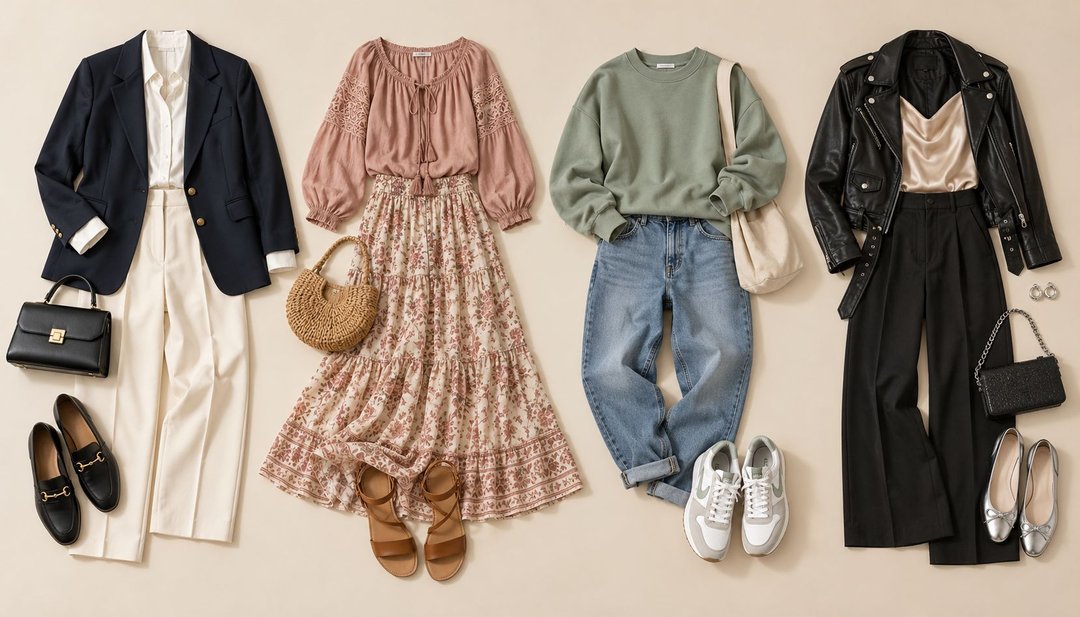
Common types of fashion styles include casual, smart casual, classic, minimalist, streetwear, sporty, boho, romantic, preppy, retro, edgy, and glam. Each describes a recognizable combination of shapes, fabrics, details, and styling choices.
There is no single official list, and the categories overlap. A blazer can appear in a classic outfit, a streetwear look, or a minimalist combination. What changes is how you wear it.
This guide compares 12 useful style references, with outfit examples drawn from women’s clothing. Use them to understand the looks you see, describe what interests you, and experiment with clothes you already own.
The different fashion styles at a glance
Look at the overall combination rather than treating one item as proof of a style.
| Fashion style | Details to recognize | An outfit to picture |
|---|---|---|
| Casual | Relaxed shapes and practical everyday pieces | Jeans, a T-shirt, a cardigan, and sneakers |
| Smart casual | Easy pieces combined with a more polished finish | Dark jeans, a knit top, a blazer, and loafers |
| Classic | Familiar tailoring and traditional wardrobe staples | A button-down shirt, straight-leg pants, and a trench coat |
| Minimalist | Simple shapes, restrained detail, and visual continuity | A plain top, wide-leg pants, and understated flats |
| Streetwear | Expressive proportions, graphics, sneakers, and casual layers | Baggy jeans, a graphic tee, a bomber jacket, and sneakers |
| Sporty | Athletic references and movement-friendly clothing | Track pants, a tank, a zip-up layer, and athletic shoes |
| Boho | Flowing shapes, textured fabrics, and decorative details | A loose blouse, flared jeans, and ankle boots |
| Romantic | Soft draping, delicate textures, and ornamental details | A lace-trimmed top, a fluid skirt, and ballet flats |
| Preppy | Collegiate and sporting references | A collared shirt, a sweater vest, straight pants, and loafers |
| Retro | Recognizable references to clothing from earlier decades | Flared jeans, a patterned shirt, and platform shoes |
| Edgy | Hardware, distressed textures, and strong contrasts | A moto jacket, a plain tee, dark jeans, and boots |
| Glam | Shine, rich textures, or dramatic shapes | A satin top, tailored pants, and statement earrings |
These examples are starting points. You can adapt the colors, coverage, fabrics, and shoes to your preferences, climate, and daily activities.
1. Casual style
Casual style centers on clothes that work comfortably for everyday life. Denim, T-shirts, sweaters, relaxed pants, and easy layers are common ingredients.
Its flexibility matters more than any particular item. Casual dressing can be colorful or neutral, fitted or roomy, simple or patterned.
Try this outfit: Straight-leg jeans, a striped T-shirt, an open cardigan, and comfortable sneakers.
A small variation: Replace the jeans with lightweight cotton pants for warmer weather. The outfit keeps its casual character because the shapes and fabrics remain easygoing.
Casual does not automatically mean sporty. Jeans and a soft sweater can feel relaxed without using athletic clothing.
Explore more combinations in the casual style guide.
2. Smart casual style
Smart casual combines everyday ease with elements that make an outfit feel more polished. Tailored layers, defined collars, structured bags, or sleeker shoes can create that shift.
The term also appears in dress codes, where expectations depend on the setting. An outfit suitable for an informal dinner may not meet a particular workplace’s requirements.
Try this outfit: Dark jeans, a fine-knit top, a relaxed blazer, and loafers.
A small variation: Swap the jeans for tailored pants when the occasion calls for a dressier combination.
You do not need to make every piece formal. The relationship between the relaxed and polished elements is what makes this category useful.
See more examples in the smart casual style guide.
3. Classic style
Classic style draws on familiar wardrobe pieces such as button-down shirts, tailored pants, trench coats, simple knits, and loafers.
The recognizable feature is often traditional construction: a defined collar, a conventional lapel, or a straightforward trouser shape. Classic outfits can include color and pattern; they do not have to be entirely neutral.
Try this outfit: A blue button-down shirt, navy straight-leg pants, loafers, and a trench coat.
A small variation: Add a striped sweater or a patterned scarf for detail while keeping the same basic structure.
Classic describes an appearance. It does not require expensive clothing or guarantee that an item will last.
Explore the pieces and combinations in the classic style guide.
4. Minimalist style
Minimalist style reduces visual complexity so that shape, proportion, and texture become more noticeable.
Plain surfaces, limited ornament, and a coherent color palette often contribute to the effect. Neutrals are common, but a simple outfit in one strong color can also have a minimalist feel.
Try this outfit: A plain knit top, wide-leg pants in a similar shade, and understated flats.
A small variation: Change the texture of one piece—such as pairing a smooth top with textured pants—without adding more decoration.
A minimalist-looking outfit is different from owning very few clothes. One describes an aesthetic; the other describes the size or organization of a wardrobe.
See more examples in the minimalist style guide.
5. Streetwear style
Streetwear often uses casual clothing as a platform for expression through proportions, graphics, footwear, and layering.
Roomy denim, cargo pants, hoodies, graphic tees, and bomber jackets are common references. Sneakers can be a focal point, but a recognizable brand or expensive release is not necessary.
Try this outfit: Baggy jeans, a graphic T-shirt, a bomber jacket, and sneakers you enjoy wearing.
A small variation: Try a longer or shorter outer layer and notice how it changes the silhouette.
The difference from a basic casual outfit often lies in the emphasis: the shape, graphic, or footwear becomes a deliberate visual feature.
Explore the streetwear style guide for more outfit references.
6. Sporty style
Sporty style brings athletic clothing and sports-inspired details into everyday outfits. Think track pants, sweatshirts, windbreakers, zip-up layers, and sneakers.
Athleisure overlaps with this category, particularly when exercise-oriented pieces are worn for daily activities. Sporty outfits can also use references such as jerseys or track jackets without looking like workout clothes.
Try this outfit: Track pants, a cotton tank, a lightweight zip-up jacket, and supportive sneakers.
A small variation: Pair the track pants with a simple sweater for a softer everyday combination.
Clothes that look athletic are not necessarily suitable for a particular sport. Choose actual workout clothing and shoes for the activity you plan to do.
Browse the sporty style guide.
7. Boho style
Boho, short for bohemian, often combines flowing shapes with tactile or decorative details. Crochet, embroidery, fringe, woven accessories, and mixed prints are common references.
An outfit can suggest boho through one textured piece rather than a complete collection of accessories.
Try this outfit: An embroidered blouse, flared jeans, and ankle boots.
A small variation: Wear the blouse with straight-leg jeans and simple sandals for a quieter interpretation.
Compared with romantic style, boho often puts more emphasis on relaxed layering, earthy textures, and a mix of decorative elements. The two can still overlap.
Explore more examples in the boho style guide.
8. Romantic style
Romantic style emphasizes softness through draping, delicate textures, rounded details, or decorative finishes.
Lace, fine florals, gathered sleeves, bows, and fluid skirts can contribute to the look. Pastels are one option, but darker colors can create a romantic outfit too.
Try this outfit: A lace-trimmed top, a softly draped midi skirt, and ballet flats.
A small variation: Wear the same top with jeans if you want a smaller romantic accent.
Neither skirts nor dresses are required. A blouse with subtle gathers can bring the same softness to a pants-based outfit.
See more combinations in the romantic style guide.
9. Preppy style
Preppy style uses recognizable collegiate and sporting references: collared shirts, polos, sweater vests, cable knits, pleats, stripes, and loafers.
Its layered combinations often make it easy to identify. A collar showing above a crewneck sweater can change the character of an otherwise simple outfit.
Try this outfit: A collared shirt under a sweater vest, straight-leg pants, and loafers.
A small variation: Use a colorful knit or striped polo to make the outfit more playful.
Classic and preppy styles share some pieces, but preppy outfits tend to make the school, club, or sporting references more visible.
Explore the preppy style guide.
10. Retro style
Retro style deliberately references clothing associated with earlier decades. The details depend on the period: a particular collar, denim shape, print, shoe, or accessory can establish the reference.
Retro and vintage are related terms, but they are not interchangeable. A newly made garment can look retro; vintage generally describes an older garment itself.
Try this outfit: Flared jeans, a patterned collared shirt, and platform shoes for a 1970s-inspired combination.
A small variation: Keep the flared jeans and wear a plain modern top for a lighter reference.
You can borrow one detail from an era without recreating a complete historical outfit.
Find more references in the retro style guide.
11. Edgy style
Edgy style often creates contrast through hardware, distressed fabrics, substantial footwear, or sharp silhouettes.
Moto jackets, boots, dark denim, and metal details are familiar ingredients. Black is common, but color can work just as well alongside those textures and shapes.
Try this outfit: A moto jacket, a plain T-shirt, dark jeans, and boots.
A small variation: Wear the jacket over a soft dress to contrast structured and fluid elements.
You do not need distressed clothing, real leather, or an expensive statement piece. The visual relationship between the items matters more than checking off a shopping list.
Explore the edgy style guide.
12. Glam style
Glam style emphasizes visual impact through shine, rich texture, dramatic shapes, or noticeable accessories.
Satin, sequins, metallic finishes, and velvet are useful references, but an outfit does not need all of them at once.
Try this outfit: A satin top, tailored pants, statement earrings, and comfortable dressy shoes.
A small variation: Wear the satin top with familiar jeans for a more relaxed combination.
Heels are optional. Metallic flats or embellished shoes can contribute to the same effect, while a dramatic sleeve or bold earring can provide interest without sparkle.
See more possibilities in the glam style guide.
Fashion styles that are easy to confuse
Classic vs. minimalist
Both can look simple and use neutral colors. The distinction is the emphasis.
Classic often draws on recognizable traditional pieces, such as a trench coat or a button-down shirt. Minimalist focuses on reducing visual detail, sometimes using less conventional shapes.
A trench, striped shirt, and loafers might lean classic. A plain top, sculptural pants, and discreet shoes might lean minimalist. An outfit can be both.
Casual vs. smart casual
Casual emphasizes everyday ease. Smart casual adds a more polished finish through some part of the combination.
Jeans, a tee, and sneakers are a straightforward casual example. Add a blazer and change to loafers, and the outfit may move toward smart casual.
Whether it meets a dress code still depends on the venue or workplace.
Boho vs. romantic
Both may use flowing fabrics, florals, or decorative details.
Boho often emphasizes textured layers, embroidery, crochet, or fringe. Romantic often emphasizes delicacy through lace, gathers, bows, or soft draping.
An embroidered floral blouse could sit comfortably in either category, depending on the rest of the outfit.
Where do aesthetics like old money, coquette, and Y2K fit?
Broad style categories help organize ideas. More specific aesthetics provide a narrower set of references, although their boundaries remain flexible.
For example:
-
Old money style overlaps with classic and preppy dressing through understated tailoring and sporting references.
-
Coquette style emphasizes details such as ribbons, lace, and bows within a romantic direction.
-
Y2K style draws on fashion associated with the turn of the millennium.
-
Gorpcore brings outdoor clothing and technical details into everyday combinations.
These labels are references, not a fixed classification system. Their meaning can vary across communities and change over time.
The Modesona style guides let you explore these connections in more detail.
One outfit base, four style directions
A white T-shirt and straight-leg jeans can support several looks. Keep those two pieces and change the elements around them.
| Direction | Add or change | What shifts |
|---|---|---|
| Classic | A trench coat and loafers | Traditional outerwear and footwear create a classic reference |
| Sporty | A track jacket and athletic sneakers | Sports-inspired details become more visible |
| Edgy | A moto jacket and substantial boots | Hardware and stronger textures change the mood |
| Glam | Statement earrings and metallic flats | Shine and accessories add visual impact |
These are suggested combinations, not requirements. Use the closest alternatives you own.
If you want help turning individual pieces into complete combinations, follow our guide to creating outfits from clothes you already own.
How to use this guide without replacing your wardrobe
Choose two styles that interest you and identify one visible detail from each.
For example:
-
Preppy: a collar layered under a sweater.
-
Romantic: a softly draped or lace-trimmed top.
Then look for an existing piece that lets you try one of those details. You might already own a shirt and sweater that work together, even if you have never called the combination preppy.
Wear the outfit for a normal activity. Notice whether you enjoy the detail and whether the combination works comfortably for your day.
For a broader process of identifying preferences, read how to find your personal style.
You can also explore Modesona’s Style DNA, which uses visual choices and head-to-head comparisons to build a style profile you can refine. Treat the result as a starting point for exploration.
Frequently asked questions
How many types of fashion styles are there?
There is no universally accepted number. This guide covers 12 broad references, but styles overlap and can be divided into more specific aesthetics. Different guides organize them differently.
Can an outfit belong to more than one fashion style?
Yes. A blazer, graphic tee, relaxed jeans, and sneakers might combine classic tailoring with streetwear elements. Labels help describe the outfit; they do not need to place it in one exclusive category.
What is the difference between a fashion style and a dress code?
A fashion style describes an aesthetic. A dress code sets expectations for a setting or event. Some terms, such as smart casual, can be used in both ways.
You can often express different styles within a dress code, provided the outfit meets the actual requirements.
Is minimalist style the same as a capsule wardrobe?
No. Minimalist style describes a visual approach. A capsule wardrobe is a selected group of clothes intended to work together. A capsule can be colorful, romantic, sporty, or influenced by other styles.
Do I need specific brands to try a fashion style?
No. Start with shapes, textures, colors, and combinations. Similar visual ideas can come from existing clothes, secondhand pieces, or different price points.
Can I wear different styles on different days?
Yes. You might prefer a sporty outfit for a travel day and a romantic combination for dinner. Changing the style does not make either choice less personal.
Start with a detail you recognize
You do not need to select one permanent label from a list of fashion styles.
Use the categories to notice what changes an outfit: a collar, a flowing fabric, a graphic, a tailored layer, or a different shoe. Then try a detail that interests you with clothes you already wear.
Explore the Modesona Style Library for more references, and use the individual guides to take your next outfit idea further.