How to Find Your Style: 7 Practical Steps
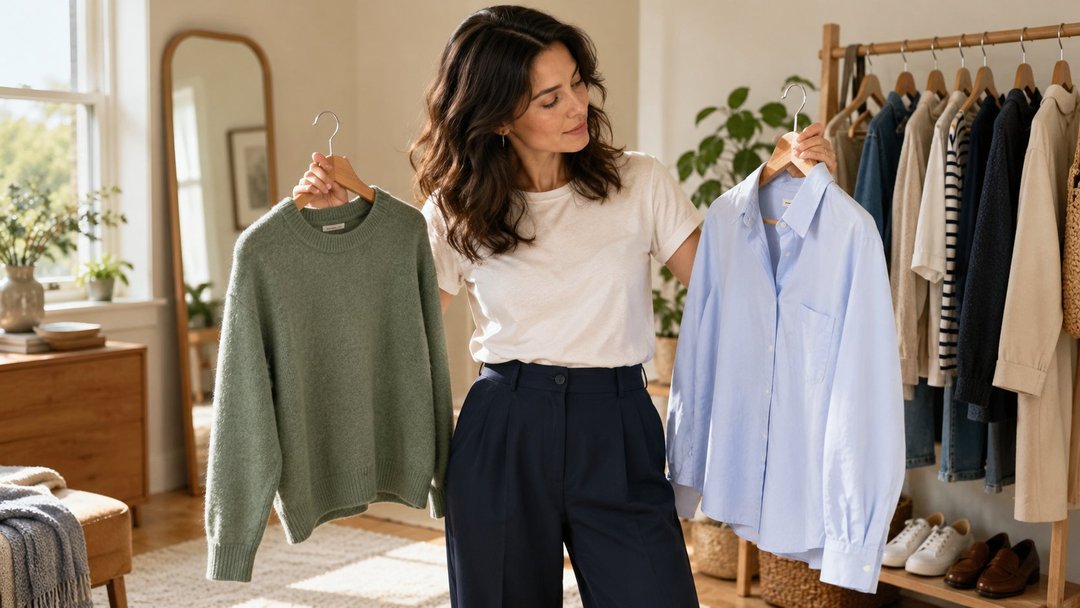
To find your style, compare outfits you enjoy wearing, identify the details they share, and test those preferences in your everyday life. Use what you learn to describe your style and guide future clothing choices.
You can begin with clothes you already own. You don’t need to replace your wardrobe, choose one fashion aesthetic, or decide what you’ll wear forever.
This guide will help you build a simple personal style profile: the shapes, colors, details, and practical requirements you want your clothes to reflect.
What is personal style?
Personal style is the way you choose and combine clothing, shoes, and accessories to suit your preferences and life.
It can show up in small, repeated choices: loose pants, bright shoes, crisp collars, soft fabrics, unusual jewelry, or outfits that let you move comfortably.
A fashion aesthetic gives you a recognizable reference, such as minimalist, preppy, or romantic. Your personal style can borrow from several aesthetics and change across situations.
You might prefer tailored clothes at work and relaxed pieces on weekends, with the same love of color running through both.
1. Separate what you like from what you wear out of habit
Choose three outfits you’ve recently enjoyed wearing. Use photos if you have them, or lay out the pieces.
For each outfit, finish this sentence:
“I like wearing this because…”
Be specific. “It looks good” is difficult to use later. These answers give you something to work with:
-
“The pants have room to move, but the shirt makes the outfit feel put together.”
-
“The bright sweater makes familiar jeans feel more like me.”
-
“I like the soft fabric and the rounded shapes.”
-
“The boots give a simple outfit a stronger feel.”
Then choose one outfit you wear frequently but don’t particularly enjoy.
Ask why it keeps returning. Is it required for work? Easy to wash? The only clean option? Comfortable enough for your commute?
Frequent wear can reveal a preference, but it can also reflect convenience or limited choices. Note the difference before treating everything in your closet as evidence of your ideal style.
If you don’t like anything in your closet
Start with one acceptable detail.
Perhaps you like the neckline of a shirt, the movement of a skirt, or the comfort of your sneakers. Write that down. You can build from a few useful observations without loving an entire outfit yet.
2. Compare two options and name the difference
A broad question like “What’s my style?” can feel impossible to answer. A smaller comparison gives you something concrete to judge.
Keep most of an outfit the same and change one element.
| Compare | What to notice |
|---|---|
| A fitted top and a relaxed top with the same pants | Which amount of room do you prefer? |
| A plain shirt and a patterned shirt with the same jeans | Do you enjoy a quieter look or more visual detail? |
| Sneakers and loafers with the same outfit | Which feels right for the occasion and your walking needs? |
| A soft cardigan and a structured jacket | Do you prefer drape, sharper lines, or different options for different days? |
| A neutral top and a colorful top | Which version would you want to wear again? |
These are comparisons, not tests with correct answers.
Try the clothes on when possible. Sit, walk, and move your arms. You may like the appearance of a structured jacket but find that a softer one suits your day better.
Record two things:
-
What I prefer visually.
-
What I prefer wearing.
When those answers differ, look for an adjustment. You might like a tailored appearance and need a softer fabric or roomier cut.
3. Use inspiration to identify details you want to try
Save a small group of outfit images that genuinely interest you. Six to ten is a manageable starting point.
For each image, identify one detail you would like to explore:
-
A color combination.
-
A long or cropped outer layer.
-
A relaxed or structured shape.
-
A mix of textures.
-
A particular shoe.
-
A way of wearing a familiar shirt.
Then ask: “Would I like this detail in my own day?”
You might admire a dramatic coat in a photograph but spend most of your time in warm weather. The useful idea could be its color or clean lines, translated into a lighter piece.
Likewise, an outfit with heels might appeal because of its dark colors and straight-leg pants. You can test those elements with shoes you already find comfortable.
If you need vocabulary for your references, explore the Modesona style library. Use style names to describe what interests you without making them permanent rules.
4. Write a personal style description you can actually use
Turn your observations into a short description.
You can start with three words, a sentence, or a few preferences. The number matters less than whether the description helps you choose between clothes.
Connect each word to something visible or practical:
| Style word | What it might mean in your wardrobe |
|---|---|
| Relaxed | Roomy pants, unstructured layers, comfortable fabrics |
| Polished | Clean lines, a defined collar, clothes you can keep looking neat |
| Playful | Color, prints, unusual accessories, unexpected combinations |
| Romantic | Soft draping, delicate details, flowing shapes |
| Sporty | Athletic references, sneakers, practical layers |
| Bold | Strong contrasts, larger shapes, noticeable details |
Your definitions may be different. “Bold” could mean a bright sweater for one person and an all-black outfit with an oversized silhouette for another.
Here are three illustrative profiles:
-
Relaxed, polished, colorful: comfortable shapes, a neat finishing detail, and a color the wearer enjoys.
-
Simple, textured, practical: straightforward combinations with tactile fabrics and shoes suited to the day.
-
Soft, expressive, adaptable: flowing elements, personal details, and layers that work across settings.
Make room for more than one mood
If you love both minimalist and expressive outfits, describe when each feels useful.
For example:
“I like simple shapes for busy workdays and more color on weekends. Comfortable shoes matter in both.”
That is already a useful personal style description.
5. Test your style in a real week
Choose two or three upcoming situations: a workday, an errand day, and a meal with friends, for example.
Use your style description to prepare an outfit for each. Start with familiar clothes and introduce one change you want to test.
You’re looking for evidence that the preference works when worn.
Example: “relaxed, polished, colorful”
This is an illustrative exercise, not a fixed wardrobe formula.
| Situation | Possible outfit | What to test |
|---|---|---|
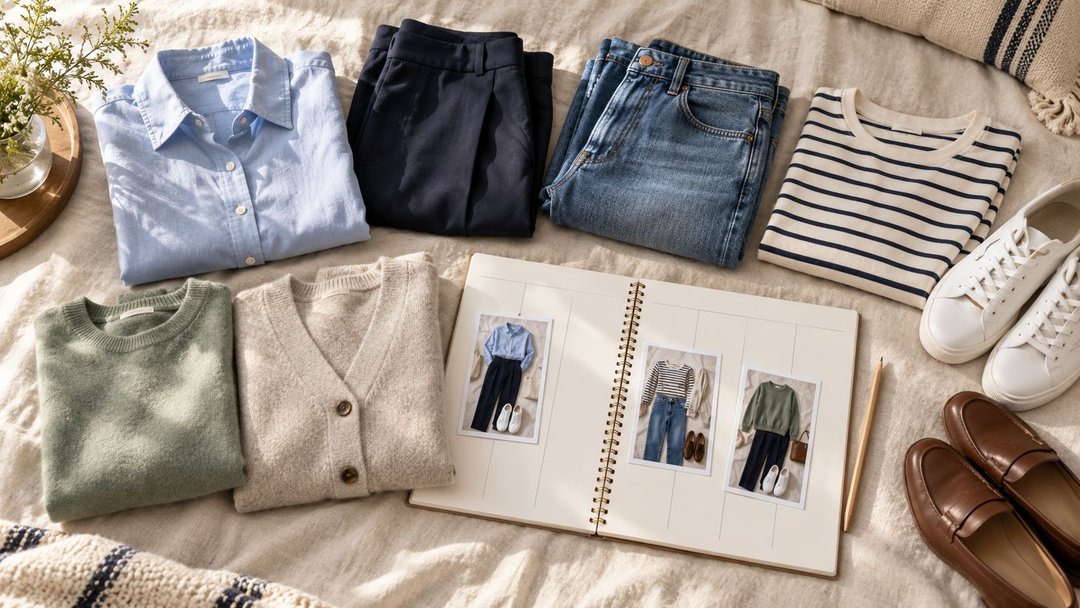
| Casual office, if the dress code allows | Relaxed navy pants, a blue shirt, comfortable loafers | Does the outfit feel neat without restricting movement? |
| Errands and walking | Favorite jeans, a green top, sneakers | Does the color make a familiar outfit more enjoyable? |
| Informal dinner | The same navy pants, a soft knit top, a colorful scarf | Does the scarf feel personal and easy to wear? |
If the loafers hurt, that doesn’t disprove the style direction. Try comfortable flats or another suitable shoe.
If the scarf feels like something you keep adjusting, test color in the top instead.
After wearing each outfit, make three quick notes:
-
Keep: what you enjoyed.
-
Change: what bothered you.
-
Try next: one adjustment.
If you need help with the mechanics of building a complete outfit, our guide to creating outfits from clothes you already own covers that process in more detail.
6. Use a style quiz as a starting point
A style quiz can give you vocabulary and references to explore. Evaluate the result against your own reactions and the clothes you enjoy wearing.
Ask:
-
Which suggested details appeal to me?
-
Which don’t fit my taste?
-
What would work for my activities and climate?
-
Can I test one idea with something I already own?
A result such as “classic” doesn’t mean you must wear loafers, neutral colors, or tailored pants. You can decide which parts of that reference are useful.
Modesona’s Style DNA uses visual choices and head-to-head comparisons to build a style profile you can refine over time. Its style library provides references to help you explore the results. You can review these tools on the Modesona features page.
Use the profile as another source of ideas. Your experience of wearing an outfit remains an important part of the decision.
What if a quiz result feels wrong?
Identify the mismatch.
Perhaps you selected outfits for their colors, while the overall aesthetic doesn’t appeal to you. Or you liked the images but wouldn’t wear those clothes.
Keep the useful detail and leave the label open. You can refine your preferences as you try more combinations.
7. Turn your style profile into a shopping filter
Once you have a direction, use it to evaluate a possible purchase.
Before buying, ask:
-
What do I like about this specific item?
-
When would I wear it?
-
Which clothes and shoes would I wear with it?
-
Does it meet my comfort and care needs?
-
Does it add something I want or replace something that no longer works?
Imagine your style description is “relaxed, polished, colorful” and you’re considering a bright blazer.
You might like the color but find the shoulders uncomfortable. That tells you to explore a different cut or another type of colorful layer. You don’t need to abandon the preference or force the purchase.
An occasional statement piece can still make sense. It doesn’t have to work with everything, but you should understand its role.
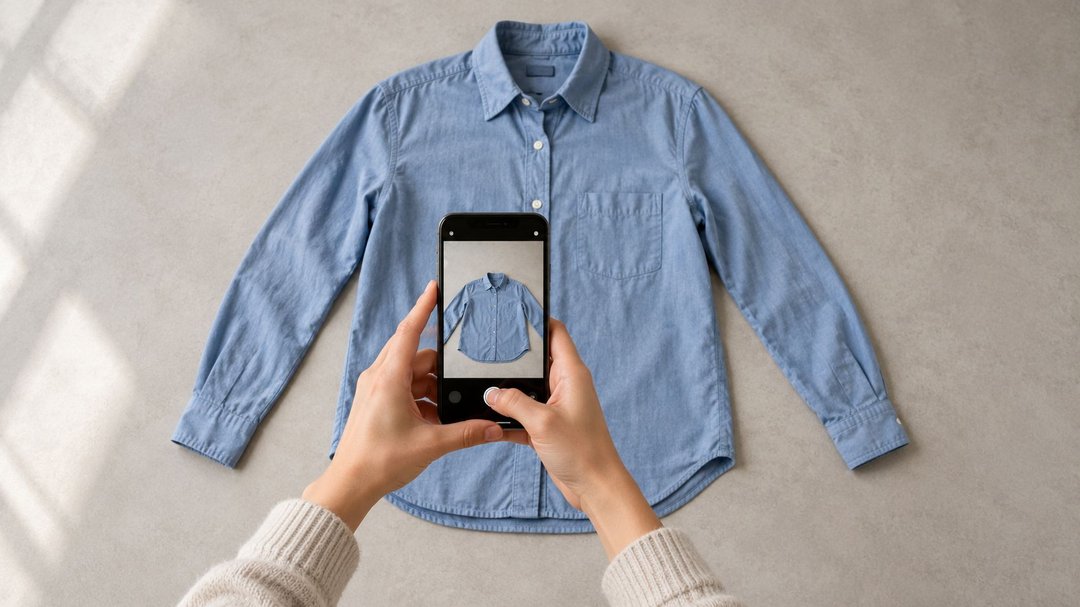
Modesona’s Closet gap analysis suggests missing pieces in the context of your wardrobe. Try before you buy offers buy-or-skip guidance and pairing ideas for a product you photograph or share. These can support your comparison; they cannot confirm how a garment feels when you wear it.
Your personal style worksheet
Copy these prompts into your notes and fill them in after a few outfit experiments.
| Prompt | Your answer |
|---|---|
| Three outfits I enjoy wearing | |
| Details those outfits share | |
| One thing I wear from convenience rather than preference | |
| Colors, shapes, or textures I want to explore | |
| Practical needs my clothes must meet | |
| Words or a sentence describing my style | |
| One outfit experiment for this week | |
| What I want to repeat after trying it | |
| A specific gap, if I found one |
Here is a short fictional example:
My preferences: relaxed pants, clear colors, and simple layers.
My practical needs: walking to work, sitting comfortably, and easy care.
My style description: relaxed and colorful, with a neat finishing detail.
My next experiment: my green knit top with navy pants and comfortable shoes.
My shopping question: do I need another top, or would repairing my everyday shoes help more?
The result is a set of choices you can use the next time you get dressed.
How to keep track as your style develops
Save photos of outfits you want to repeat, including their shoes and layers. Add a note about how they felt after wearing them.
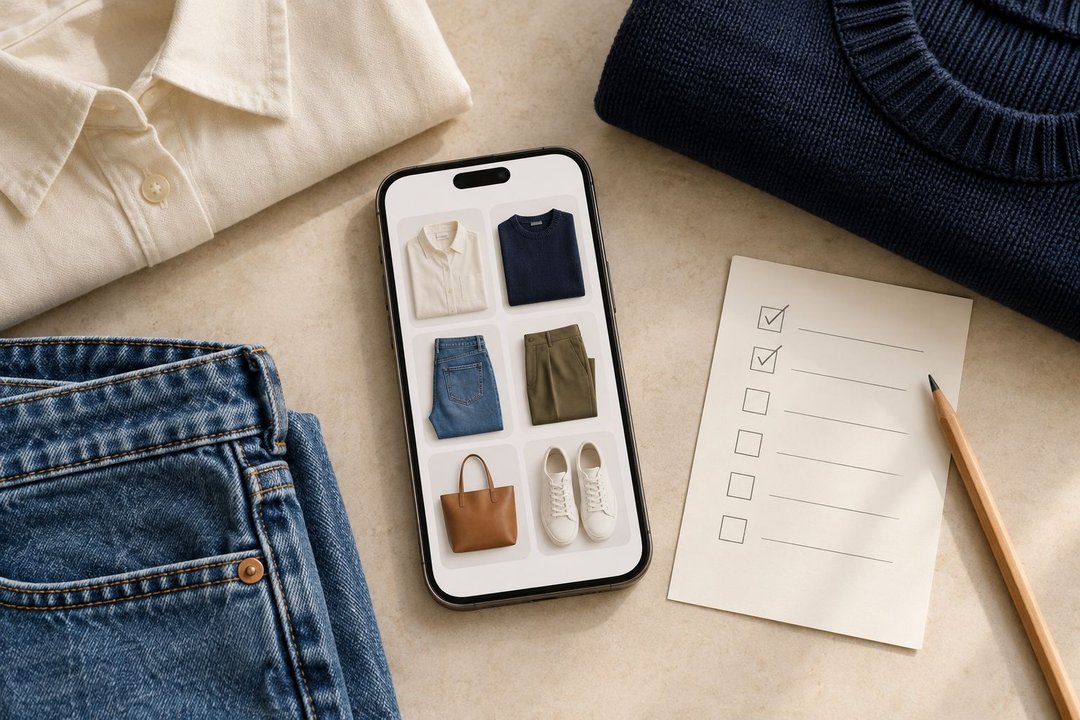
A phone album is enough. If you prefer organizing individual clothing photos, you can start a digital closet with a small selection.
Modesona’s saved outfits can help you keep combinations available for future plans. Its wardrobe statistics show breakdowns such as color, category, and style.
Interpret those breakdowns in context: they describe the clothes in your catalog. They don’t automatically show what you love most, what fits comfortably, or what you wear most often.
Keep your own observations alongside the numbers.
Frequently asked questions
How do I find my style if I like everything?
Compare specific details instead of choosing one complete aesthetic. You might enjoy relaxed shapes from one reference, color from another, and accessories from a third.
Test those preferences in a few outfits. You can have several style directions for different situations.
Can I find my personal style without buying new clothes?
Yes. You can learn a lot by comparing pieces you own, changing how you combine them, and recording what you enjoy wearing.
If your clothes don’t meet your current needs, the process can help you describe a specific gap before spending money.
Do I need to know my body type to find my style?
No. You can explore shapes, proportions, fabrics, and details directly through comparisons and try-ons.
Focus on whether the clothes feel comfortable, suit your activities, and create an appearance you enjoy. You don’t need to follow rules about what a body category should wear.
What if my style changes between work and weekends?
That can be useful information. Look for preferences that connect the two, such as color, texture, comfortable shoes, or clean lines.
You can also keep separate descriptions for different parts of your life. They don’t have to look identical.
How long does it take to find your style?
A short exercise can give you a starting description. Wearing different combinations over time helps you refine it.
There is no deadline. Changes in your routine, climate, preferences, or clothing needs may lead you to revisit the profile.
What if my clothes no longer feel like me?
Start with the details that still work and identify what has changed. It could be comfort, fit, your daily activities, or your preferences.
Try a small adjustment before replacing a large part of your wardrobe. Keep useful clothes while you explore your options.
Start with one comparison
Choose an outfit you already wear. Change one thing: the shape of the top, the color, the shoes, or the outer layer.
Try both versions and write down what you prefer and why.
That observation is a practical starting point for finding your style. Repeat the process in real situations, save what works, and let your description become more specific over time.
For guided visual comparisons, explore Style DNA through Modesona’s styling tools. Use the results to choose your next experiment with the clothes you already own.