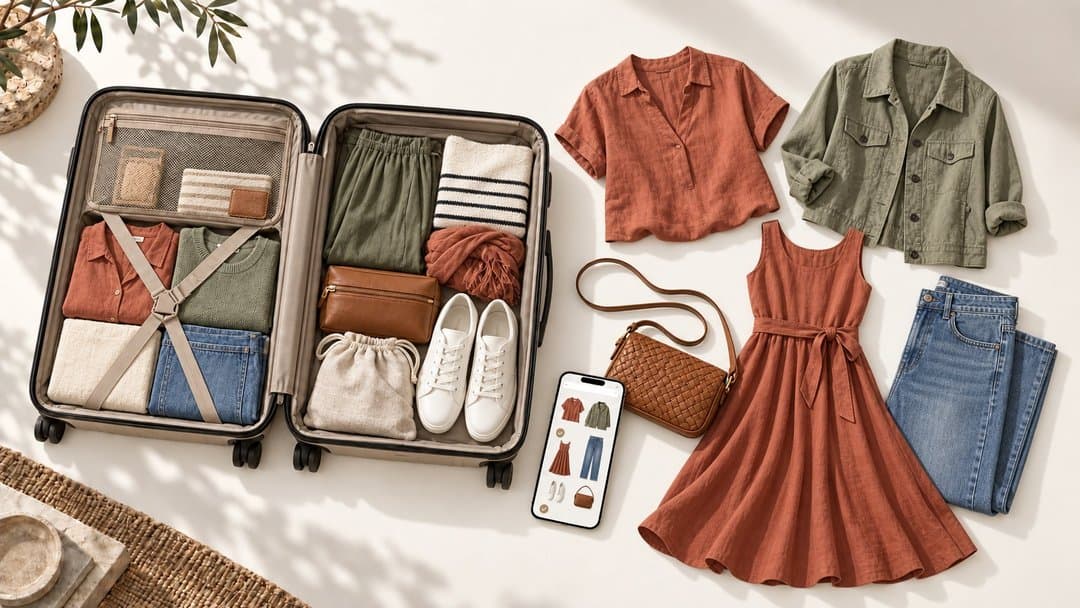
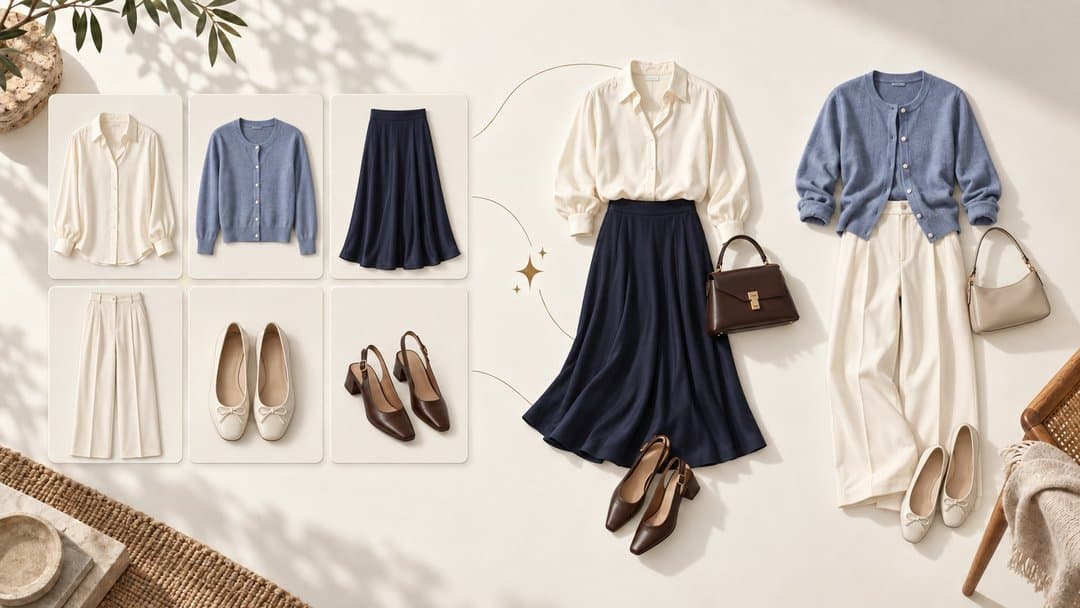
How to Create Outfits From Clothes You Already Own
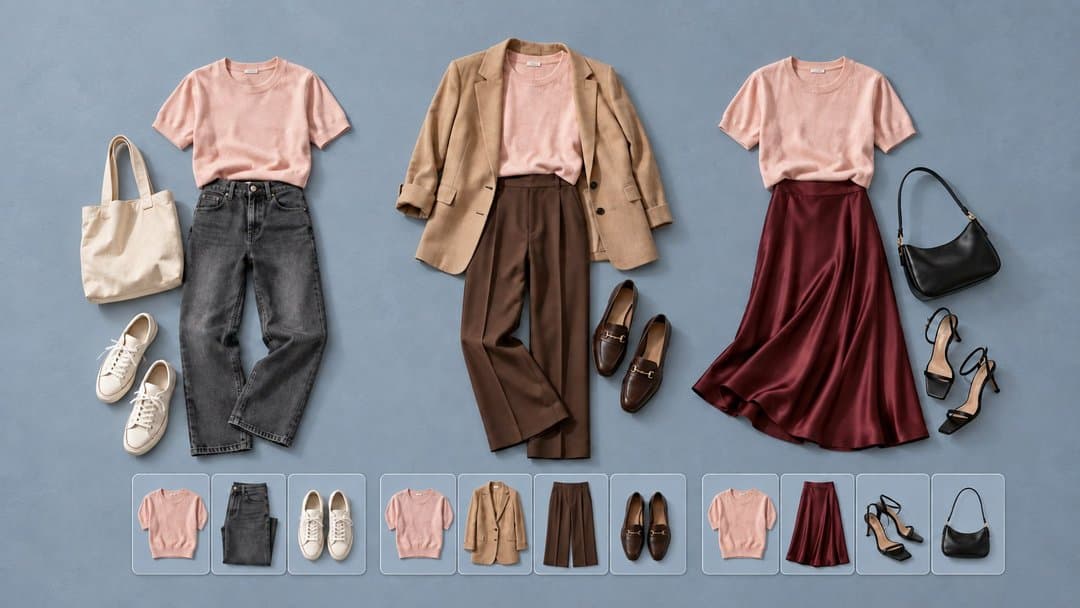
To create outfits from clothes you already own, choose a situation you need to dress for, pull out a small selection of clothes that fit comfortably, and build a complete look—including shoes. Try it on, change one element at a time, and photograph the combinations you want to wear again.
You can start with the pieces you reach for every week. That familiar shirt may work with pants you usually save for the office. A button-down you always wear closed might become a light layer over a T-shirt.
The goal is to finish with a few outfits you can actually use. Here’s how to find them.
1. Choose a real occasion before choosing clothes
Give your outfit a job.
“Something stylish” leaves you with almost every possibility in your closet. “Something comfortable for a casual office day and a 20-minute walk” gives you a useful starting point.
Think about:
-
Activity: Will you be sitting, walking, commuting, or going out?
-
Weather: Do you need warmth, breathable fabrics, or rain protection?
-
Dress code: What will feel appropriate where you’re going?
-
Comfort: Which shoes, waistbands, and fabrics will you want to wear for several hours?
Choose one upcoming situation for your first attempt. If comfortable shoes are essential, pick those first and build around them.
2. Pull out a small selection from your closet
Start with:
-
Three tops.
-
Two bottoms.
-
One layer.
-
Two pairs of shoes.
These numbers simply keep the exercise manageable. A dress, jumpsuit, skirt, or another piece you wear regularly can replace any category.
Choose clothes that fit you now, are ready to wear, and suit the occasion. Put them somewhere you can see them together.
Include one piece you like but rarely wear. Pairing it with familiar favorites gives you a specific way to experiment.
Don’t turn this into a full closet cleanout. If something needs washing or repair, set it aside and keep going with usable clothes.
3. Build one complete outfit
Pick the piece you feel most confident wearing. Then add the rest.
For separates, start with:
Top + bottom + shoes
For a one-piece outfit, start with:
Dress or jumpsuit + shoes
Add a layer if the weather, setting, or your preference calls for one. Accessories are optional.
Here are a few starting combinations to adapt:
| Starting piece | Build an outfit with |
|---|---|
| A favorite T-shirt | Jeans and sneakers |
| A button-down shirt | Relaxed pants and loafers |
| A lightweight sweater | A skirt and ankle boots |
| A casual dress | Comfortable flats and a cardigan |
| Wide-leg pants | A simple top and shoes that work with the hem |
Use the closest equivalent you already own. You don’t need to buy loafers to try an outfit that could work with your flats.
When the colors feel difficult
Begin with a pairing you already enjoy wearing. Add the unfamiliar piece to that combination and see what happens.
For a patterned item, try pairing it with a solid color that appears in the print. A green-and-cream shirt, for example, gives you two easy colors to look for in your closet.
A neutral wardrobe isn’t a requirement. If you enjoy bright combinations, use them. The useful question is whether you like the colors together when you put the clothes on.
4. Try it on and identify what needs adjusting
Clothes can look good together on a bed and feel awkward when worn.
Put on the whole outfit, including shoes. Sit down, walk around, reach forward, and check whether anything pulls, slips, or needs constant adjustment.
If the outfit feels off, name the problem before changing everything.
| What feels off? | An adjustment to try |
|---|---|
| The outfit feels too formal | Switch to a more casual top or pair of shoes. |
| It feels too casual | Try a structured layer or a smarter shoe you already own. |
| There is more volume than you want | Try a shorter top, an open layer, or a tuck if comfortable. |
| The colors feel disconnected | Replace one item with a color already present elsewhere in the outfit. |
| It feels too plain for your taste | Add texture, a patterned layer, or a favorite accessory. |
| It looks good but feels uncomfortable | Replace the uncomfortable piece and rebuild around what feels right. |
These are experiments, not rules about what your body should wear. An oversized outfit can work beautifully if that’s the shape you enjoy.
5. Turn one outfit into several
Once you like a combination, keep part of it and make a deliberate change.
Start with a white T-shirt, blue jeans, and sneakers:
-
Replace the jeans with black pants.
-
Keep the black pants and switch the T-shirt for a button-down.
-
Wear the button-down open over the T-shirt with jeans.
-
Return to the first outfit and add a cardigan.
Each change gives you something specific to assess. You can see whether you prefer a different shape, a different level of formality, or an extra layer.
Example: eight pieces, six outfits
Imagine this small selection from an existing closet:
-
White T-shirt.
-
Blue button-down shirt.
-
Black knit top.
-
Blue straight-leg jeans.
-
Black relaxed pants.
-
Gray cardigan.
-
White sneakers.
-
Black loafers.
Here are six illustrative combinations:
| Outfit | Pieces | A possible use |
|---|---|---|
| 1 | White T-shirt + jeans + sneakers | Errands or a casual weekend |
| 2 | Blue button-down + black pants + loafers | A casual office, depending on its dress code |
| 3 | Black knit top + jeans + loafers | Dinner with friends |
| 4 | White T-shirt + black pants + cardigan + sneakers | A relaxed day with a light layer |
| 5 | Blue button-down worn open + white T-shirt + jeans + sneakers | A casual layered look |
| 6 | Black knit top + black pants + cardigan + loafers | A simple coordinated outfit |
Treat this as a demonstration, rather than a shopping list. Substitute your own colors and clothing styles.
The combinations also need a try-on check: a thick shirt may not layer comfortably, and pants that work with one shoe may drag with another. Adjust the example to your clothes, weather, and routine.
6. Recreate the idea behind an inspiration photo
An outfit photo can help you see familiar clothes differently. Look for the part you want to borrow.
Ask yourself:
-
Is it the color combination?
-
The contrast between relaxed and structured pieces?
-
The long or cropped layer?
-
The way the shoes change the outfit?
For example, you might like a photo featuring a cream sweater, brown wide-leg pants, and loafers. Your version could use a beige sweatshirt, olive relaxed pants, and flats.
The pieces are different, but you’re exploring a similar mix of soft colors and relaxed shapes.
Write a short description of what caught your attention—such as “loose pants with a neat top”—then look for that relationship in your own closet.
7. Save outfits with enough detail to use them again
Photograph the combinations you like. Include the shoes and any layer that makes the outfit work.
A phone album is enough to start. Give each outfit a practical label:
-
Office — warm weather.
-
Weekend — lots of walking.
-
Dinner — light jacket.
-
Travel day — comfortable layers.
Add a note if it will help: “Works with the shorter cardigan” or “Too warm for summer.”
After wearing the outfit for a full day, decide whether to keep it, adjust it, or remove it from your saved options. Something that looks good for a photo may need a different shoe for your actual routine.
How a wardrobe app can help
A digital wardrobe app can be useful if you want to see your clothing photos together or keep outfit ideas in one place. Features vary, so check whether an app supports the task you need, such as manually combining items, saving looks, or suggesting outfits from your own clothes.
Start by adding the small selection you used in this exercise. That gives you a way to evaluate the process before photographing your entire closet.
If you use AI suggestions, check them against the actual garments. Fabric weight, fit, transparency, and comfort still need your judgment.
What if you still can’t find an outfit?
Look at the specific obstacle.
“Everything I pulled out makes a statement.”
Try wearing just one of those pieces with the simplest items you own. You may find it easier to style the patterned pants with a familiar plain top before combining them with another print.
“I always end up in the same combination.”
Choose one item you normally keep separate: office pants with a weekend T-shirt, for example. Try the unfamiliar pairing before deciding whether it works.
“I like the clothes, but they don’t suit my day.”
Return to your activity and comfort requirements. A closet exercise can reveal that you have plenty of dinner outfits but few options for walking to work.
“The piece never feels right.”
You don’t have to force it. Fit, fabric, condition, or personal taste may be the issue. Set it aside and use something you feel comfortable wearing.
If you discover a wardrobe gap, describe the need precisely before shopping. “Shoes I can walk to work in that suit these two pants” gives you a clearer decision than “something to make my outfits better.”
Frequently asked questions
How do I make new outfits without buying clothes?
Take an outfit you already wear and change its top, bottom, shoes, or layer using another item from your closet. Try the result on and save it if it works. You can also borrow a color combination or silhouette from an inspiration photo using similar pieces you own.
How can I make basic clothes look more interesting?
Try adjusting how you wear them: roll sleeves, wear a shirt open over a top, or add a contrasting texture. Shoes and accessories can change the feel, too. Choose details you enjoy and can wear comfortably.
Can I create outfits with a very small wardrobe?
Yes. Start by making combinations for your actual activities, then use layers and shoes to vary them where useful. You can repeat outfits; the aim is to have dependable choices that fit your life.
Do I need to upload my entire closet to an outfit app?
Check the app’s requirements, but for your own planning exercise, you can begin with a small group of frequently worn pieces. Add more as you need them.
How do I know whether an outfit works?
Check whether it suits the occasion and weather, stays comfortable when you move, and feels like something you want to wear. A photo can help you compare options, but wearing it gives you the most useful feedback.
Start with tomorrow’s outfit
Choose what you need to dress for tomorrow. Pull out a few suitable pieces, build one complete outfit, and try a second version with a different top or layer.
Save the one you want to wear. You now have an outfit ready—and a starting point for the next one.