How to Style a Button-Down Shirt: 5 Ways With One Shirt
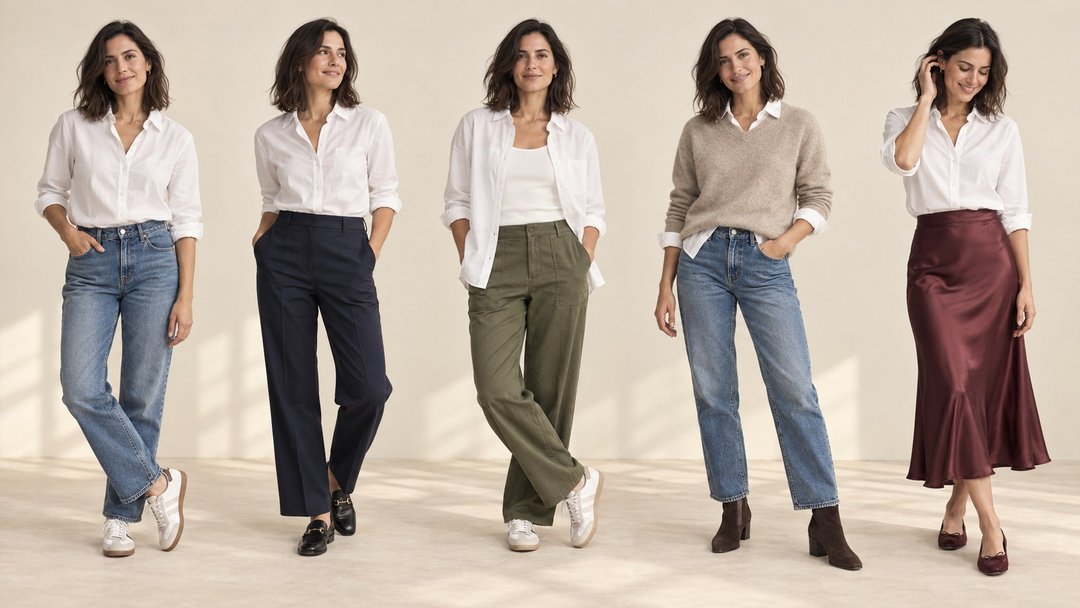
To style a button-down shirt five different ways, keep the same shirt and change its role: wear it as a casual top, tuck it into a work outfit, open it over a tank, layer it under a sweater, or pair it with a different texture for dinner.
You can try this with clothes you already own. Start with one shirt you enjoy wearing, then build complete outfits around it—including shoes.
The examples below use the same white shirt throughout. A blue, striped, printed, or brightly colored shirt can work too. Use the combinations as starting points and adjust them to your clothes, comfort, and plans.
Start with one shirt that works for you
Choose a shirt you can comfortably button, move around in, and wear for more than a quick photo.
Check its fabric and shape before deciding which combinations to try:
- A lightweight shirt may work well over a tank or under a sweater.
- A heavier Oxford shirt may feel better on its own or under a roomier layer.
- A longer shirt gives you more options for tucking, but you can also leave it loose.
- A shorter or more fitted shirt may work best buttoned rather than worn as an open layer.
You don’t need one shirt to perform every possible styling trick. If a particular combination feels awkward, adapt it.
Pull out a few possible partners: jeans, another pair of pants or a skirt, a tank or T-shirt, a sweater, and shoes you already wear. This is a selection to test, not a shopping list.
For a broader starting point, our guide to creating outfits from clothes you already own explains how to build combinations across your closet.
Five button-down shirt outfits at a glance
| Outfit | Use the same shirt with | What changes |
|---|---|---|
| Casual everyday | Jeans and sneakers | The shirt becomes an easy everyday top |
| Work or a meeting | Tailored pants and loafers or flats | The bottom and shoes make the outfit more structured |
| Relaxed layered | Tank, casual pants, and sneakers | The shirt becomes an open outer layer |
| Cool-weather | Sweater, jeans or pants, and suitable shoes | The shirt becomes a visible base layer |
| Dinner or an evening out | Textured skirt or pants and comfortable dressier shoes | Fabric, styling, and accessories change the mood |
These are five options to wear on different occasions. They don’t assume you’ll wear the shirt five days in a row without washing it.
1. Wear it with jeans and sneakers for an everyday outfit
Start with the combination that requires the fewest decisions:
White button-down + your usual jeans + comfortable sneakers.
Button the shirt to a level that feels comfortable. Try it untucked first, then compare it with a full or partial tuck if the length allows.
Look at what each version changes. Leaving the shirt loose may give you the relaxed shape you want. Tucking part of it may make the waistband or a favorite belt more visible.
Sleeves offer another small adjustment. Wear them down or roll them if that feels better for the temperature and activity.
Try-on check: Sit down and reach forward. Make sure the shirt doesn’t pull across the back or gape in a way that bothers you.
Use what you own: Swap jeans for casual cotton pants, or sneakers for another comfortable everyday shoe. The useful contrast is between the collared shirt and familiar casual pieces.
2. Pair it with tailored pants for work or a meeting
Keep the same shirt and switch to pants you wear in a more structured setting.
White button-down + tailored pants + loafers or flats.
Try a full tuck if it stays comfortable while sitting. If you prefer the shirt untucked, check how its hem works with the pants and whether the combination suits the setting.
A jacket is optional. Add one if the dress code, room temperature, or your preference calls for it.
You can also experiment with color. Navy, olive, burgundy, or patterned pants may work just as well as black, depending on what you own and enjoy wearing.
Try-on check: Sit as you would at a desk. Check the waistband, shirt buttons, and whether the tuck needs constant adjustment.
Use what you own: A skirt can replace the pants. Choose shoes for the actual day, including any walking or commuting. The outfit should fit your workplace’s expectations.
3. Wear the shirt open over a tank or T-shirt
Now change the shirt’s function.
Open button-down + tank or T-shirt + casual pants + sneakers.
The shirt becomes a removable layer. This can be useful when moving between warmer outdoor conditions and cooler indoor spaces.
Start with a base outfit you already like. Put the open shirt over it and see whether the sleeve width and shoulder area leave enough room to move.
The base layer can match the shirt, contrast with it, or introduce a color you enjoy. There’s no requirement to use a neutral tank.
Try-on check: Raise your arms and reach forward. If the layers bunch under your arms, try a thinner base or reserve this shirt for an unlayered outfit.
Use what you own: Try the shirt open over a comfortable dress. Check how the two hems look together and whether the layers move comfortably when you walk.
4. Layer it under a sweater for cooler weather
Use the same shirt as the layer underneath.
Button-down + sweater + jeans or pants + weather-appropriate shoes.
Choose a sweater with enough room for the shirt. Let the collar show if you like, and experiment with whether the cuffs or hem remain visible.
You don’t need every edge of the shirt on display. A small amount of collar may be enough to give a familiar sweater outfit a different feel.
A sweater vest is another option if you already own one and want less bulk around the arms.
Try-on check: Bend your elbows, sit down, and move your shoulders. If the shirt bunches or feels restrictive, try a roomier sweater or a different outfit.
Use what you own: A cardigan can provide a similar layered option. Open or close it according to the temperature and the look you prefer.
Add appropriate outerwear when needed; this combination alone won’t cover every cold-weather day.
5. Change the texture for dinner or an evening out
For the fifth outfit, keep the shirt and introduce a different fabric or finish.
White button-down + a textured skirt or pants + comfortable dressier shoes.
That could mean a satin skirt you already own, corduroy pants, a patterned bottom, or a favorite pair of dark pants with a different shoe.
Start with the shirt buttoned and adjust the styling. You might tuck it, leave it loose, or roll the sleeves. Add earrings, a watch, a scarf, or a bag if those are part of how you like to dress.
The outfit can feel distinct without high heels or a new purchase.
Try-on check: Look at the fabrics together in the lighting where you’ll wear them. Check coverage, comfort, and whether the hem works with your shoes.
Use what you own: Keep the same pants from the work outfit and change the shoes, shirt styling, or accessories. A useful variation doesn’t need to replace every piece.
How to make the five outfits feel different
If every version looks almost identical, choose one larger change before adding accessories.
Try changing:
- The shirt’s role: main top, open layer, or base layer.
- The bottom: jeans, tailored pants, skirt, or another shape you own.
- The texture: denim, knitwear, crisp cotton, or a softer fabric.
- The footwear: choose another suitable pair when that helps the outfit.
- The way you wear the shirt: loose, tucked, or open.
You can reuse the same jeans or shoes across several outfits. Focus on changes you notice and want to wear.
If only three combinations feel useful, keep those three. Five is the exercise, not a requirement your closet has to meet.
Try the same method with another favorite piece
If button-down shirts aren’t part of your wardrobe, choose a different item and keep it in every outfit.
For example:
- A favorite T-shirt: vary the bottoms, add or remove a layer, and change the shoes.
- A dress: try it on its own, with an open shirt, under a sweater where comfortable, or with different jackets and footwear.
- A pair of pants: change the tops, textures, and layers while checking that the hem works with each shoe.
Choose five situations or outfit variations that matter to you. There’s no need to invent a formal occasion if your routine is mostly casual.
Save the versions you would actually wear
Photograph each successful outfit with its shoes and any necessary layers. Add a short label, such as:
- White shirt — weekend.
- White shirt — office.
- White shirt — open over tank.
- White shirt — sweater layer.
- White shirt — dinner.
Include useful notes: “better with thinner tank,” “comfortable for walking,” or “needs a coat.”
A phone album is enough. If you prefer working with individual clothing photos, you can create a digital closet with a small selection of pieces.
These combinations may also help you reuse a shirt during a trip. Before packing, check weather, laundry, and your itinerary using our travel capsule wardrobe planning guide.
Frequently asked questions
How do you style a white button-down shirt casually?
Pair it with jeans or casual pants and comfortable shoes. Try it untucked, partially tucked, or open over a tank. Choose the version that feels comfortable and suits your day.
Can I use a colored or patterned shirt instead?
Yes. Keep the same shirt across the exercise and choose pieces you like alongside it. If a print feels difficult to combine, start with a bottom in one of its colors.
What if my shirt is too thick to wear under a sweater?
Skip that combination. Try an open cardigan, a roomier jacket, or another unlayered outfit. Your shirt’s fabric and cut should guide the options.
Do I need five completely different sets of clothes?
No. Repeat pants, shoes, and layers where they work. Changing how the shirt is worn can create another useful option with some of the same supporting pieces.
Give one familiar shirt another option
Start with the outfit you already wear. Keep the shirt, change one meaningful element, and try the result on.
Save the combinations that fit your life. You’ll have more ways to use a familiar piece the next time you’re deciding what to wear.
Explore Modesona to see how your existing wardrobe can become the starting point for more outfit ideas.