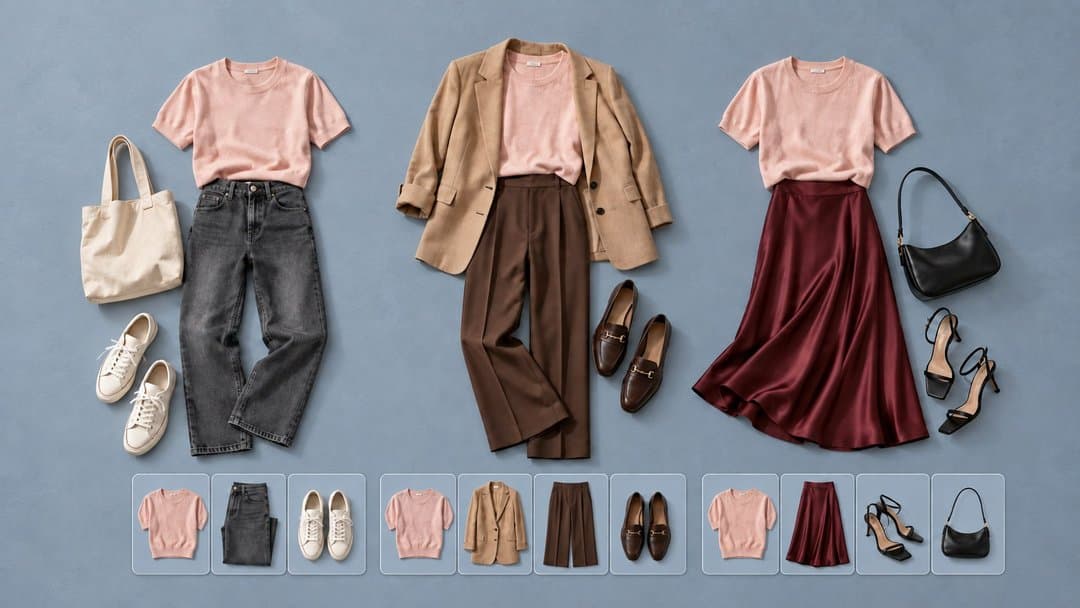
How to Dress Better: 7 Styling Skills You Can Practice
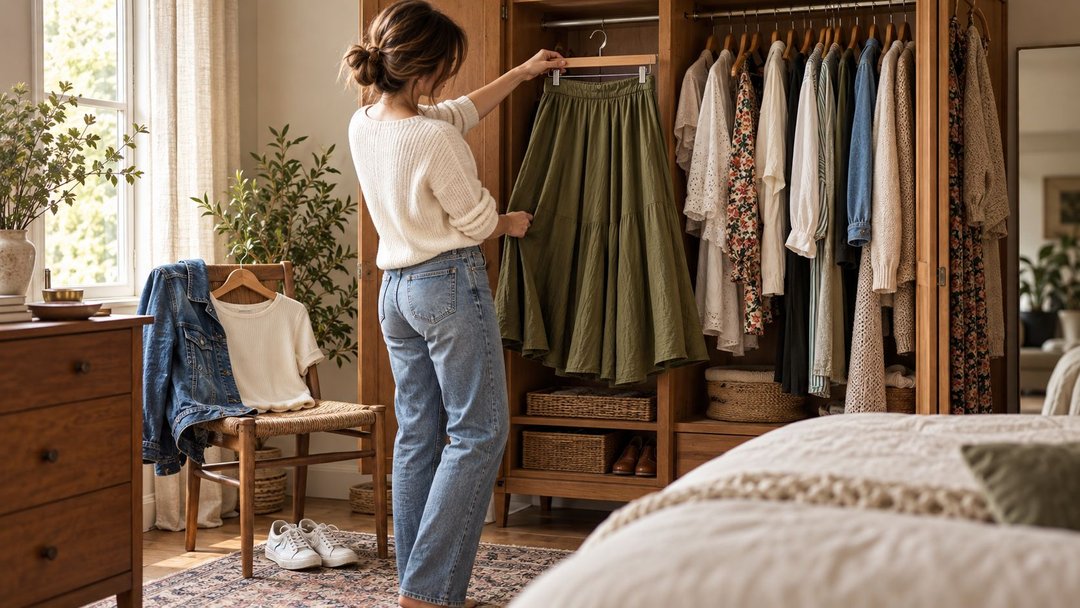
To dress better, practice noticing how your clothes fit, how their colors work together, and how small changes affect a complete outfit. Start with clothes you already own, try one adjustment at a time, and keep track of what feels comfortable and worth wearing again.
You can enjoy fashion and still struggle to explain why one combination works for you while another feels unfinished. A useful way forward is to turn that uncertainty into a specific question.
Is the waistband uncomfortable? Does the jacket end where you want it to? Would different shoes suit the day better?
These seven exercises help you make those decisions. Each gives you something to try with your wardrobe, with selected lessons from Modesona’s Personal Style Course if you want to explore further.
1. Learn to assess fit while moving
A garment can look right in a mirror and become distracting after ten minutes of wear.
Try on a complete outfit, including shoes. Sit down, reach forward and walk around. Notice whether anything pulls, slips, restricts movement or needs repeated adjustment.
Separate fit from your preference for shape. A loose shirt can fit comfortably and create the silhouette you want. A fitted shirt can also work, provided it allows you to move.
Try this: Choose one outfit you wear regularly. Identify one comfortable feature and one thing you keep adjusting. Replace the uncomfortable piece with an alternative and compare the result.
For a closer look at balancing comfort with deliberate styling choices, explore the Intentional Comfort lesson.
2. Compare proportions with one change
The relationship between garment lengths and volumes affects how an outfit looks.
A waist-length cardigan and a long cardigan can give the same trousers a different feel. A tucked shirt changes where the top appears to end. Wider trousers create a different silhouette from straight-leg jeans.
There is no single proportion you need to follow. The skill is recognizing the difference and choosing deliberately.
Try this: Keep your trousers and shoes the same. Compare two tops with different lengths, or try the same shirt tucked and untucked. Photograph both versions. Which would you choose, and what makes the difference?
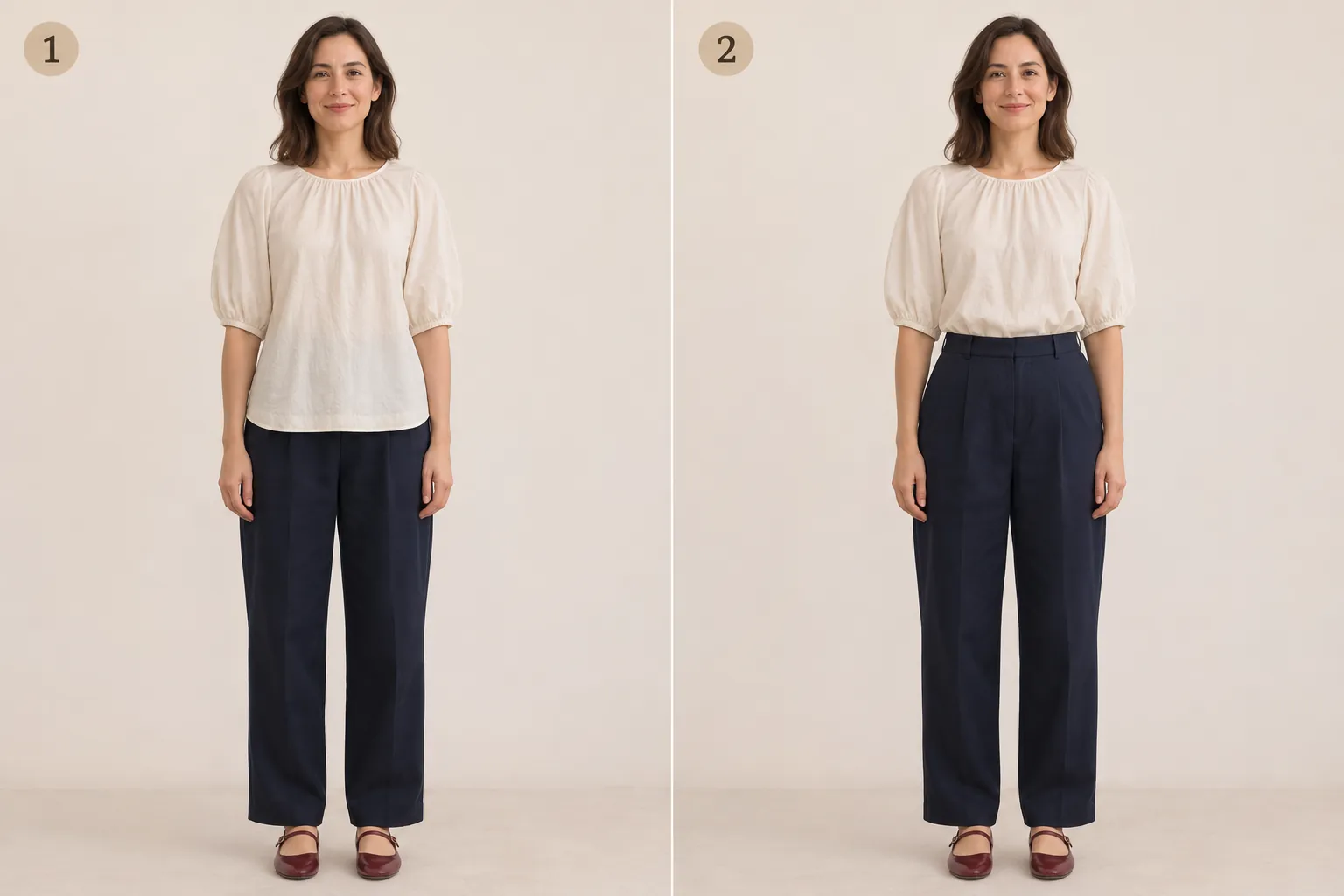
Compare one change: 1. Blouse untucked. 2. The same blouse tucked in. The trousers and shoes stay the same. These are illustrative options to compare, not a right and wrong way to dress.
Continue with The Geometry of Style to explore how garment shapes and proportions affect an outfit.
3. Build a color combination you can repeat
Start with two colors you already enjoy together.
Navy trousers and a cream top, for example, give you a combination to test with different shoes or layers. If you add a patterned scarf, look for a color in the print that connects with something you are wearing.
Neutral colors are one option. You can use the same exercise with green, pink, burgundy or another color you like.
Consider the amount of each color, too. A green scarf introduces a smaller area of color than a green coat. You may enjoy both, but in different situations.
Try this: Make one outfit with two main colors. Then change one piece to introduce a third. Compare the versions in daylight and decide which you would want to repeat.
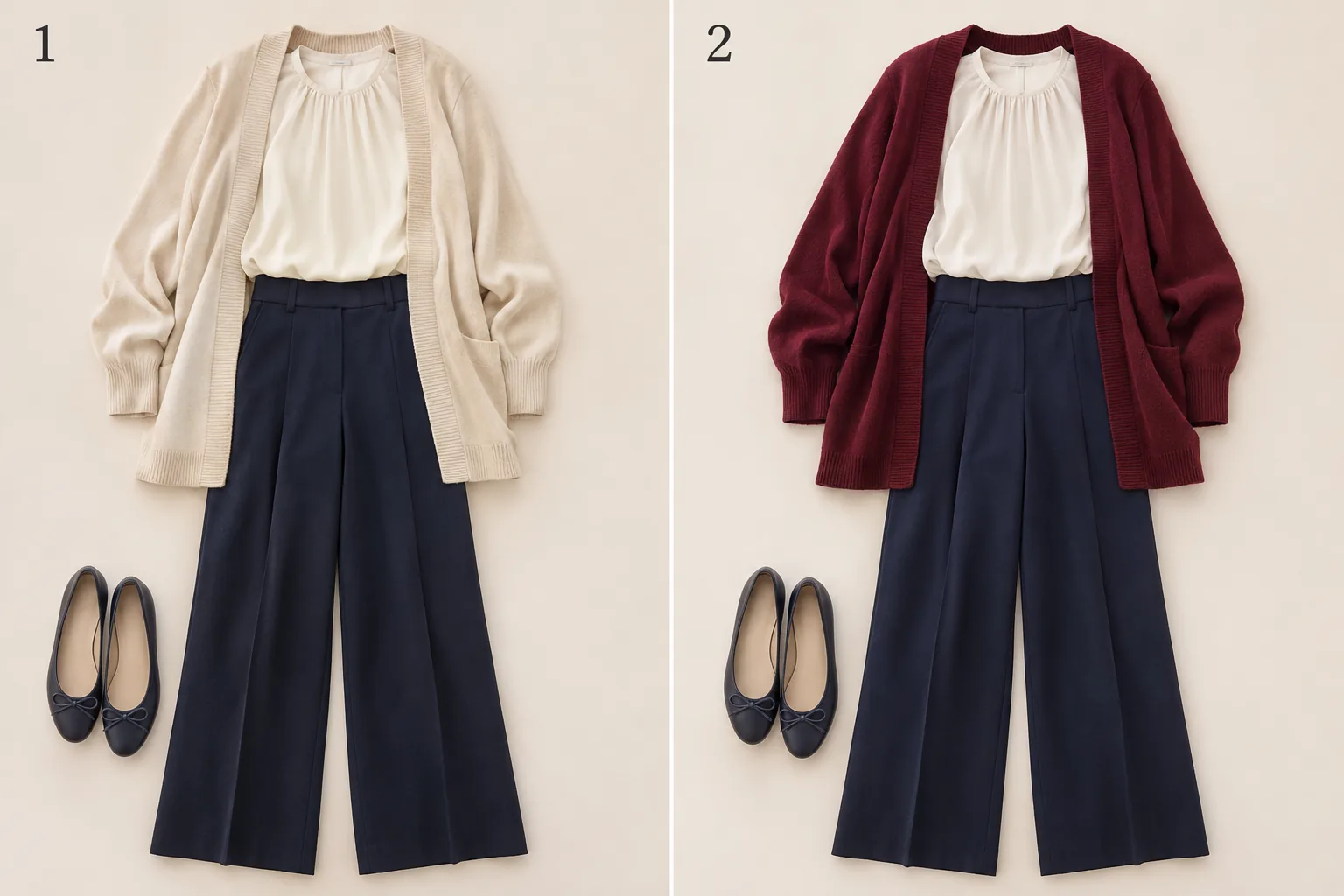
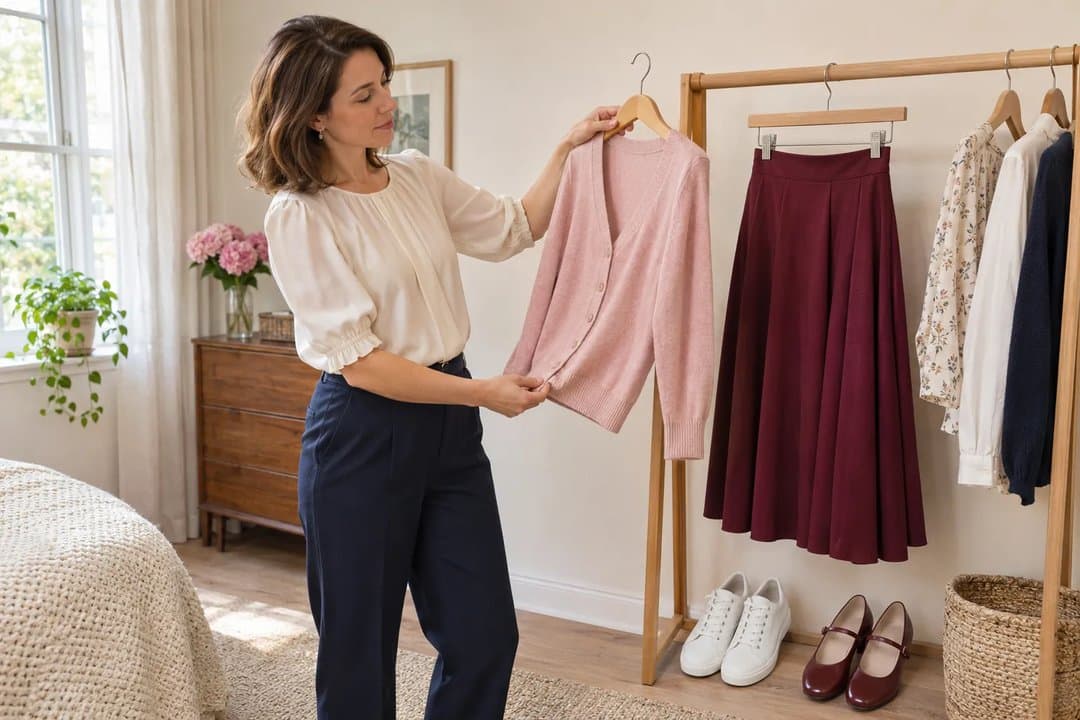
Compare the colors: 1. Navy and cream. 2. The same outfit with a burgundy cardigan introducing a third color. Only the cardigan color changes. Illustrative outfit examples.
Take this exercise further with Build Your Personal Color Palette, a lesson to help you develop a clearer direction for your wardrobe’s colors.
4. Notice what fabric changes
Color and cut do not explain everything about a garment.
A soft knit drapes differently from a crisp cotton shirt. Two pieces in similar colors can create contrast through texture. Fabric thickness also affects whether layers sit comfortably together.
If a cardigan bunches over a shirt, you might try a thinner shirt, a roomier cardigan or another layer you already own. That specific adjustment gives you more information than changing the whole outfit.
Try this: Wear the same bottom and shoes with two different tops—for example, a knit and a woven shirt. Compare movement, warmth and appearance. Record which version suits your day better.
Explore Fabric Magic: Structure vs. Fluidity to continue comparing how different fabrics shape a look.
5. Choose shoes as part of the outfit
Shoes influence both the appearance of a combination and what you can comfortably do in it.
A skirt with sneakers may suit a walking day. The same skirt with flats might be your preference for dinner. Check the whole outfit rather than judging the shoes separately.
Pay attention to trouser hems, too. A length that works with one sole height may drag with another. A shoe change can therefore require a different pair of trousers, even when the colors work together.
Try this: Compare two pairs of shoes with one outfit. Walk in both and check the hem length. Choose according to the occasion, comfort and overall effect.
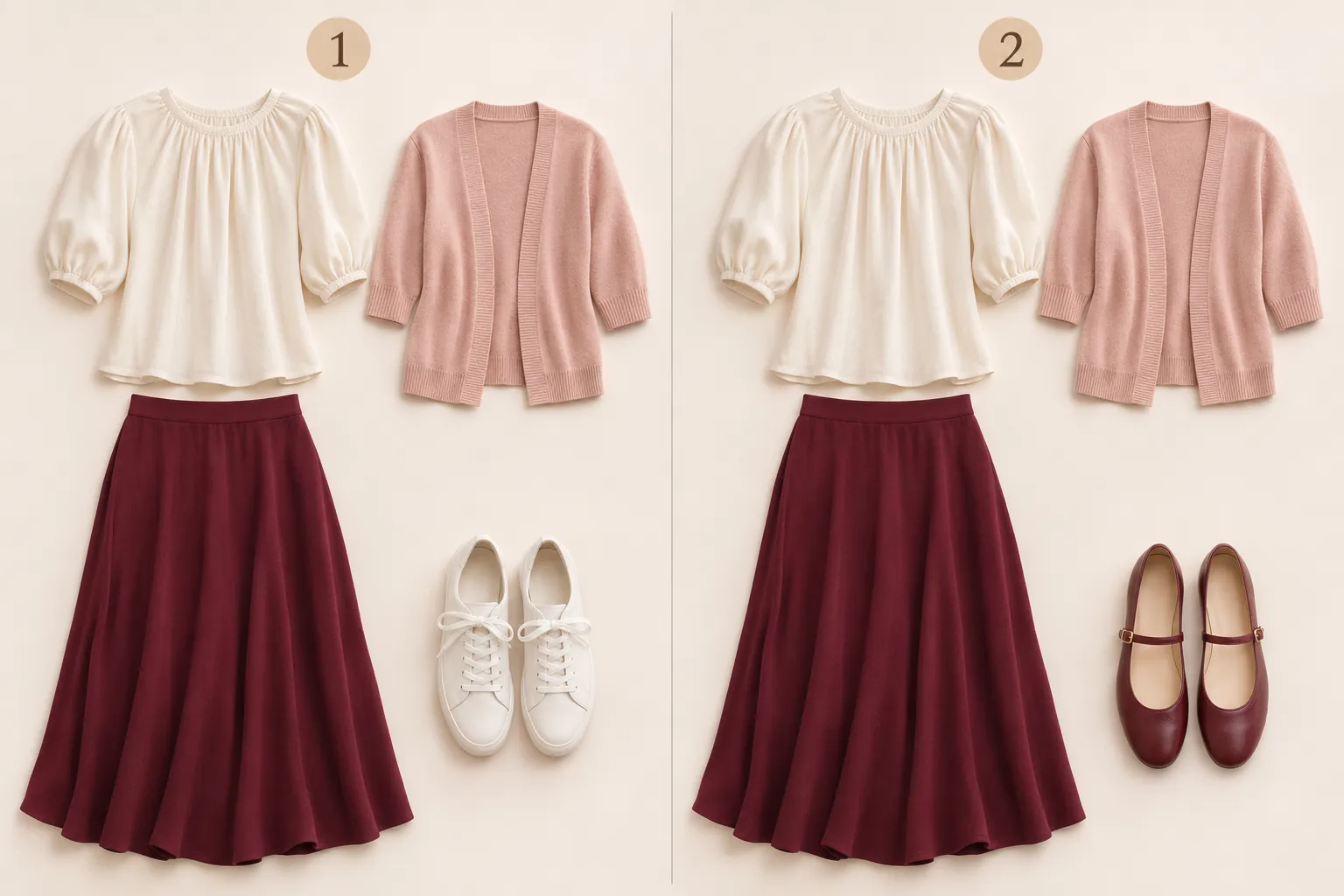
Keep the clothes and change only the shoes: 1. White sneakers. 2. Burgundy Mary Jane flats. Compare the overall feel, then try your own versions to check comfort and suitability for your plans. Illustrative outfit examples.
For the next experiment, focus on where your garments end. The Master Your Hemlines lesson explores this part of outfit proportions.
6. Use finishing details intentionally
A sleeve rolled once, an open shirt, a belt or a favorite accessory can change a familiar combination.
Ask what the detail contributes. Does it repeat a color? Add texture? Make the outfit feel more like something you enjoy wearing?
For example, a burgundy scarf can connect with burgundy shoes. An open blue shirt can add a light layer to a white top and jeans. A belt can change how a loose dress sits, if that is an effect you like.
You can also remove a detail. Some combinations feel better when there is less to adjust or coordinate.
Try this: Photograph an outfit, then add or remove one accessory or change how you wear a layer. Compare the two versions before making another adjustment.
7. Review outfits after wearing them
A photograph helps you compare appearance. Wearing the outfit tells you whether it works in your life.
After a day out, make three short notes:
- Keep: What did you enjoy?
- Change: What became uncomfortable or impractical?
- Try next: What single adjustment would help?
“Wear the shorter cardigan” is more useful than “improve this outfit.” A specific observation gives you something to test next time.
Your notes might reveal that you like a combination but need different shoes for your commute. Or that an outfit you expected to feel plain is comfortable, easy to wear and worth repeating.
Try this: Save one outfit photo with those three notes. Revisit it before wearing the combination again.
Continue your review with The 4-Question Outfit Audit, another exercise for examining your outfit choices.
Choose one skill to practice this week
Start with the question you encounter most often:
| Your question | An exercise to try |
|---|---|
| Why am I constantly adjusting this outfit? | Check fit while sitting and moving |
| Why does this top feel different with these trousers? | Compare lengths and volumes |
| How can I use a color I rarely wear? | Introduce it into a familiar combination |
| Why does this layer feel awkward? | Compare fabric thickness and drape |
| Why does the outfit stop working when I change shoes? | Check comfort, hem length and overall effect |
| What would make this combination feel more personal? | Add or remove one finishing detail |
| How can I remember which outfits work? | Save a photo and a short wear-test note |
Repeat your chosen exercise with a few combinations. The aim is to understand your choices well enough to make getting dressed easier.
If you need help assembling the starting outfit, follow our guide to creating outfits from clothes you already own.
If you are still identifying your preferences, our guide to finding your personal style can help you describe the details you enjoy.
Follow a structured personal style course
If you would like a guided sequence, Modesona’s Personal Style Course brings together 40 lessons across four modules:
- Personal Style Foundations: explore your preferences, colors, fabrics and proportions.
- Build Your Wardrobe: work on wardrobe organization and outfit-building exercises.
- Color, Pattern & Texture: develop your approach to combining colors, prints and textures.
- Everyday Styling: apply styling ideas to situations from your daily life.
Begin with the foundations or revisit a lesson connected to the skill you are practicing. Try the ideas with your own clothes and keep notes on what works. Your course progress is saved in your browser.
Explore the Personal Style Course
Frequently asked questions
Can you learn to dress better?
Yes. You can practice observing fit, comparing combinations and making adjustments. Your preferences provide the direction; trying clothes in real situations helps you decide what works.
Do I need to buy new clothes first?
Start with what you have. Outfit experiments may reveal useful combinations or a specific problem, such as shoes that do not suit your commute. Understand that need before deciding whether to buy anything.
Do I need to know my body type?
You can begin by comparing garment shapes, lengths and fit directly. Notice what feels comfortable and creates an appearance you enjoy. A body-type label is not required for these exercises.
How do I find a clothing style I like?
Start with outfits you would enjoy wearing in your daily life. Notice the colors, shapes and details they share, then try one of those elements with clothes you already own. Explore women’s clothing styles for inspiration—you can combine elements from several styles without choosing a single label.
How do I know whether my styling is improving?
Look for practical changes: you can explain why you prefer a combination, adjust an outfit without rebuilding it, and find options that suit your activities. Save examples so you can recognize what you want to repeat.
Where should I start if I feel overwhelmed?
Choose one familiar outfit and one question. You might compare two shoe options or try a different top length. Make a note of what you prefer and why, then use that observation the next time you get dressed.