How to Plan Outfits for the Week With Clothes You Own
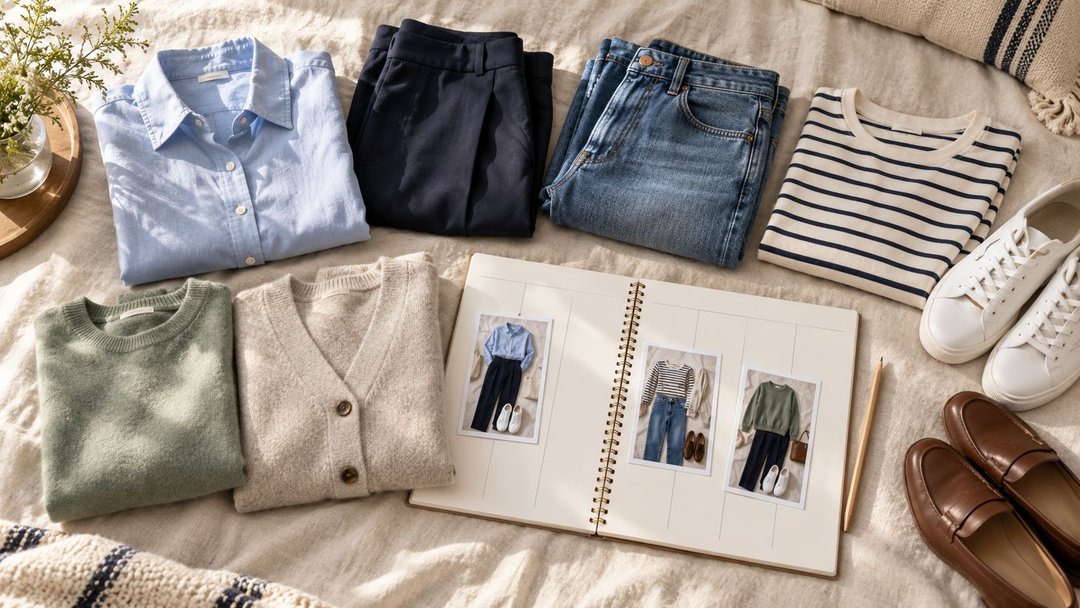
To plan outfits for the week, check your schedule, review the weather forecast, and choose complete outfits from clothes that will be clean and available. Start with the days that have specific requirements, save your choices, and leave room for changes.
You can use a phone album, a simple note, or an outfit calendar. Begin with familiar combinations and build a plan around the week you actually have.
Here’s a repeatable routine, followed by a seven-day example you can adapt to your own wardrobe.
1. Start with your actual schedule
Write down what each day involves before choosing clothes.
“Tuesday” gives you little to work with. “Office, a walking commute, and dinner straight afterward” tells you much more.
For each day, note:
-
Where you’ll spend most of your time.
-
Any dress requirements.
-
How much walking, standing, or sitting you expect.
-
Whether you’ll need a separate clothing change.
-
Whether you’ll have time to go home between activities.
Include the ordinary days. Working from home, school pickup, errands, and quiet weekends still have clothing needs.
If you wear a uniform, plan around the decisions you do make: clean uniform pieces, permitted shoes, outerwear, and clothes for afterward.
You can start your planning week on any day. Choose a moment when you know your upcoming schedule and can check your clothes.
Identify the least flexible day
A presentation, special event, or long shift may have fewer suitable options than a casual afternoon.
Plan that outfit first. Then build the other days around the remaining available clothes.
This also gives you time to notice that a shirt needs washing or the shoes you intended to wear need attention.
2. Check the forecast and your available clothes
Look at the forecast for the places you’ll be, including the morning and evening if you’ll be outside.
Consider how conditions affect the complete outfit:
-
Will your shoes work for the walk?
-
Can your outer layer fit comfortably over the planned clothes?
-
Will you want an extra layer indoors?
-
Does the outfit still work if the afternoon is warmer?
Review the forecast during the week as your plans get closer.
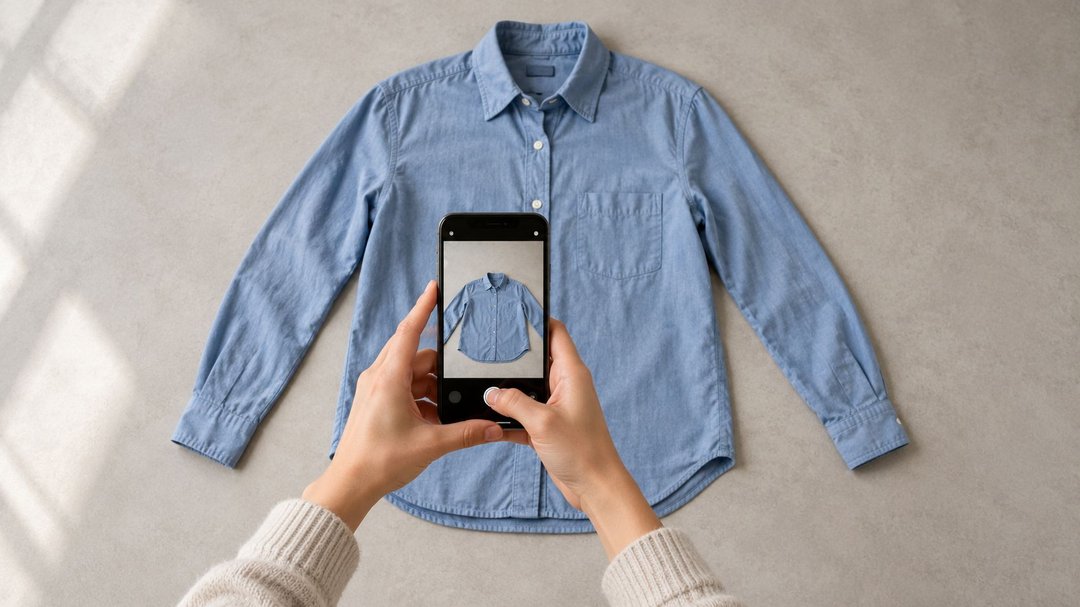
Next, check the actual garments. A saved outfit photo can remind you of a combination, but it cannot tell you whether those pants are in the laundry.
Sort the pieces you want to use into three practical groups:
| Status | What it means for your plan |
|---|---|
| Ready to wear | Available for a suitable day |
| Needs washing, drying, or ironing | Schedule only when there is enough time to prepare it |
| Unavailable this week | Choose another piece |
Follow the care instructions for each garment. If an item needs longer to dry or requires special cleaning, allow for that before assigning it to a day.
Use a digital closet to find your options
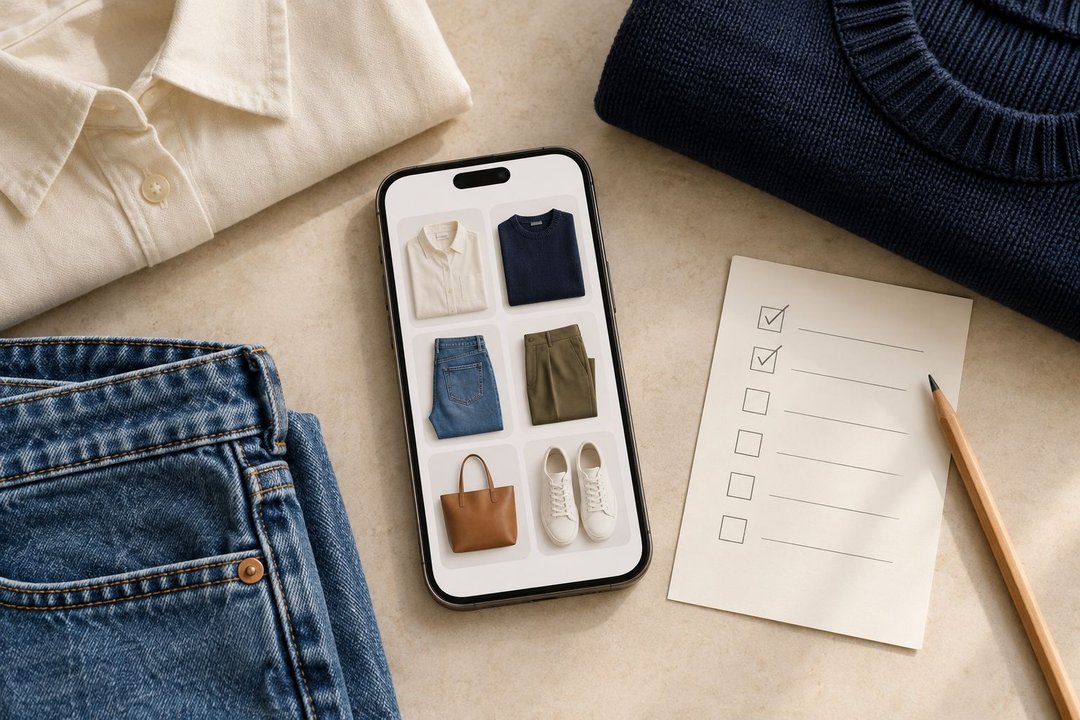
A visual clothing catalog can help you find pieces you want to include.
Modesona’s Digital Closet lets you search your wardrobe and filter it by details such as category, color, season, favorites, and your own tags.
Use those tools to narrow your choices, then check that the physical clothes are ready to wear.
If you’re starting from scratch, our guide to creating a digital closet with a small selection explains how to begin with the pieces you use most.
3. Choose complete outfits for the most demanding days
Start with an outfit you already know works for the occasion.
Include the shoes, necessary layers, and any accessories you rely on. A top-and-pants combination leaves part of the decision unfinished if you still need to find suitable footwear in the morning.
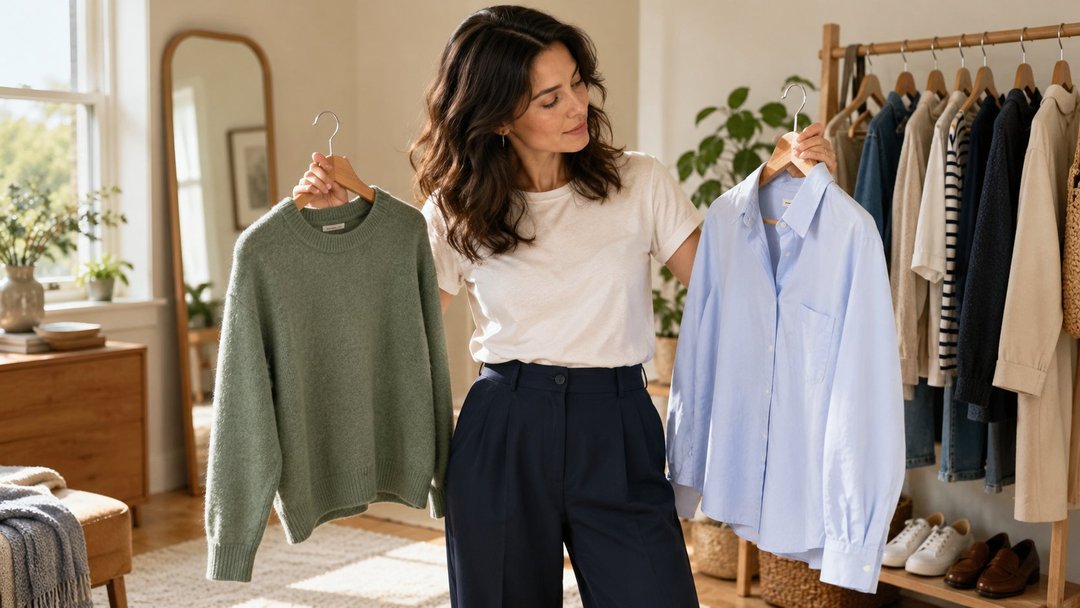
Try on unfamiliar combinations before saving them. Sit down, walk, and move your arms. Check that the outfit works with the bag and coat you expect to use.
If putting the pieces together is the difficult part, follow our guide to creating outfits from clothes you already own.
For a day with two activities, decide whether one outfit can cover both.
For example, you might wear the same pants and shoes from work to an informal dinner, with a fresh top packed separately. If that change matters to you, include it in the plan.
4. Fill the remaining days with familiar combinations
Once the specific occasions are covered, choose outfits for the more flexible days.
Repeating a complete outfit is an option. So is reusing one piece in different combinations, provided it remains clean and comfortable.
A button-down might work with tailored pants early in the week and with jeans later. A favorite dress might cover two similar days after the appropriate care.
If you want variety from one familiar piece, explore five ways to style a button-down shirt.
Make any planned reuse realistic
If an outfit depends on wearing a piece again, note what needs to happen first.
For example:
Blue shirt: wear Monday, wash Wednesday according to its care label, and check that it is dry and ready before Friday.
If that timing is uncertain, choose another top for Friday.
The same principle applies to bottoms, layers, and shoes. Decide whether to rewear them based on their condition and your needs.
5. Use this weekly outfit planner as an example
The example below assumes mild weather, a casual office, and no formal events. It uses familiar clothes and includes one shirt worn again after washing.
The colors and garments are illustrative. Substitute pieces that fit your style, routine, and climate.
| Day | Plans | Outfit | Preparation or adjustment |
|---|---|---|---|
| Monday | Casual office | Blue button-down, navy pants, loafers | Add a cardigan if needed indoors |
| Tuesday | Errands and walking | Striped T-shirt, jeans, sneakers | Choose an outer layer for the forecast |
| Wednesday | Work from home | Gray T-shirt, soft pants, comfortable indoor footwear | Wash Monday’s shirt if its care routine allows |
| Thursday | Office meeting | Green knit top, navy pants, loafers | Check that the pants are ready to wear again |
| Friday | Casual workday and an informal meal | Clean blue button-down, jeans, sneakers | Use another clean top if the shirt is not ready |
| Saturday | Time outdoors and coffee with a friend | Black T-shirt, comfortable casual pants, walking shoes | Check the forecast before leaving |
| Sunday | Home and local errands | Soft long-sleeve top, relaxed pants, sneakers for going out | Review next week and prepare anything needed |
Fresh underwear, socks, and other base layers are additional. Add workout clothes or separate evening changes when your schedule requires them.
Use as many pieces as your week needs. The table gives you a way to organize decisions without setting a required wardrobe size.
Adapt the example to your clothes
If you prefer dresses, replace a top-and-bottom combination with a familiar dress and suitable shoes.
If you enjoy bold colors or prints, keep them in the plan. Coordinating a week does not require every day to share a palette.
For a small wardrobe, repeat reliable combinations and make the care schedule explicit. If laundry access is limited, plan around the clothes that will remain available until the next wash.
6. Save complete outfits before assigning them to days
Keep the combinations somewhere you can find them again:
-
A phone album with complete outfit photos.
-
A note describing the clothes.
-
A personal library of saved outfits.
Use enough detail to identify the pieces. “Work outfit” may be less useful than “blue shirt, navy pants, loafers, gray cardigan.”
If you take photos, include the shoes and layers in the image or its caption. Add a useful note when needed, such as “comfortable for walking” or “needs a warmer coat outside.”
Modesona’s Saved Outfits keeps complete combinations from your digital closet in a personal library. You can save looks you build yourself, keep generated combinations you like, and mark favorites for easy reuse.
Build a small collection of reliable outfits first. You can draw from it each week and add new combinations when you find something worth repeating.
7. Put your saved looks on a weekly calendar
Once the outfits are ready, assign them to the days when you need them.
A simple note with one line per day is enough. A calendar can be useful when you want to see the week together and move outfits as your schedule changes.
For each entry, keep track of:
-
The date and activity.
-
The complete outfit or a reference to its photo.
-
Any separate clothing change.
-
Preparation needed before that day.
Review the week as a whole. Check whether two outfits depend on the same item and whether there is enough time to prepare it between uses.
Planning the week in Modesona
Modesona’s Outfit Calendar lets you assign saved outfits to dates and review your plans in weekly or monthly views.
Start with a combination in your saved outfit library, place it on the day you need it, and adjust or remove it when your plans change.
You can also choose to add a planned outfit to your device calendar. That step is optional and requires calendar permission on your phone.
Keep any laundry or preparation reminders alongside your plan so you remember what needs attention before each day.
8. Leave room for changes
Choose a familiar backup combination from clothes that are ready to wear.
The backup should fit a likely situation. For a week of casual workdays, that might be a clean top, comfortable pants, and suitable shoes. A formal event may need its own alternative.
You can also note small changes to individual outfits:
-
A warmer layer if temperatures drop.
-
Suitable footwear if rain is expected.
-
A fresh top for an additional evening plan.
-
Another clean outfit if a planned piece becomes unavailable.
Keep the alternatives manageable. One useful option is easier to act on than another long list of choices.
Check tomorrow’s outfit the night before
Review three things:
-
Have the plans changed?
-
Does the outfit still suit the forecast?
-
Are all the pieces ready?
Update the plan when necessary. If you move an outfit to another day, check whether that affects any later reuse of its clothes.
You can also change your mind simply because you want to wear something else.
9. Review what you actually wore
At the end of the week, compare the plan with what happened.
A scheduled outfit is a suggestion for a date. Record separately whether you wore it and how it worked.
Keep the review short:
-
Which outfit would I happily repeat?
-
Which one needed an adjustment?
-
Did laundry or preparation cause a problem?
-
Did I choose something different, and why?
If you skipped an outfit because it felt too warm, update its weather note. If the shoes became uncomfortable, save the combination with a different pair.
If several planned outfits felt unlike you, our guide to finding your personal style can help you identify the details you enjoy wearing.
Use those observations when you plan the following week. Keep the combinations that worked and make specific adjustments to the others.
Your reusable weekly planning checklist
Copy this checklist into the place where you keep your plan:
-
Note the week’s activities and dress requirements.
-
Check the forecast.
-
Check which clothes are ready.
-
Choose outfits for the least flexible days.
-
Fill the other days with familiar combinations.
-
Include shoes, layers, and separate changes.
-
Schedule any necessary clothing care.
-
Save the complete outfits.
-
Assign them to days.
-
Choose a useful backup.
-
Check tomorrow’s plan the night before.
-
Record what worked after wearing it.
Start with the steps that solve your biggest problem. You can add detail as the routine becomes useful.
Frequently asked questions
When should I plan outfits for the week?
Choose a time when your schedule is reasonably clear and you can check your clothes. After putting away laundry may be convenient. If you work changing shifts, plan around your next set of confirmed days.
Do I need seven different outfits?
No. Repeat combinations when they suit your plans and the clothes are ready to wear. You can also plan only the days that usually involve difficult clothing decisions.
Can I plan outfits without an app?
Yes. A note, paper planner, or phone album can hold your weekly plan. An app may be useful if you want to keep clothing photos, saved outfits, and dates together.
What is the difference between saved outfits and an outfit calendar?
Saved outfits keep the combinations you want to reuse. An outfit calendar assigns those combinations to specific dates. You might keep several work outfits in your library and choose which ones to schedule for the coming week.
What if the weather changes during the week?
Review the next day’s forecast and adjust the outfit, shoes, or layers. If the conditions require a different combination, move or replace the planned look and check the rest of the week.
What if I don’t know my weekend plans yet?
Leave those days flexible. Choose an available casual outfit as a starting point and update it when the plans become clear.
Should I buy clothes before starting?
Start by planning with what you have. If you repeatedly lack something needed for a specific activity, note the gap. Check whether another combination, a repair, or a change to your care routine can help before deciding to buy.
Build a routine you can repeat
Look at the coming week, choose complete outfits from available clothes, and save them where you can find them. Assign those combinations to days, check the next day’s plan each evening, and carry useful lessons into the following week.
Start with your next three days if a full week feels like too much.
When you’re ready to give your saved combinations a date, use Modesona’s Outfit Calendar to organize the week around the clothes you already own.