Fabrics
- corduroy
- rigid denim
- polyester crepe
- suede
- ribbed jersey
- lamé
→ 01 / Women
Past decades, worn today
Style that revives specific eras — 70s flares, 80s shoulders, 90s slips or Y2K — with true vintage pieces or modern reissues.
The short answer
Retro style for women means committing to one era and getting its proportions right: 70s flares and earth tones, 60s shift dresses and graphic lines, 90s slips and muted neutrals, or Y2K. Vintage sits at the center of the outfit and plain modern pieces fill in around it. The cut matters far more than the label.
One decade per outfit. Two is not retro, it's a costume box.
Updated September 22, 2026
→ 02 / What defines it
→ 03 / Where it comes from
Wearing old clothes on purpose is newer than it sounds. For most of the twentieth century secondhand meant necessity, and then in the 1960s young people in London and New York began buying thrift-store 1930s dresses and army surplus precisely because they were not new — and the shops serving them, Biba and the Portobello stalls among them, turned that into a style you could buy into. Every revival since has run on roughly the same clock: an era comes back once the people who lived through it stop being embarrassed by it, which takes somewhere around twenty to thirty years. That is the rockabilly 1950s revived in the 1980s, the 1970s in the 1990s, the 1990s in the 2010s, and Y2K now that resale apps have made the originals easy to find. What separates retro from fancy dress is accuracy: the rise of the trouser, the point of the collar, the width of the lapel. Get the cut right and a single garment will date the whole outfit for you.
→ 04 / Retro outfit ideas
Year-round
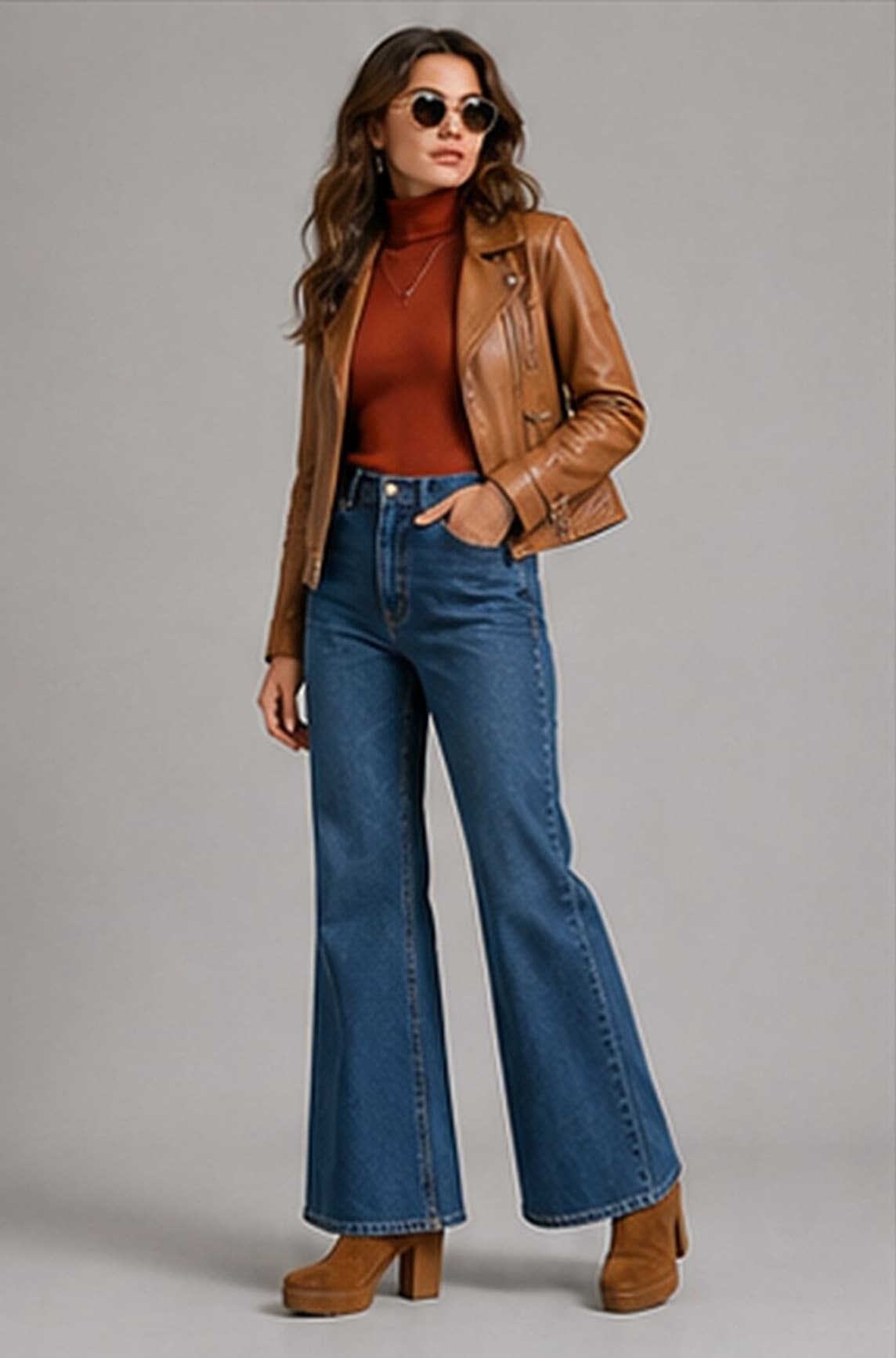
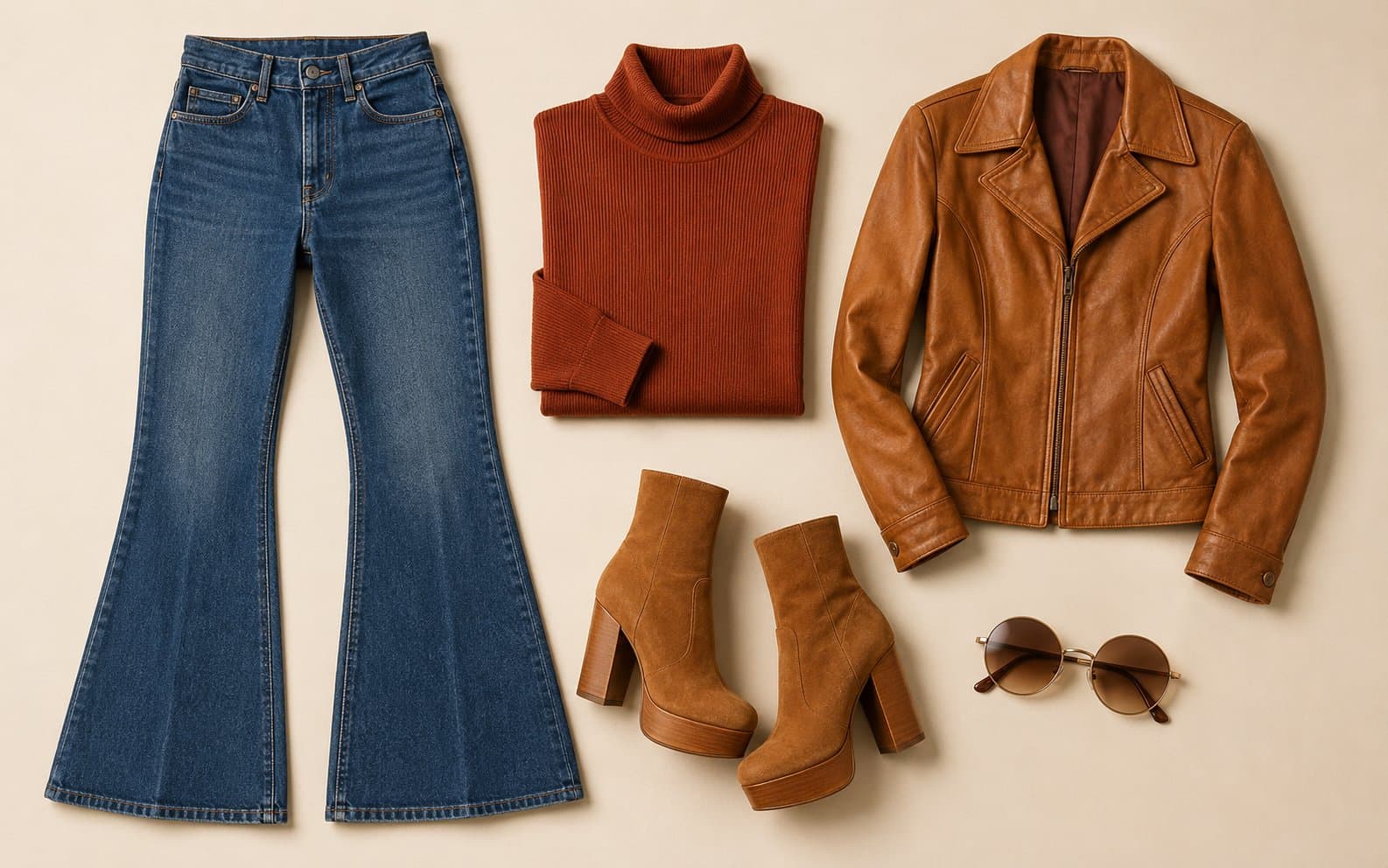
Why it works: The 70s outfit that still functions as normal clothes. Flare width and rise height do all the dating — a mid-rise flare with a narrow hem just reads as a mistake from around 2006.
Cool
Why it works: 60s shapes are geometric, so the styling has to stay flat and simple. No layering and no jewelry beyond earrings, because the silhouette is the entire idea and anything draped over it softens the line.
Warm
Why it works: A tank under a slip is how the 90s actually wore this, and it is also what makes the dress work in daylight. Keep the palette muted — oyster, sage, chocolate — rather than bright.
Year-round
Why it works: The lowest-effort retro outfit and the most likely to read genuinely old, because the tee already is. Tuck it so the high rise is visible or the proportion collapses into something shapeless.
Cold
Why it works: Outerwear is where vintage pays off hardest: old coats used more cloth and better linings than most new ones at the same price, and one of them dates an outfit on sight.
Year-round
Why it works: The one place this style allows genuine shine. Pick your era and hold it — a 70s lamé dress with 80s shoulders and 90s hair reads as a theme party rather than a decision.
→ 05 / Outfit examples
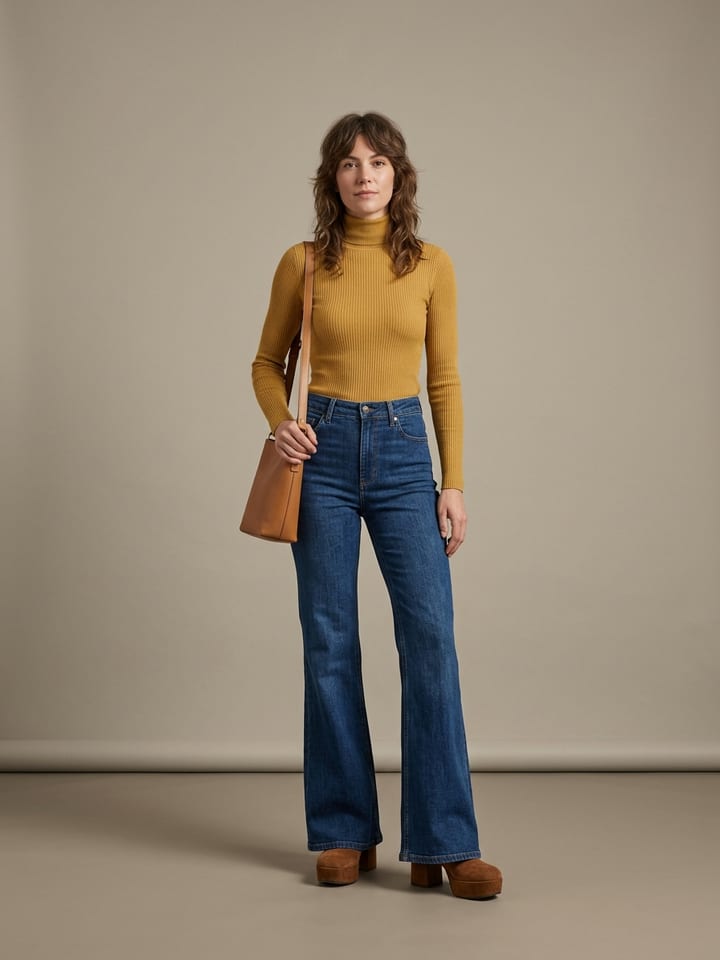
High-rise flares with a ribbed knit and suede platforms.
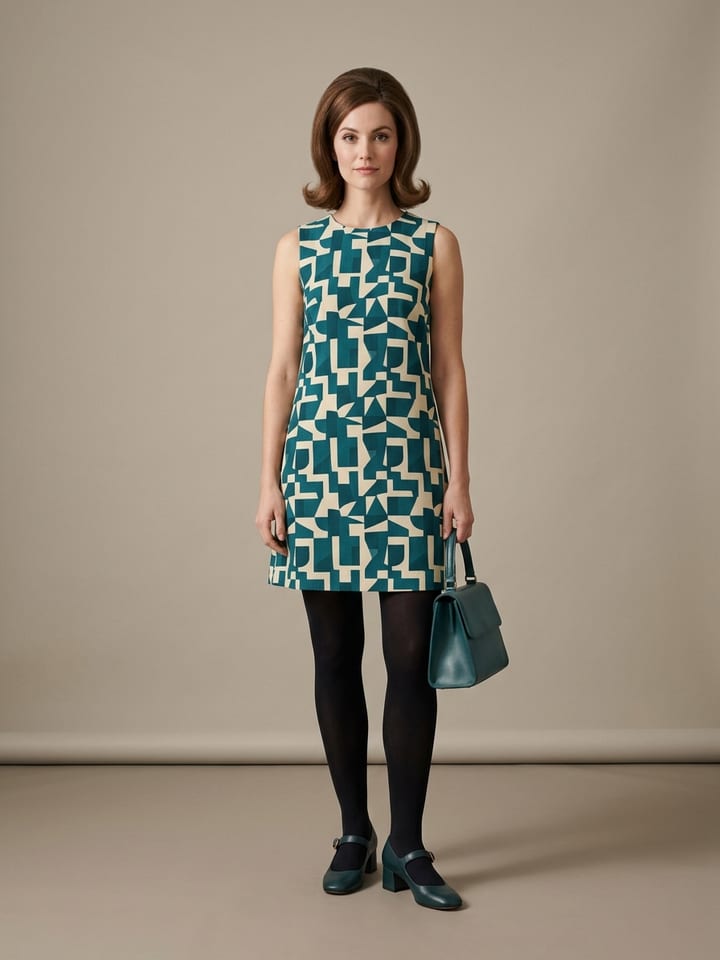
A graphic-print shift dress with low block heels.
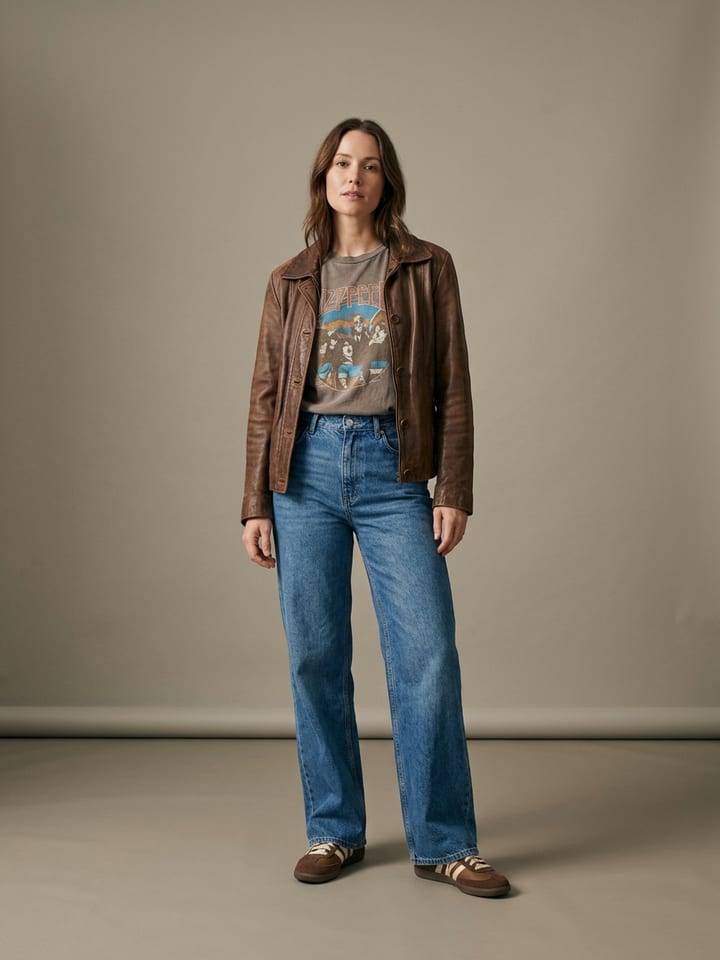
A worn band tee tucked into high-rise wide-leg jeans.
→ 06 / Key pieces · Women
→ 07 / Starter capsule
→ 08 / Palette & fabrics
Contemporary neutrals. A current-season greige or cool grey will fight every genuinely old piece in the outfit, because those shades simply were not in the palettes you are referencing. Modern athletic sneakers and chunky performance soles are the other break point — footwear is where retro outfits fail most often.
→ 09 / Across the seasons
60s territory: shift dresses, flat Mary Janes, graphic prints. The lightest silhouettes in the style and the easiest to wear without a coat over them.
90s slips over ribbed tanks, or 70s cotton in burnt orange. Square-toe sandals rather than anything with a modern sculpted sole.
Corduroy, suede and knitwear in mustard and chocolate. Peak 70s, and the season where thrifted pieces are easiest to find in wearable condition.
One vintage coat over everything, knee boots, a silk headscarf. The coat is the purchase that does the most for the whole wardrobe.
→ 10 / Where it goes wrong
Decade-mixing. 70s flares with an 80s power shoulder and 90s platform sandals is three references cancelling each other out into nothing.
Instead: One era per outfit. If you want to mix, mix the era with plain modern basics rather than with another era.
Vintage that doesn't fit. Old clothes were cut for different bodies and different underwear, and squeezing into them shows up in every photograph.
Instead: Buy for the shoulder and the rib cage, then pay a tailor. Treat alteration as part of the price of any vintage purchase, not an optional extra.
Costume accessories. A beehive wig, elbow gloves and cat-eye frames all at once turns a good dress into a theme night.
Instead: One period accessory per outfit. Let the garment carry the decade and keep your hair and makeup close to normal.
Skipping the condition check. Perished elastic, stained underarms and split seams are usually why the piece was cheap, and none of it improves with wear.
Instead: Check underarms, zips and seam allowances before you buy. A repairable garment has seam allowance left; a disintegrating one doesn't.
→ 11 / How to start this week
→ 12 / Style icons, and what they actually wore
A 60s frame of reference held for more than a decade — shift dresses, Peter Pan collars, flat shoes, a heavy fringe. The clearest example of treating one era as a wardrobe rather than a theme.
70s flares, lamé and wide collars in full saturation one season, Y2K low-rise the next. She switches eras cleanly instead of blending them, which is exactly the rule.
Early-60s girl-group silhouettes — fitted bodices, ballet flats, a beehive — pushed through her own tattoos and eyeliner. Proof retro improves when you refuse to be historically accurate about yourself.
→ 13 / This might be you if...
→ 14 / Often confused with
→ 15 / Mixes well with
→ 16 / FAQ
Retro style for women revives a specific decade — 70s flares, 90s slips, a 60s shift — with vintage or a faithful reissue, not a vague “old vibe.”
Do pick one era and commit: the collar, the rise, the sunnies. Do let a vintage jacket or dress be the core. Do mix with one modern shoe if you need it to live in now.
Don’t mash five decades into one outfit. Don’t buy costume-shop polyester and call it vintage. Don’t ignore fit; old cuts still need to sit on this body, today.
Women can wear Retro style to everyday life, creative work, nights out, and anywhere a decade reference reads as taste. Tone down extreme silhouettes for conservative offices.
Typical colors depend on the decade — 70s earth, 80s brights, 90s muted — in corduroy, denim, and leather. Women’s retro palettes should match the era they picked.
A common Retro mistake for women is a costume, not an outfit: every accessory from a themed party. Choose one era-accurate hero and keep the rest wearable.
Two minutes of swiping tells you whether Retro is genuinely your Style DNA — or one decade you like looking at more than wearing.
Take the style quizYou are cordially invited
Modesona is your personal stylist — free, instant, and built around everything already hanging in your wardrobe.


Free · No card required · iOS & Android