Fabrics
- heavy washed denim
- nylon and velour tracksuiting
- mesh jersey
- cotton jersey
- metallic-weave shirting
→ 01 / Men
The 2000s, rebooted
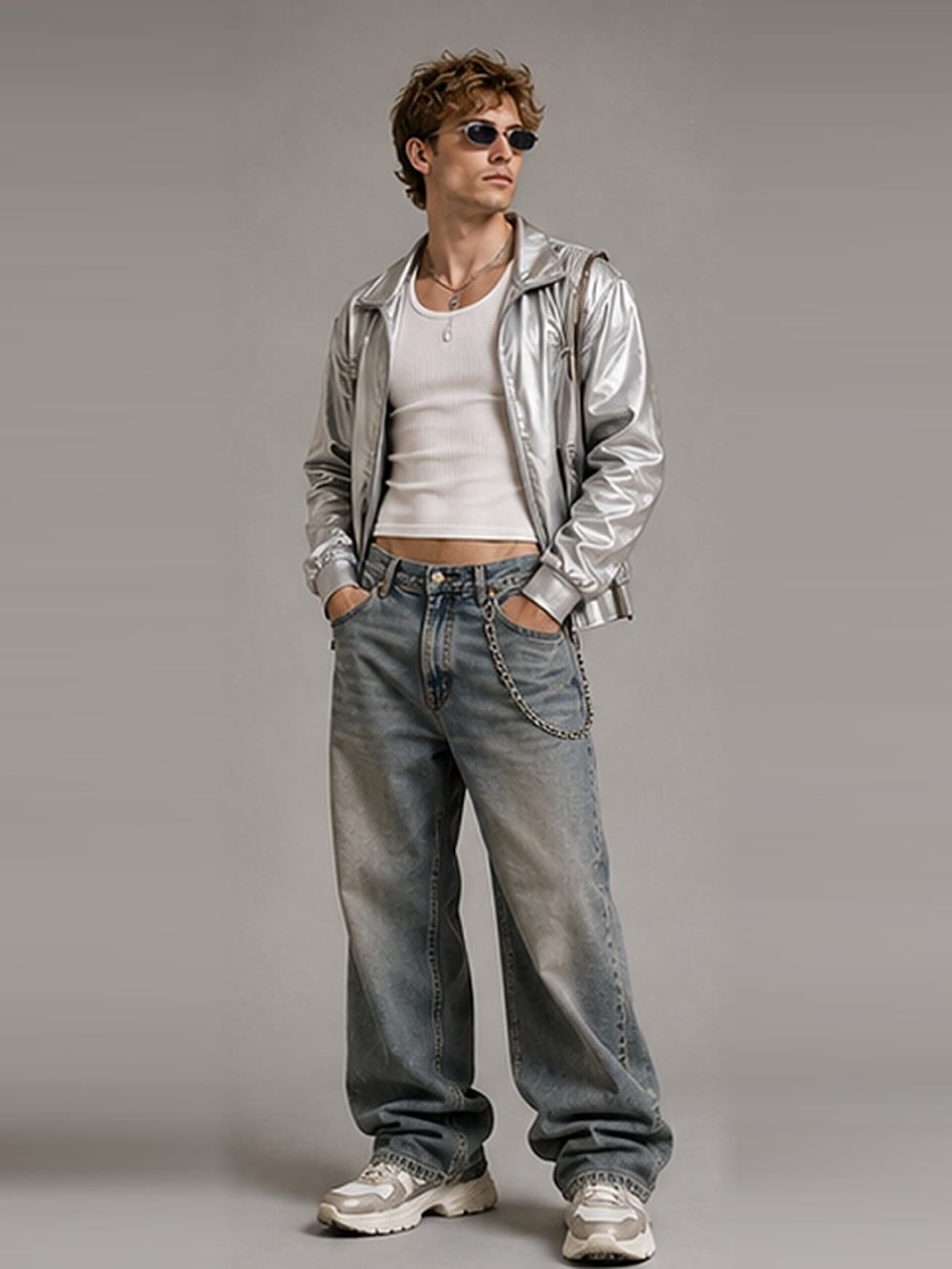
Early-2000s pop culture worn today — low rise, baby tees, metallics and butterflies, with a deliberate wink of chaos.
The short answer
Y2K style for men is baggy denim, a sports or graphic top, chunky white sneakers and something tinted or metallic near the face. Wide and long on the bottom, simple on top, with one piece of visible jewelry. It falls apart the moment the jeans get slim or the sneaker gets modern and minimal.
Low waist, short top, one thing shining. Everything else is just clothes that fit.
Updated September 22, 2026
→ 02 / What defines it
→ 03 / Where it comes from
Y2K is the only style named after a software bug. The look belongs to the years either side of the millennium, when the culture was simultaneously convinced that every computer would fail at midnight and that the future had already arrived — so clothes went metallic, semi-transparent and vaguely technical, and brands started selling the internet as a texture. Two forces fixed the silhouette. Waistlines had been dropping since Alexander McQueen’s mid-1990s “bumster” trousers pushed the idea as far as it would go on a runway, and MTV’s daily video churn broadcast the result to a global audience every afternoon, which is why the era looks so uniform in hindsight. The revival arrived roughly on schedule, since nostalgia runs on a twenty-year cycle, but it came through resale apps and short video rather than magazines. That is why today’s version cherry-picks: the low rise and the shine survived, the logo-mania and the body politics largely didn’t.
→ 04 / Y2K outfit ideas
Year-round
Why it works: The whole look lives in the leg opening. A wide hem stacking slightly over a chunky sneaker is the difference between 2003 and jeans that simply don’t fit.
Year-round
Why it works: The open shirt over a tee is the era’s layering move, and it works because it adds a shoulder without adding a jacket. Two buttons fastened at most, or none.
Cold
Why it works: Layering short over long is what keeps a jersey from looking like you’re on your way to a game. The vest holds the shoulders wide, which the whole silhouette depends on.
Warm
Why it works: The shorts end at or just below the knee — mid-thigh reads current rather than 2000s. A football shirt is the most wearable graphic the decade produced.
Cold
Why it works: The early-2000s going-out shirt is genuinely back. Keep it dark and keep it plain — the era’s pattern choices are the one part nobody is reviving.
Year-round
Why it works: The men’s tracksuit of the period was cut wider and worn zipped low over a tee. Matching the top to the bottom is what stops it reading as gym kit.
→ 05 / Outfit examples
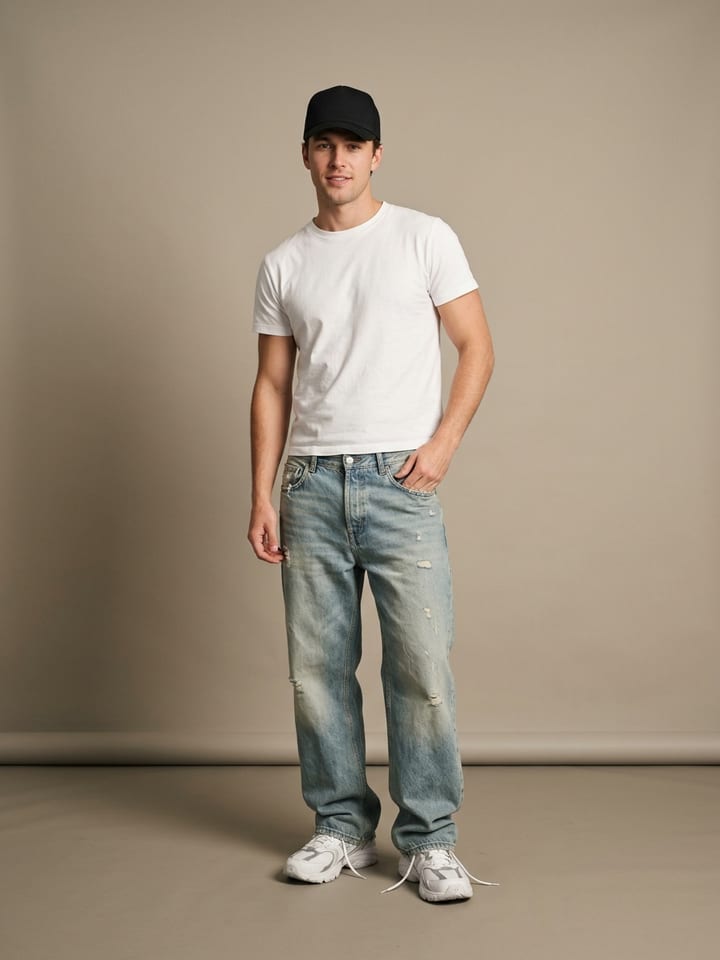
Baggy distressed denim with chunky white sneakers.
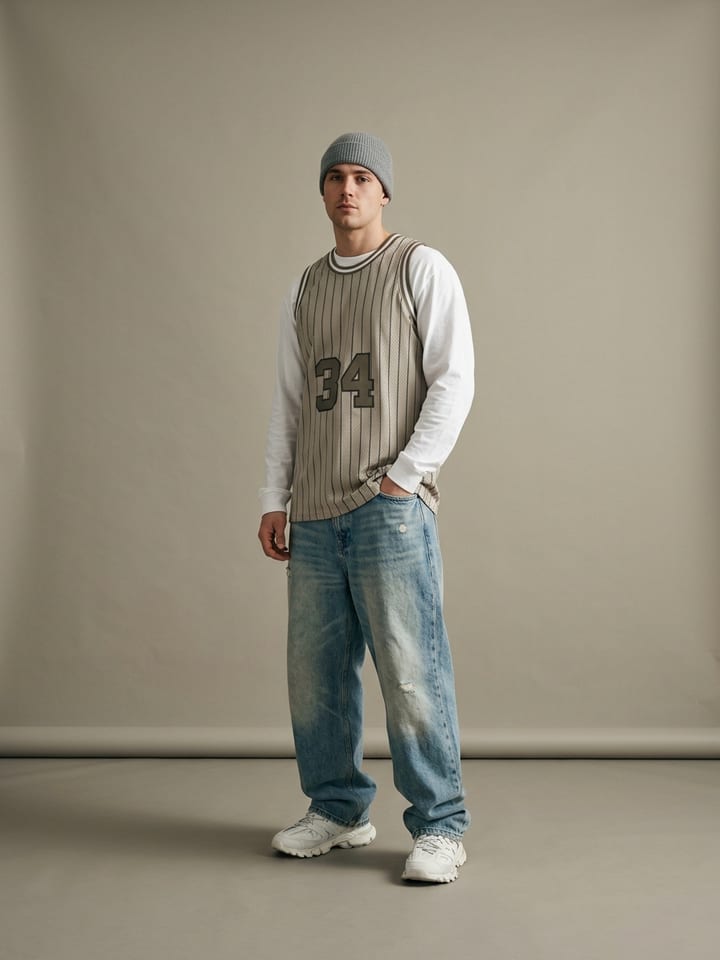
A retro sports jersey over a long-sleeve tee.
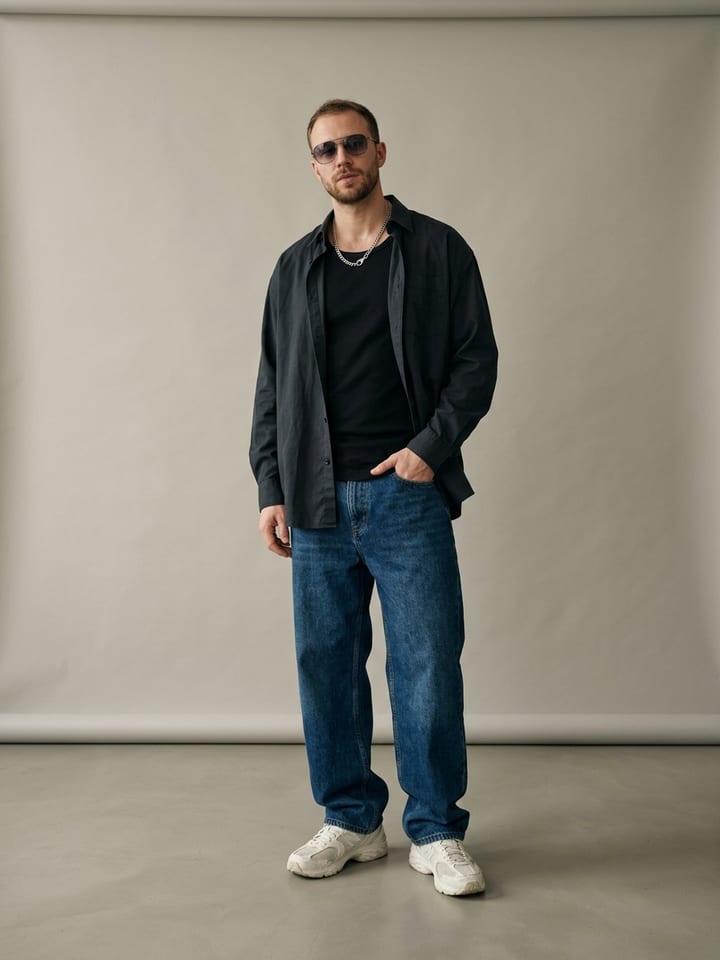
A dark shirt worn open, with a silver chain.
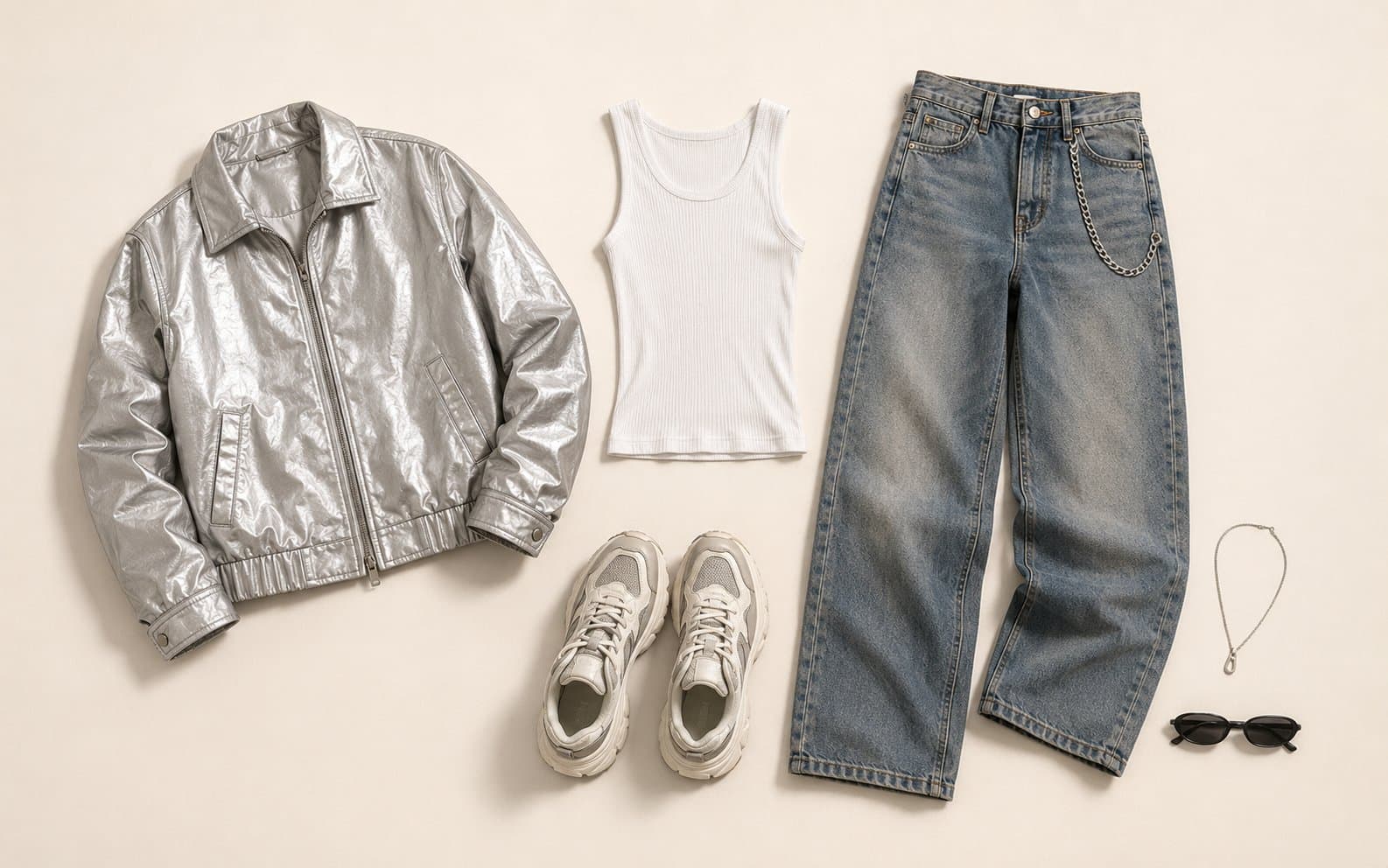
→ 06 / Key pieces · Men
→ 07 / Starter capsule
→ 08 / Palette & fabrics
Earth tones. Olive, rust and brown belong to a different revival and instantly age the outfit out of the decade. Avoid the modern slim-tapered jean in any color too — the cut alone undoes everything else you’ve put on.
→ 09 / Across the seasons
Track jacket over a tee with baggy jeans. The lightest layer the style owns, and the one it wears most often.
Jerseys, long shorts and retro runners. The era’s sportswear borrowing makes the most sense when it’s hot out.
Denim, a jersey over a long-sleeve, a cap. Peak wearability — this is when the look reads as clothing rather than reference.
A boxy or cropped puffer rather than a long coat. Length kills the proportion the whole outfit is built on.
→ 10 / Where it goes wrong
Baggy with no structure. Wide jeans under an oversized tee under an oversized hoodie is a pile, not a silhouette.
Instead: Wide on the bottom, fitted or boxy on top. The 2000s ran on contrast, not volume everywhere at once.
Logo overload. Three readable brand names in one outfit was authentic in 2003 and looks like a costume now.
Instead: One graphic — a jersey, a cap or a tee — and nothing else legible from across the street.
Modern minimal sneakers. A slim low-profile white sneaker collapses the proportion the jeans just set up.
Instead: Chunky, rounded and slightly oversized, or a true retro runner. The shoe has to hold its own against the hem.
Reviving the grooming too. The clothes come back well; the frosted tips do not.
Instead: Keep the haircut current and let the clothes carry the reference. Jewelry and shades are the only period details you need near your face.
→ 11 / How to start this week
→ 12 / Style icons, and what they actually wore
Oversized tees, baggy denim, a trucker cap and a chain, in the years when he and the Neptunes were on every other record. The skate-adjacent version of the era, and the most copied.
Denim on denim, shiny going-out shirts and a hat phase. The pop-star reading of the decade — worth studying for the silhouette and ignoring for the details.
Baggy tailoring, sunglasses indoors, and a beaded necklace with a plain white tee. He is why men’s Y2K leans clean rather than loud outside the United States.
→ 13 / This might be you if...
→ 15 / Mixes well with
→ 16 / FAQ
Y2K style for men is 2000s pop nostalgia: baggy distressed jeans, a retro jersey, a trucker cap, chunky white sneakers, and tinted shades.
Do go baggy on the jean, graphic on the top, chunky on the sneaker. Do add a chain or tinted sunglasses. Do keep it pop, not boardroom.
Don’t wear skinny black jeans and a quiet knit and pin a butterfly on it. Don’t confuse it with modern luxury street. Don’t size so huge the outfit disappears.
Men can wear Y2K style to weekends, shows, and nights out. It is a hard no for most formal dress codes and a stretch for conservative offices.
Typical colors for men’s Y2K style are washed denim, white, silver, and sport-jersey brights, in distressed denim and mesh. Nostalgia should be visible.
A common Y2K mistake for men is costume jersey plus novelty shades plus three chains. Pick a 2000s silhouette and stop adding souvenirs.
Two minutes of swiping tells you whether Y2K is genuinely your Style DNA — or a decade you only raid for the jeans.
Take the style quizYou are cordially invited
Modesona is your personal stylist — free, instant, and built around everything already hanging in your wardrobe.


Free · No card required · iOS & Android