→ 01 / Short answer
What to wear to a job interview
Wear one structured piece, a calm color palette, and shoes you can walk in. Aim one step more polished than the company’s everyday dress code.
→ 02 / 3 complete outfits
Interview outfits by dress code
Start with the company, not a style label. Pick the closest workplace below, then dress one step more polished than its everyday norm.
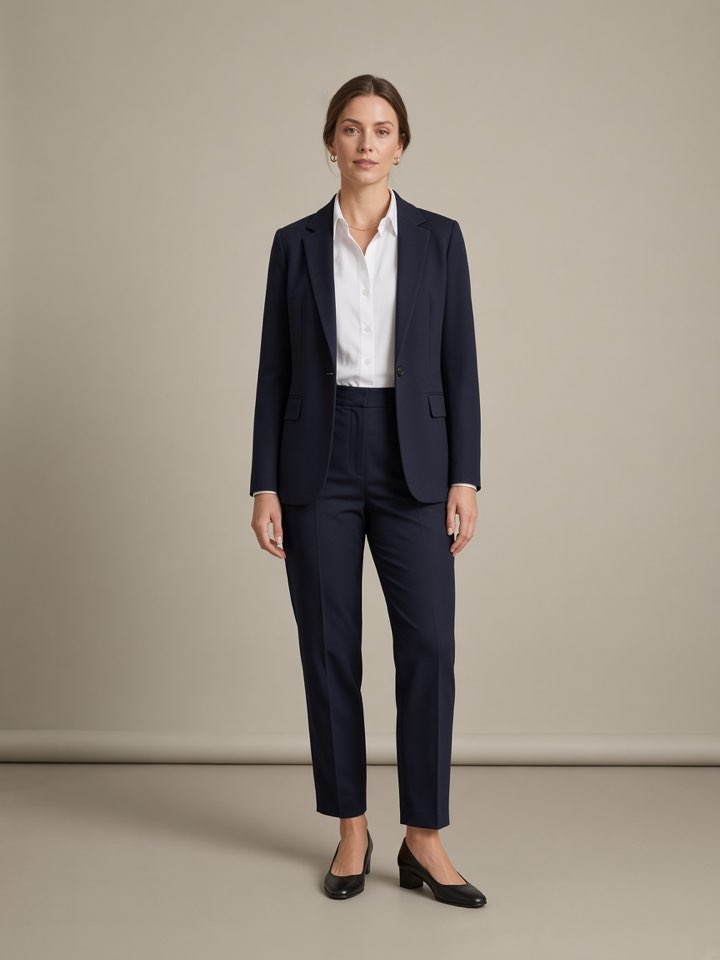
Option 01 / Corporate, finance, law
Business formal
Buttoned navy blazer, white button-down, matching tailored trousers, and black closed-toe pumps.
- Why it works
- Matching tailoring is the clearest option when the company expects conventional business dress.
- Adjust it
- A lower heel works when you will walk between meetings, and keep jewelry to small studs and a thin chain.
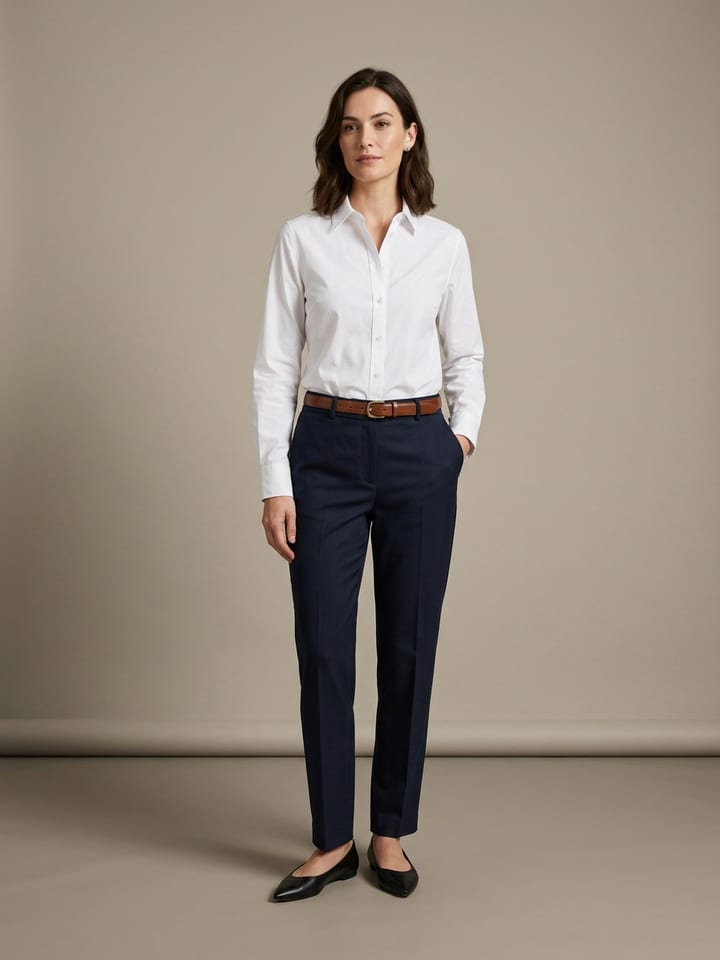
Option 02 / Tech, marketing, education
Business casual
Crisp white button-down, navy tailored trousers, a slim leather belt, and pointed black flats.
- Why it works
- Clean separates look capable without making a less formal workplace feel like a boardroom.
- Adjust it
- Add a blazer for a client-facing role, or a fine cardigan when the office is more relaxed.
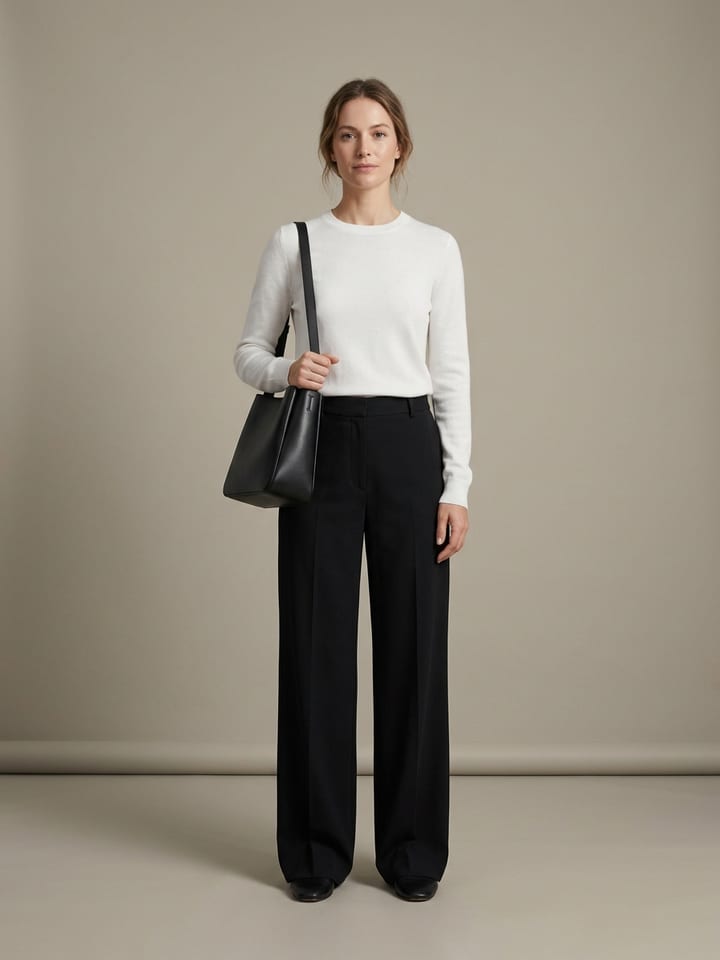
Option 03 / Startups, studios, relaxed offices
Casual workplace
White fine-knit sweater, black wide-leg trousers, simple black shoes, and a structured tote.
- Why it works
- The knit and tailored trousers stay comfortable while looking more intentional than everyday office basics.
- Adjust it
- Clean sneakers work when company photos confirm them; otherwise choose loafers or simple flats.
→ 03 / Choose the level
How to choose the right interview dress code
The industry is only a starting point. Use the company’s own signals to decide which outfit level fits the room you are walking into.
01
Start with the company’s own evidence
Read the interview email, ask the recruiter when the wording is unclear, and check recent team photos. What employees wear to meetings is more useful than a generic industry rule.
02
Choose the closest workplace level
Use business formal for conventional corporate settings, business casual for polished but flexible offices, and casual workplace only when the company clearly dresses that way.
03
Dress one step above the everyday norm
The goal is to look prepared, not costumed. Add one structured layer or smarter shoe instead of jumping from a relaxed office straight to a full formal suit.
→ 04 / Format and forecast
Adjust for the interview and the weather
Keep the same level of polish, then change the fabric, outer layer, and footwear for the format and the journey.
01
For a video interview
Wear the complete outfit so your posture and mindset stay consistent. Choose solid mid-tone colors, avoid tight patterns on camera, and test the neckline, lighting, and background beforehand.
02
For heat and warm offices
Choose breathable cotton, lightweight wool, or linen blends with enough structure to resist creasing. Carry the blazer if needed and put it on shortly before the interview.
03
For cold, rain, and long commutes
Use a clean weatherproof coat and shoes that can handle the route. Bring polished indoor shoes when conditions are severe, and allow enough time to cool down and tidy up.
→ 05 / Final check
Before the interview
Run through the outfit the day before. Small practical checks prevent the clothes from becoming a distraction in the room.
- Sit, walk, reach, and climb stairs in the complete outfit.
- Wear the shoes for at least one hour before interview day.
- Steam the clothes and check them in natural light for marks or lint.
- Keep jewelry, fragrance, patterns, and visible branding restrained.
- Pack documents, a notebook, and essentials in one simple bag.
- For video calls, test the outfit on the same camera and in the same light.
→ 06 / What to skip
Mistakes to avoid
- Wearing new shoes you have not tested for a full hour.
- Choosing loud accessories that compete with what you are saying.
- Guessing the dress code when the company’s team photos can answer it.
→ 07 / Interview questions
Frequently asked questions
A suit is the safest choice for business-formal workplaces, but it is not required everywhere. For business-casual or casual offices, polished separates that sit one step above the team’s everyday clothes are usually more appropriate.
Wear jeans only when recent company photos or the recruiter confirm a genuinely casual dress code. Choose a dark, clean pair without distressing and combine it with a structured shirt, knit, blazer, or overshirt.
Clean, minimal sneakers can work in a clearly casual workplace. If the dress code is uncertain or the role is client-facing, choose loafers, flats, derbies, or another polished closed-toe shoe instead.
Navy, charcoal, grey, cream, soft blue, and other calm neutrals keep attention on the conversation and combine easily. One muted accent is enough; avoid colors or prints that dominate on camera or in person.
Match the same formality you would choose in person and wear the complete outfit. Solid mid-tone colors usually read clearly on camera. Test the neckline, contrast, lighting, and seated view before the call.
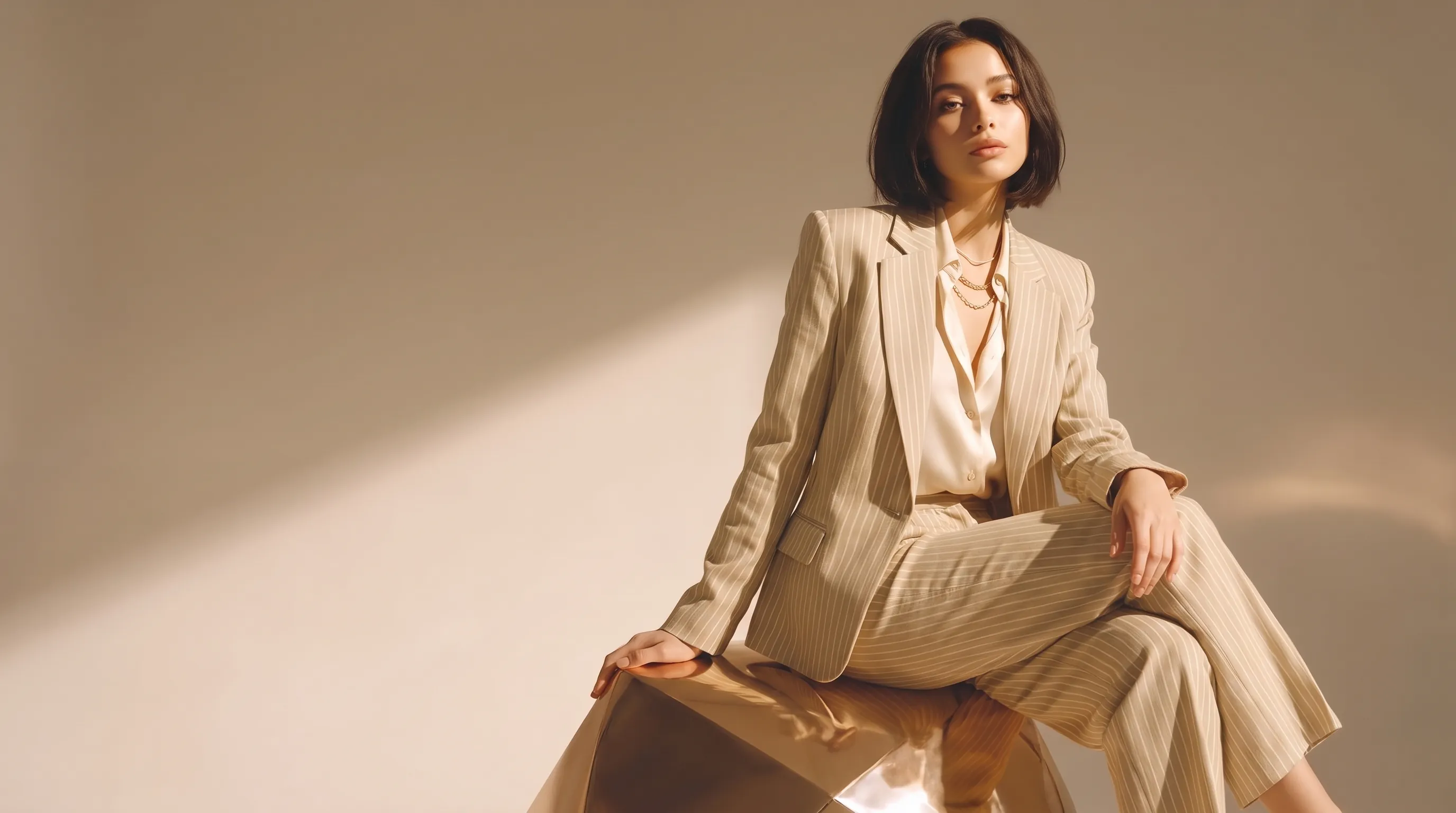
Modesona · Your wardrobe
You already own
these looks.
Modesona reads the pieces you already own and builds job interview looks like these from your own wardrobe.
Create these looks with clothes from your closet.