How to Build a Clothing Wishlist You’ll Actually Use
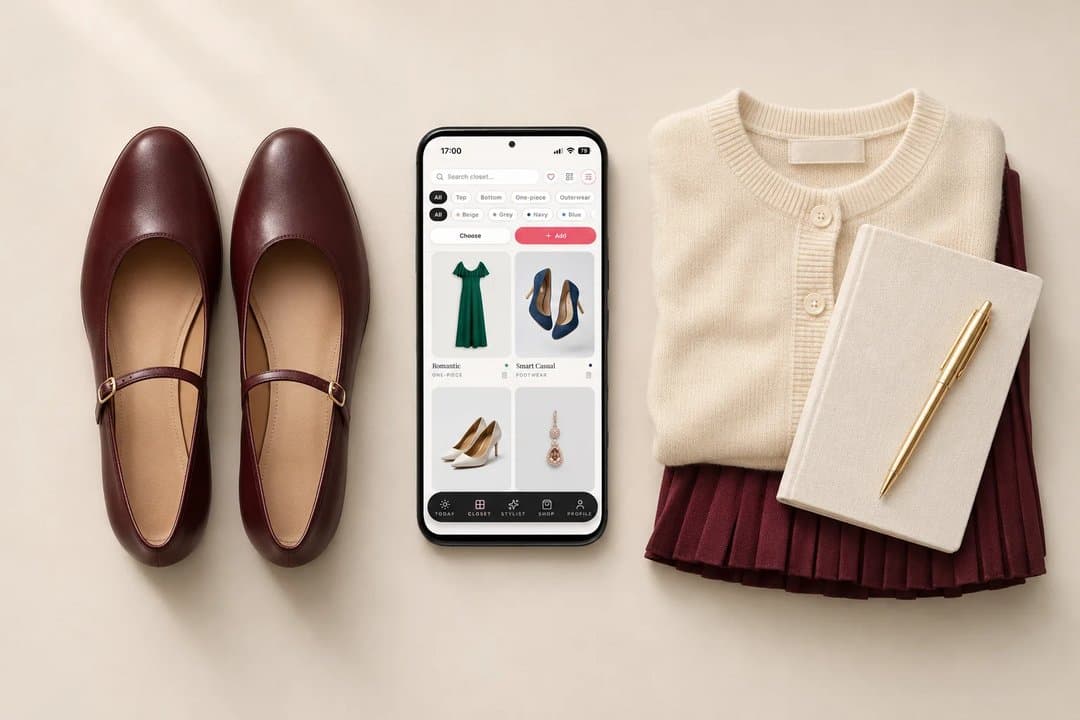
Build a clothing wishlist by recording what each possible purchase would do, which clothes you already own it would work with, and what you still need to check. Add a realistic spending limit and a reason to revisit the item. Keep possible purchases separate from clothes you actually own.
That turns a collection of appealing product links into something you can use when deciding what to buy—or leave behind.
Your list can include practical replacements, something for a new routine, and pieces you simply love. The aim is to make the reason visible so you can return to it after the initial excitement has passed.
1. Give each wishlist item a specific job
Before choosing a brand or browsing colors, write one sentence about why you are considering the piece.
- “I want a light layer for an air-conditioned office that feels less structured than my blazer.”
- “My everyday walking shoes are wearing out, and I want to compare replacements.”
- “I love embroidered tops and would enjoy wearing one with my familiar jeans.”
A useful reason describes your life or your preferences. “Everyone needs this” tells you very little about whether you would use it.
Keep the requirement separate from a particular product. “A comfortable indoor layer” is the job; a cream cardigan from a specific store is one possible answer. If that product sells out, the reason can still guide your search.
If the item is for work, start with the workplace’s actual requirements. Use the office outfit ideas as references to adapt, then check your employer’s guidance before treating any piece as suitable.
2. Check what you own before adding another option
Look for clothes that already do the job, including pieces in storage or awaiting a simple repair. Try the relevant outfits rather than relying only on memory.
Our guide to shopping your closet walks through that exploration. Here, the question is narrower: what would this particular purchase add?
Sometimes an existing piece solves the problem. Sometimes a replacement makes sense because the current garment is uncomfortable, damaged, or unavailable often enough to disrupt your routine. Owning something similar does not automatically make the new item unnecessary; record the difference that matters.
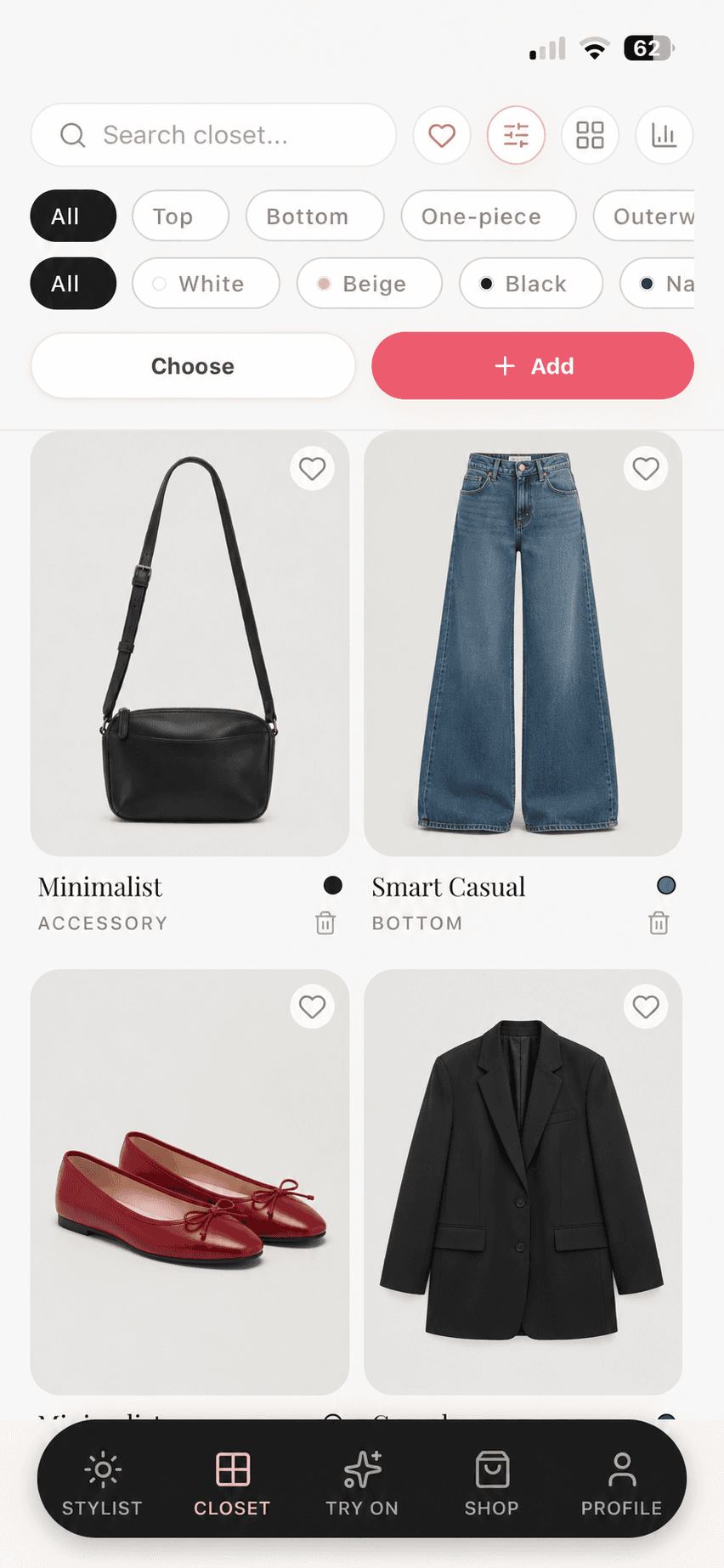
In Modesona, Closet Gap Analysis suggests missing garment categories that could connect items in your digital closet. Review those suggestions against your actual clothes. An item you own but have not added can appear to be missing, and a suggested category may be something you do not want to wear.
3. Test a candidate against complete outfits
“It goes with my jeans” is a starting point. Add the top, shoes, and layers so you can picture a complete combination.
Consider this worked example. You already own eight entries: a white T-shirt, a pale blue button-down, navy straight-leg pants, blue jeans, a burgundy midi skirt, a black blazer, white sneakers, and black loafers. The possible purchase is a cream fine-knit cardigan for light indoor warmth.
Here are three combinations to investigate:
| Possible outfit | What the cardigan would add | What to check |
|---|---|---|
| White T-shirt, navy pants, black loafers, cream cardigan | A softer alternative to the existing blazer | Whether the workplace allows the combination and the layer provides enough warmth |
| White T-shirt, blue jeans, white sneakers, cream cardigan | A removable layer for an everyday outing | Sleeve comfort and whether the cardigan works with the T-shirt’s hem |
| Blue button-down, burgundy midi skirt, black loafers, cream cardigan | A knit layer over a familiar shirt-and-skirt combination | Room over the shirt’s sleeves, comfortable movement, and how the hems sit together |
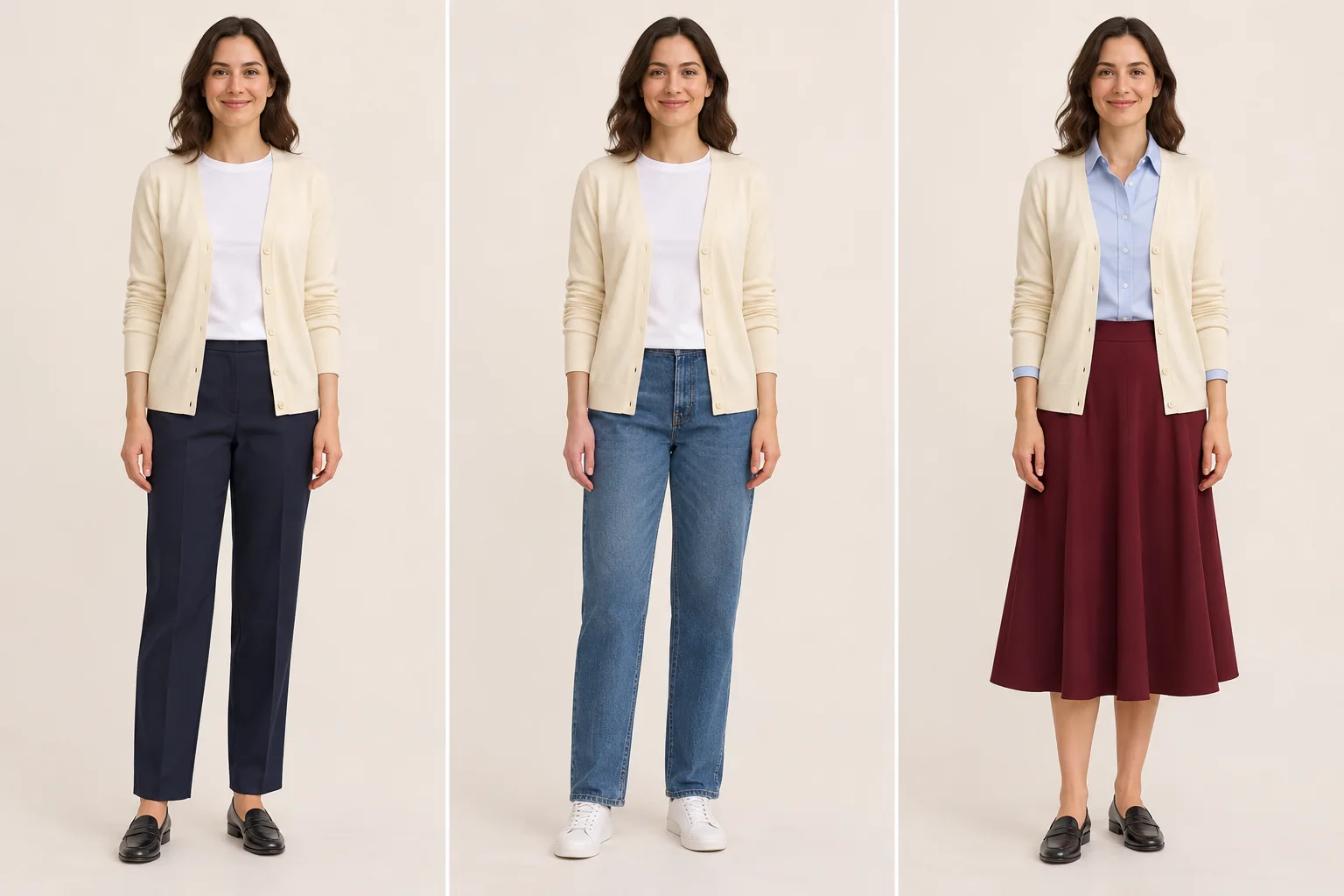
One possible cardigan, three proposed outfits. The supporting pieces are already owned in this example. Check the actual garment for fit, comfort, and layering before deciding.
These are proposed pairings, not proof that a particular product will work. A bulky cardigan, a different length, or a fabric you dislike could change the answer. The indoor layer also does not replace whatever outerwear your weather requires.
Three outfits make this example easy to compare; they are not a buying rule. A piece for a specific activity may have one clear use. Another may need to work across several ordinary days to justify the space and expense for you.
4. Record the total cost and the unanswered questions
Set a spending limit before deciding whether the current product is a good candidate. Include likely tax and shipping, and check any return costs separately.
For example, suppose your limit for the cardigan is $65 in total. A hypothetical listing at $78 before tax is outside that limit. Saving it does not mean increasing the budget or buying immediately because a discount appears.
Record the price you saw, the retailer, and the date. Treat this as an observation to verify later, not a live price guarantee.
Then list what you still need to establish:
- Fit: measurements, movement, and room over the intended layers.
- Fabric: texture, weight, and any sensitivities that affect comfort.
- Care: the actual label instructions and whether you are willing to follow them.
- Practical details: pockets, closures, coverage, or other requirements that matter to you.
- Purchase conditions: the exact variant, current availability, delivery timing, and returns policy.
“Check whether the sleeves fit over my shirt” is a useful next action. “Decide later” leaves the same uncertainty waiting for you.
5. Use this clothing wishlist template
Copy these fields into a note, document, or spreadsheet. Start with one candidate rather than transferring every product you have ever saved.
| Field | Example entry |
|---|---|
| Item or requirement | Light indoor layer; cream cardigan is one possibility |
| Reason I want it | A less structured option than my blazer in a cool office |
| Existing alternatives | Black blazer; check whether another stored knit already works |
| Complete outfits to try | The pants, jeans, and skirt combinations above |
| Maximum total spend | $65, including tax and shipping |
| Product evidence | Retailer link, exact color and size, price seen, and date checked |
| Unknowns | Sleeve room, fabric feel, care label, and return cost |
| Next action | Check stored knit first; then compare measurements and try on if practical |
| Review point | After checking the existing alternative and before a planned shopping trip |
You do not need identical fields for every purchase. A replacement pair of shoes may need more attention to walking comfort. For a special-occasion piece, you may need to check the invitation’s dress code, confirm the delivery deadline, and consider borrowing an alternative.
6. Review the list when you have new information
Choose a review point that helps resolve a question: after a repair, after trying an existing outfit, or before your next shopping trip. A fixed waiting period is optional; elapsed time alone does not tell you whether a garment suits your needs.
At review, give each entry a clear next step:
- Keep considering: the reason still matters, and you know what to check next.
- Pause: the decision depends on something unresolved, such as a repair or an upcoming change in routine.
- Remove: the item no longer interests you, an existing option works, or the practical requirements do not fit.
These are labels for your own worksheet, not Modesona app controls. You can also keep a separate inspiration list for pieces you enjoy looking at without planning to buy.
When several candidates solve the same problem, compare them together. You may need one cardigan, several distinct options, or none; the list should make that choice clearer.
7. Use Modesona to revisit the reasoning behind a purchase
Modesona’s AI Shopping Assistant lets you discuss a possible purchase with your digital closet in context, save products you are considering, and return to past shopping conversations.
Give it a specific question:
“I’m considering a cream cardigan for light indoor warmth. Compare it with the clothes I’ve added and my existing black blazer. Which complete outfits could it join, and what would it duplicate?”
Check whether the suggested clothes are actually available and whether you like the combinations. Add any relevant missing pieces to your closet before relying on the comparison.
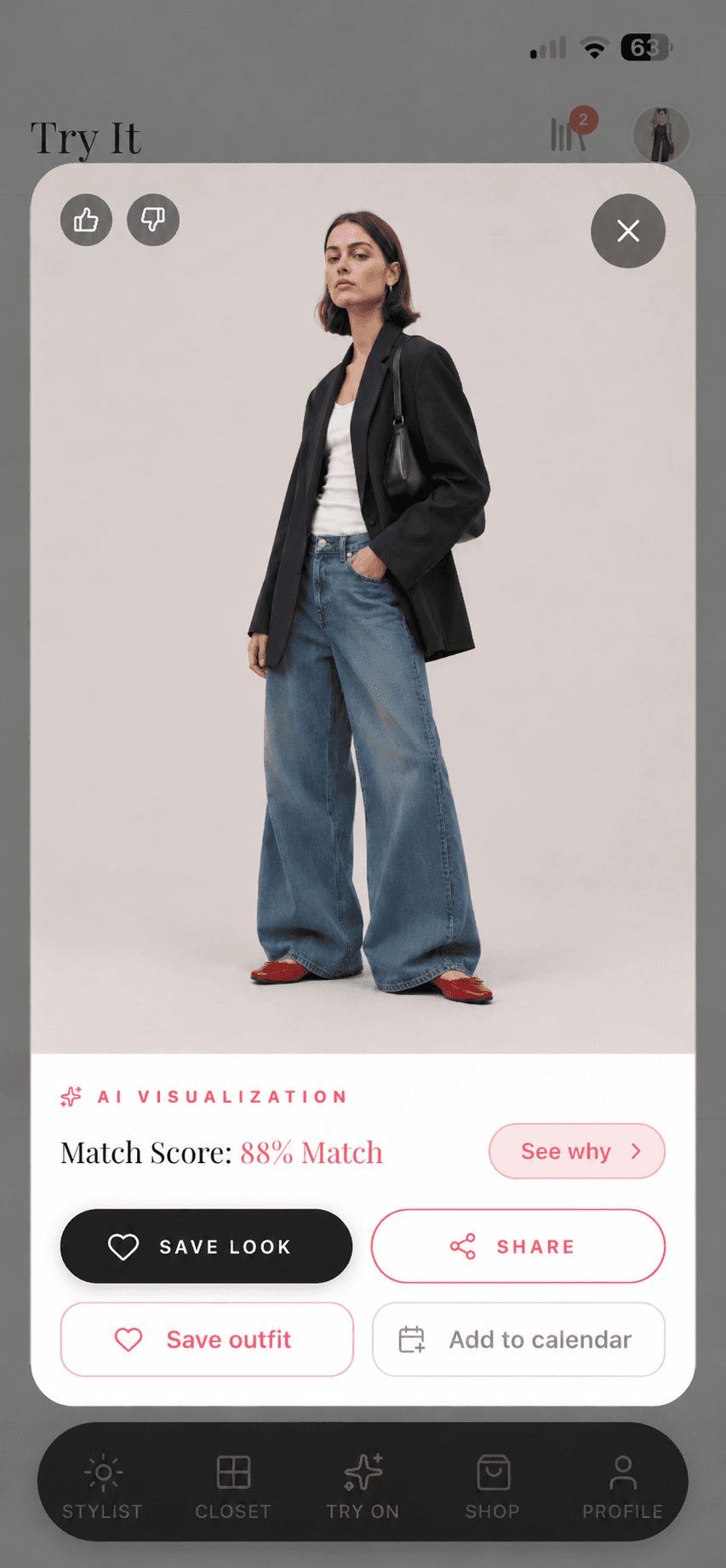
If you are assessing a particular product in a store or online, Try Before You Buy can compare its image with your digital closet. Follow the store’s photography rules and correct any misread item details.
These tools provide ideas about wardrobe compatibility. They do not establish physical fit, garment quality, fair value, or current retailer information. Check those points yourself before buying.
Frequently asked questions
Can a clothing wishlist include something I simply love?
Yes. Enjoyment is a valid reason. Write down what appeals to you and how you might wear it, then check the cost, comfort, and care as you would for a practical replacement. You do not need to invent a wardrobe gap to justify liking a piece.
What should I do if a wishlist item sells out?
Return to the requirement behind it. Another product may serve the same purpose, or you may decide the purchase can wait. Keep useful details such as the desired sleeve shape or fabric preference rather than treating one retailer link as your only option.
When should a purchase become part of my digital closet?
Keep possible purchases distinguishable from owned clothes while deciding. Once the item arrives and you decide to keep it, record the actual garment and check its details. In Modesona, a Try Before You Buy scan can be converted into a closet item after purchase.
Start with one decision you can move forward
Choose one saved product. Write down why you want it, what you already own that might do the job, one complete outfit to test, and the next unanswered question.
You may end up buying it, choosing a different option, or removing it from the list. Each outcome gives the wishlist a useful purpose: helping you make a decision you understand.