How to Build a Capsule Wardrobe From Clothes You Already Own
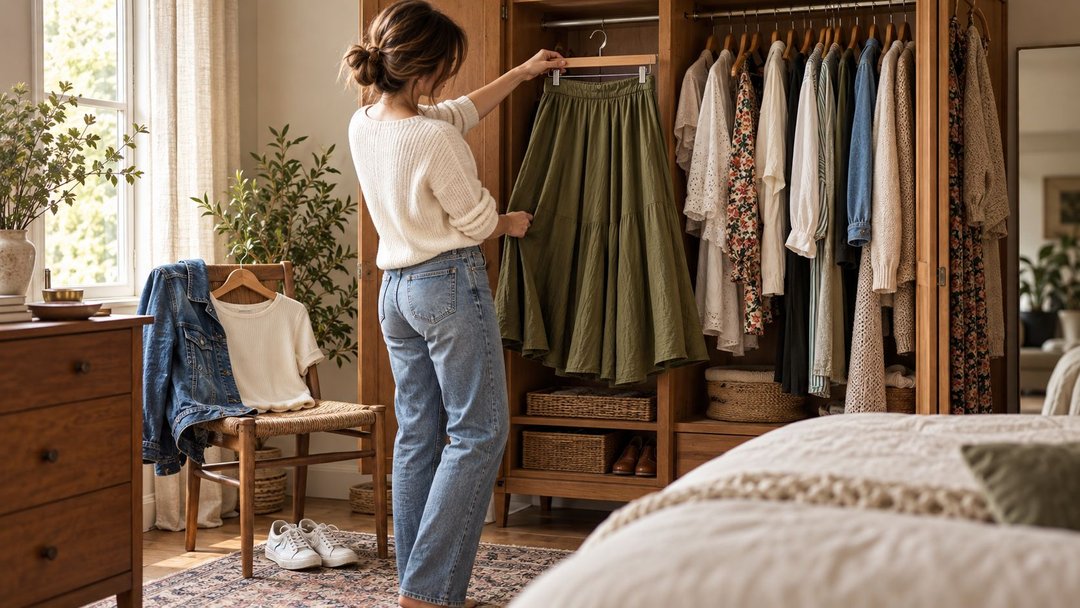
A capsule wardrobe can start with the clothes you wore last week.
You do not need to replace them with matching basics, buy a particular blazer, or decide how many garments you are allowed to own. Start by choosing a useful group of clothes for the life you have now.
To build a capsule wardrobe from clothes you already own, define the activities and weather it needs to cover, select comfortable pieces, and test complete outfits with shoes and layers. Keep the combinations you want to repeat, check how laundry affects availability, and adjust the selection after wearing it.
The result is a smaller group of dependable choices within your wardrobe. The rest of your clothes can remain available.
Here is a practical method, followed by a 15-piece example you can adapt.
What is a capsule wardrobe?
A capsule wardrobe is a selected group of clothes, shoes, and layers chosen to work together for a particular part of your life.
That might be your everyday wardrobe for the current season, your work clothes, or a selection for several recurring activities.
Pieces appear in more than one outfit, but every item does not have to match everything else. A rain jacket can serve one important purpose. A dress can be useful without combining with every top.
The selection should give you enough complete, comfortable outfits for its intended use.
A capsule wardrobe can also include color, prints, different silhouettes, and statement pieces. It does not require a minimalist aesthetic.
1. Decide what your capsule needs to cover
Give your first capsule a clear scope.
For example:
“Everyday clothes for my current routine: casual office days, working from home, errands, and informal meals in mild weather.”
A capsule for those activities will differ from one for a uniformed job, a cold-weather commute, or frequent formal events.
Write down your recurring situations and their clothing requirements.
| Situation | What your clothes need to do |
|---|---|
| Office days | Meet the actual dress code and stay comfortable while sitting |
| Errands and commuting | Allow walking and work with your usual bag |
| Working from home | Feel comfortable for your activities and any video calls |
| Informal meals | Suit the venue and your preferred level of dress |
| Time outdoors | Provide suitable warmth, coverage, or weather protection |
Include any situation you need regularly, even if it makes the selection larger.
If you wear a uniform, you might build a capsule for the decisions outside it: commuting layers, shoes, evenings, and days off.
For unclear workplace expectations, compare smart casual and business casual before choosing the clothes.
Set the boundary for other clothing
Decide what you are including in this exercise.
You might keep underwear, socks, sleepwear, workout clothing, and specialist equipment outside the main capsule count while still planning enough for your needs.
This makes the count understandable. It does not make those items less important.
2. Start with outfits you already enjoy wearing
Choose a few complete outfits that have worked recently.
Look for clothes that:
-
Fit comfortably now.
-
Suit your current activities.
-
Work for the temperatures you expect.
-
Have care requirements you can manage.
-
Feel like something you want to wear again.
Include the actual shoes and layers.
Then look for repeated pieces. Perhaps the same navy pants appear with a shirt, a knit top, and a printed blouse. Those pants already connect several useful combinations.
Frequent wear alone does not prove that something belongs in your ideal selection. You may use a top because it is easy to wash while disliking its fit.
If that distinction is difficult, the guide to finding your personal style can help you identify what you enjoy rather than what you wear by default.
3. Choose pieces that connect those outfits
Build outward from your familiar combinations.
Start with the bottoms or dresses you use most, then add suitable tops, shoes, and layers. A piece earns a place because it contributes to an outfit or meets a specific requirement.
For each candidate, ask:
-
Which complete outfit does this belong to?
-
What activity does that outfit cover?
-
Can I wear it comfortably with the selected shoes and layers?
-
Does it give me a useful alternative when another piece is unavailable?
There is no required number of combinations per garment. A versatile cardigan and a weather-specific coat have different jobs.
Work with colors you already like together
Look at successful outfits before choosing a palette.
You might already enjoy navy with green, burgundy with cream, or black with bright prints. Use those relationships as a starting point.
For a patterned blouse, test a bottom in one of the print’s colors. Then try it with a familiar pair of jeans or pants.
You do not need to replace colorful clothes with neutrals to make the capsule work.
If a piece interests you but rarely gets worn, give it a separate test using the shop-your-closet exercise. It can join the capsule if you find a useful role for it.
4. Test complete outfits before counting combinations
A group of coordinated clothing photos is not yet a working capsule.
Put the pieces on with the shoes, undergarments, and layers you intend to use.
Check:
-
Can you sit and move comfortably?
-
Do pant hems work with the selected shoes?
-
Do layers fit over the tops?
-
Does the outfit provide the coverage and temperature control you want?
-
Is it appropriate for its intended setting?
Keep a short list of combinations that pass the try-on check. Treat them as candidates until you have worn them for the actual activity.
Avoid multiplying tops by bottoms and presenting the answer as your outfit count. Some combinations may not work with your shoes, fit preferences, weather, or plans.
For help assembling the individual looks, follow the guide to creating outfits from clothes you already own.
A 15-piece capsule wardrobe example
This example covers casual office days, errands, home working, and informal meals in mild weather.
It assumes the wearer already owns the pieces, the office accepts the proposed outfits, and suitable clothing care is available. Adjust those assumptions before using the selection.
| Category | Example pieces | Count |
|---|---|---|
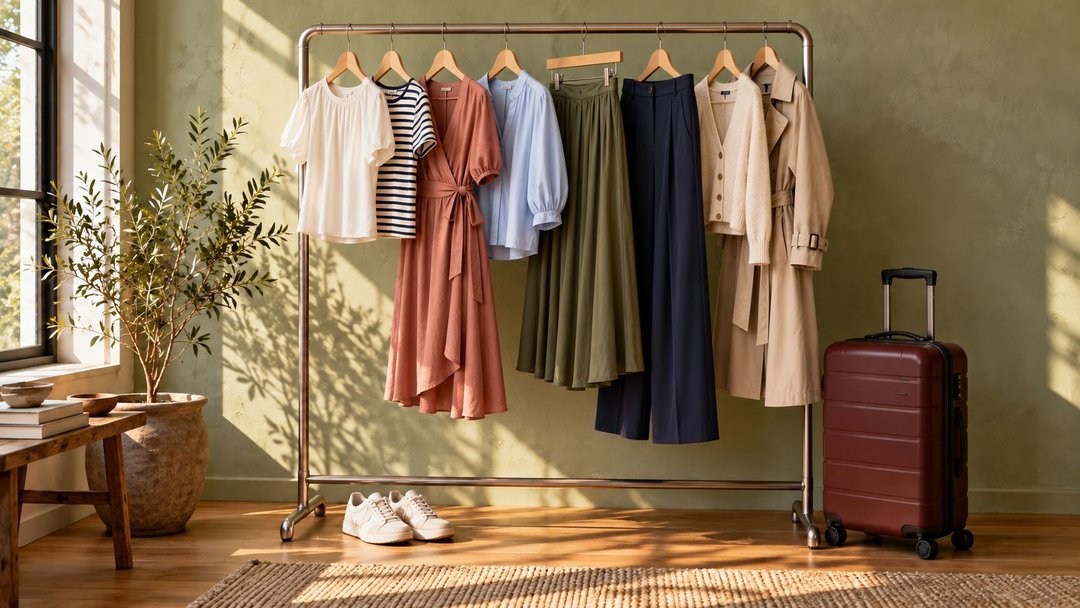
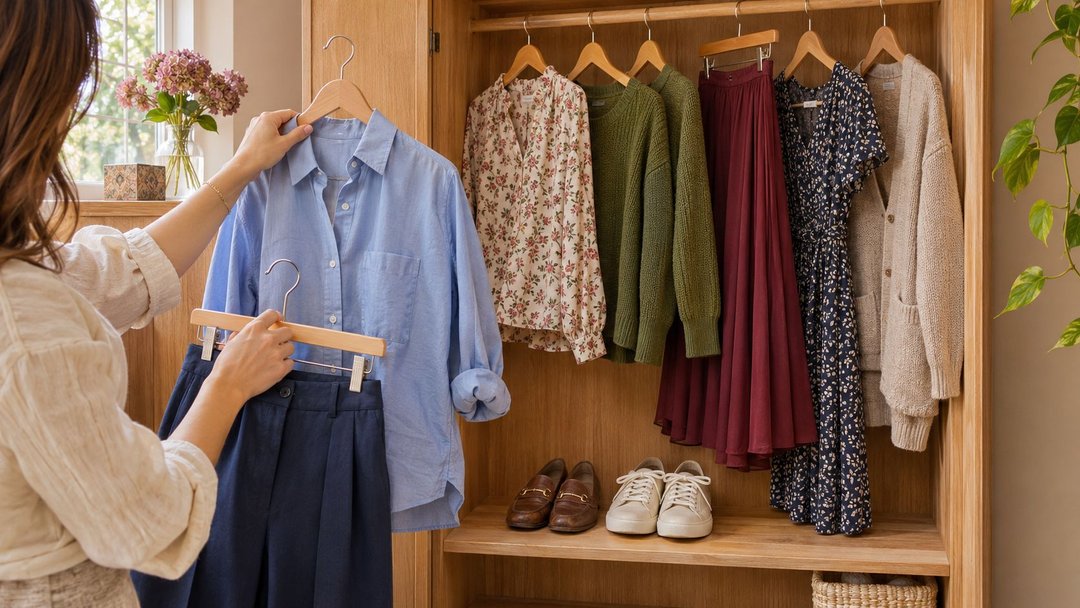
| Tops | Cream T-shirt, striped T-shirt, blue button-down, green knit top, printed blouse | 5 |
| Bottoms | Navy pants, jeans, burgundy midi skirt | 3 |
| One-piece outfit | Simple dress | 1 |
| Indoor layers | Cardigan, relaxed blazer | 2 |
| Weather layer | Jacket appropriate for the forecast | 1 |
| Shoes | Walking sneakers, loafers, comfortable ankle boots | 3 pairs |
That is 12 clothing pieces and three pairs of shoes.
Underwear, socks, sleepwear, bags, accessories, workout clothing, and any specialist items are additional. This is an illustrative selection, not the total contents of someone’s closet.
Eight complete outfits to try
| Use | Combination |
|---|---|
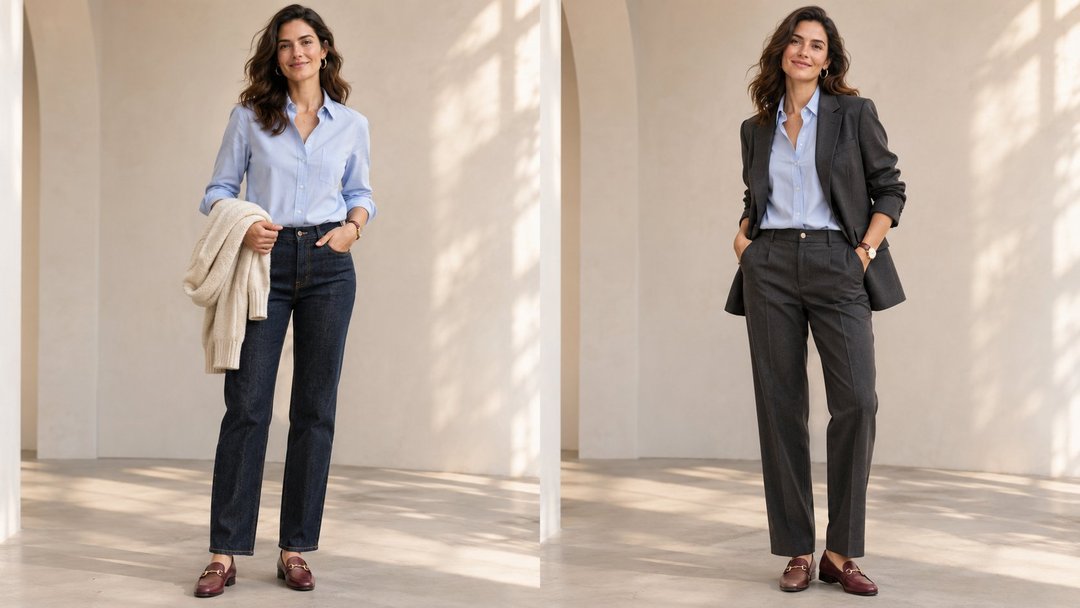
| Office | Blue button-down + navy pants + loafers + blazer |
| Office alternative | Green knit top + navy pants + loafers |
| Work or an informal meal, where appropriate | Printed blouse + burgundy skirt + ankle boots |
| Errands and walking | Striped T-shirt + jeans + sneakers + cardigan when needed |
| Home working and local errands | Cream T-shirt + navy pants + suitable footwear for the activity |
| Informal dinner | Dress + cardigan + ankle boots |
| Casual outing | Blue shirt worn open over the cream T-shirt + jeans + sneakers |
| Another informal meal | Printed blouse + jeans + loafers |
Add the weather jacket when conditions require it. Confirm that it fits over the selected layers.
These are outfit options, not a day-by-day schedule. The same blouse appears twice because it offers two combinations; that does not establish that it is ready to wear again without care.
If you prefer dresses, replace some separates with dresses you already use. If skirts are not part of your wardrobe, substitute another bottom. Keep the activities covered as you change the list.
5. Check whether the selection covers your routine
Now review the capsule as a whole.
For each recurring situation, identify a complete outfit and an appropriate alternative when one is useful.
| Check | Question to answer |
|---|---|
| Activity coverage | Is there something suitable for each regular situation? |
| Footwear | Can I complete those outfits with shoes that work for the actual day? |
| Temperature | Do I have the layers or lighter alternatives I need? |
| Clothing care | What remains available while favorite pieces are being washed or repaired? |
| Personal preference | Would I choose these combinations willingly? |
A capsule can look coordinated and still leave important needs uncovered.
For example, you may have several office combinations but nothing comfortable for a long walk. Or all your tops may need ironing when that is difficult to fit into your routine.
Describe the problem before adding more clothes.
Run a laundry check
Imagine your most-used top and one pair of pants are unavailable.
Can the remaining selection cover your next normal activity?
If not, investigate why:
-
Do you own another suitable piece outside the capsule?
-
Does a different combination solve the problem?
-
Would changing the care schedule help?
-
Do you need more fresh clothing between laundry sessions?
Add enough for your actual changing and washing needs. You do not need to rewear something that no longer feels clean or comfortable to preserve a small count.
6. Keep the capsule easy to find
You can group the selected clothes in one closet section or identify them with a simple list.
Keep the rest of your wardrobe accessible while testing. Choosing a capsule does not require donating or boxing up everything else.
If you prefer a digital reference, Modesona’s Digital Closet supports search, filters, favorites, and custom tags.
You could tag your selected pieces “Everyday capsule” and filter for them when reviewing combinations. Use entries for clothes you actually own; remove or distinguish any sample pieces before relying on the selection.
You do not need a complete catalog to begin. Start with the pieces in this exercise and expand when useful.
7. Wear the selection and make specific adjustments
Try the capsule through enough ordinary days to encounter its intended situations. One or two weeks can be a useful first review point, but an unusual week may tell you less.
Record what happened:
| Observation | Possible adjustment |
|---|---|
| A planned outfit stayed comfortable | Keep it as a repeatable option |
| A top only worked with a layer you disliked | Try another layer or remove that combination |
| You repeatedly needed a warmer option | Bring a suitable piece into the selection |
| A favorite was often unavailable | Review care timing or include another useful option |
| A piece went unworn | Check whether its activity or weather occurred before judging it |
Change the element causing the problem.
If the shoe hurts, replace the shoe. If the outfit does not meet a work requirement, revise that combination. If you simply do not enjoy a garment, you can leave it outside the capsule.
Save the combinations worth repeating. Modesona’s Saved Outfits keeps complete looks from your digital closet, with favorites and notes.
Once you have a dependable selection, the separate guide to planning outfits for the week explains how to assign those combinations to dates.
How many pieces should a capsule wardrobe have?
There is no universal number.
The right size depends on the activities you include, local weather, laundry access, changing preferences, and the range of outfits you want.
The 15-piece example above demonstrates a selection. It is not a recommendation to reduce every wardrobe to 15 pieces.
A larger capsule may be more useful if you need frequent fresh changes or clothing for different work settings. A smaller selection may suit a narrower purpose.
Count pieces after checking coverage. Use the number to describe the capsule, rather than treating it as the goal.
Before buying capsule wardrobe essentials
Compare any suggested “essential” with your actual needs.
A white shirt is not missing if you prefer the blue one you own. A trench coat is not necessary if your existing jacket covers the weather and situations in your capsule.
Write a gap as a specific unmet need:
“I need a comfortable shoe for walking to work that also works with my two office pants.”
Then check your wider closet, possible repairs, and alternative combinations.
Modesona’s Closet Gap Analysis suggests garments that could connect pieces in your digital wardrobe. Review suggestions against the clothes you actually own: an uncataloged item can appear to be missing.
A suggestion is a prompt to investigate, not an instruction to buy.
Your capsule wardrobe checklist
Before treating the selection as ready, confirm:
-
I have defined the activities and weather it covers.
-
The selected clothes fit comfortably now.
-
Each piece has an outfit or a specific purpose.
-
I have tried complete combinations with shoes and layers.
-
My regular situations are covered.
-
I have enough fresh clothing for my care routine.
-
I can find the selected pieces and outfit references.
-
I have kept the rest of my clothes available during the trial.
-
Any proposed purchase addresses an observed need.
Frequently asked questions
Can I build a capsule wardrobe without buying anything?
Yes, if the clothes you own cover the activities and conditions you have chosen. Start with familiar outfits and look for useful connections. If a genuine need remains, describe it before considering a purchase.
Does every item need to match everything else?
No. You need complete outfits for your routine and useful alternatives. Some pieces serve specific purposes, such as rain protection or an occasional work requirement.
Can a capsule wardrobe include bright colors and prints?
Yes. Start with combinations you already enjoy and test additional pairings. A neutral palette is optional.
Do I have to get rid of clothes outside the capsule?
No. Leave them available while you test. Seasonal pieces, formal clothing, sentimental garments, and clothes for other activities may sit outside this particular selection.
Is a capsule wardrobe the same as a travel capsule?
They use similar selection principles, but travel adds constraints such as luggage space, a fixed itinerary, and laundry away from home. For those decisions, use the separate travel capsule wardrobe planning guide.
What if my capsule does not cover an unexpected day?
Use another suitable piece from your closet. Then decide whether the situation is likely to recur. If it is, revise the capsule; if it is unusual, the extra outfit can remain separate.
Build a selection you want to use again
Start with clothes you enjoy wearing, give each piece a practical role, and test the complete outfits.
Then check what happens when the weather changes, a favorite is in the laundry, or your plans shift. Adjust the selection around those observations.
Your first capsule does not have to be your final one. It only needs to give you useful choices for the part of life it covers.
Use Modesona’s Digital Closet to keep the selected pieces easy to find, and save the combinations you want to repeat.