Fabrics
- tweed
- wool flannel
- corduroy
- oxford cotton
- lambswool
- velvet
→ 01 / Women
Dressed for the library
Tweed, turtlenecks and oxford shoes in autumn tones — scholarly style that looks like it reads poetry by candlelight.
The short answer
Dark Academia style for women is a tweed blazer, a dark turtleneck or a collared shirt, a pleated wool midi skirt or wool trousers, and oxfords or loafers — all in brown, charcoal, forest and burgundy. It is classic tailoring in a minor key: covered, textured and slightly severe, whatever the weather is actually doing.
Dress one degree more formal than the room, and keep the whole thing in autumn colors.
Updated September 22, 2026
→ 02 / What defines it
→ 03 / Where it comes from
Every garment in dark academia is older than the aesthetic that collects them. Tweed began as estate cloth in the Scottish and Irish countryside, moved into British university towns because it was warm and nearly indestructible, and stayed there long enough to become shorthand for teaching. Corduroy, flannel trousers, oxford shirts and brogues followed the same path from function to faculty uniform. The mood layered on top is literary and cinematic rather than historical: Brideshead Revisited, Dead Poets Society, and above all Donna Tartt’s The Secret History, published in 1992, which gave the look its specific blend of scholarship and dread. The name itself is internet-native — it grew on Tumblr and then exploded on TikTok around 2020, when campuses closed and a lot of people found themselves dressing for a library they couldn’t enter.
→ 04 / Dark Academia outfit ideas
Cool
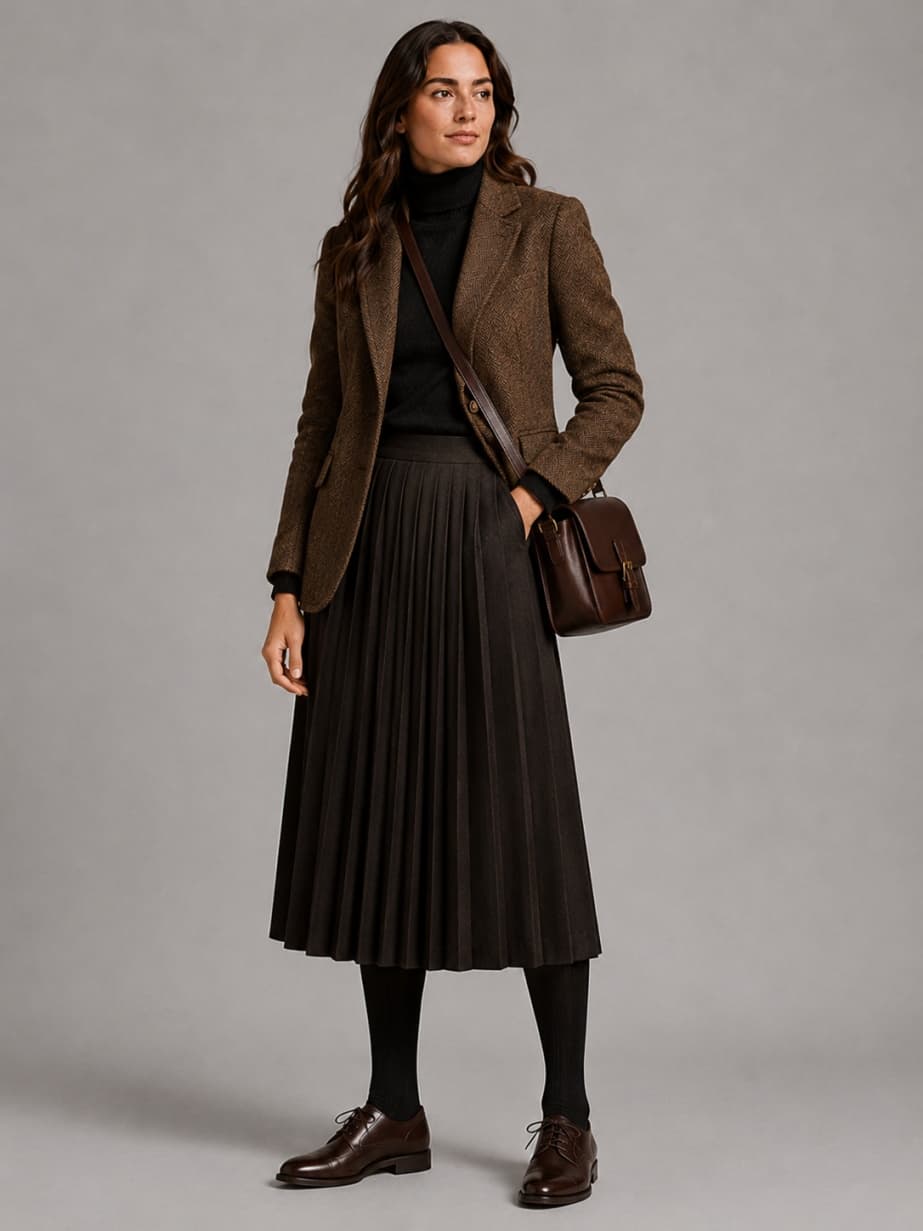
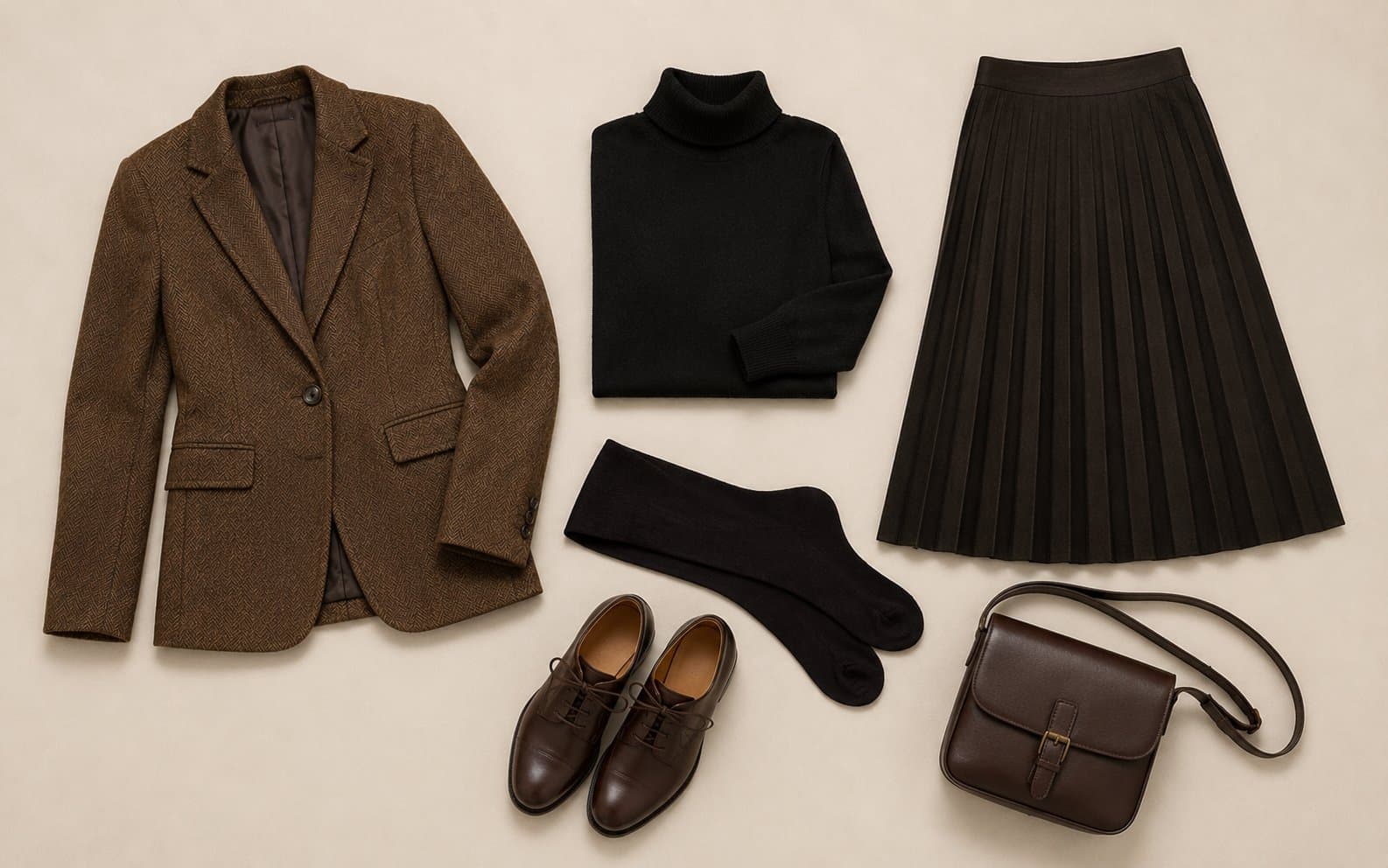
Why it works: The reference outfit. The turtleneck keeps the neckline closed, which is what makes it scholarly rather than simply smart, and the pleats give the skirt movement so the tweed doesn’t look stiff.
Cool
Why it works: A knit vest over a shirt collar is the cheapest entry into this style and the most flexible — it layers warm, photographs well, and reads studious without a jacket in the room.
Cold
Why it works: The coat has to reach at least mid-calf. Dark academia’s whole winter silhouette is a long vertical line with a scarf breaking it once at the neck — a short coat collapses it.
Warm
Why it works: The mistake in heat is bare and bright; the fix is covered and dark in a lighter fiber. Cotton and linen in the same brown-and-ink palette keep it recognizable at 85 degrees.
Year-round
Why it works: Velvet is the one luxurious texture this palette welcomes, because it absorbs light rather than reflecting it. Keep the jewelry antique-looking and singular — one ring reads better than a stack.
Cool
Why it works: Jeans are allowed if everything above the waist stays tailored and textured. This is the version you can wear to a coffee shop without looking like you’re in period costume.
→ 05 / Outfit examples
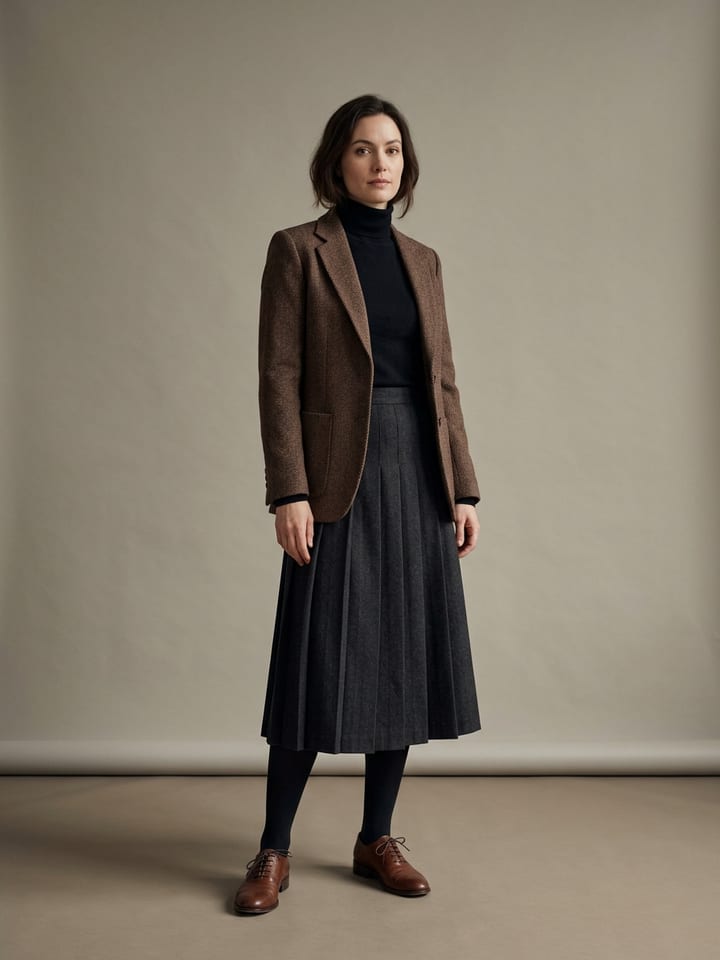
Tweed blazer over a black turtleneck, with a pleated wool midi.
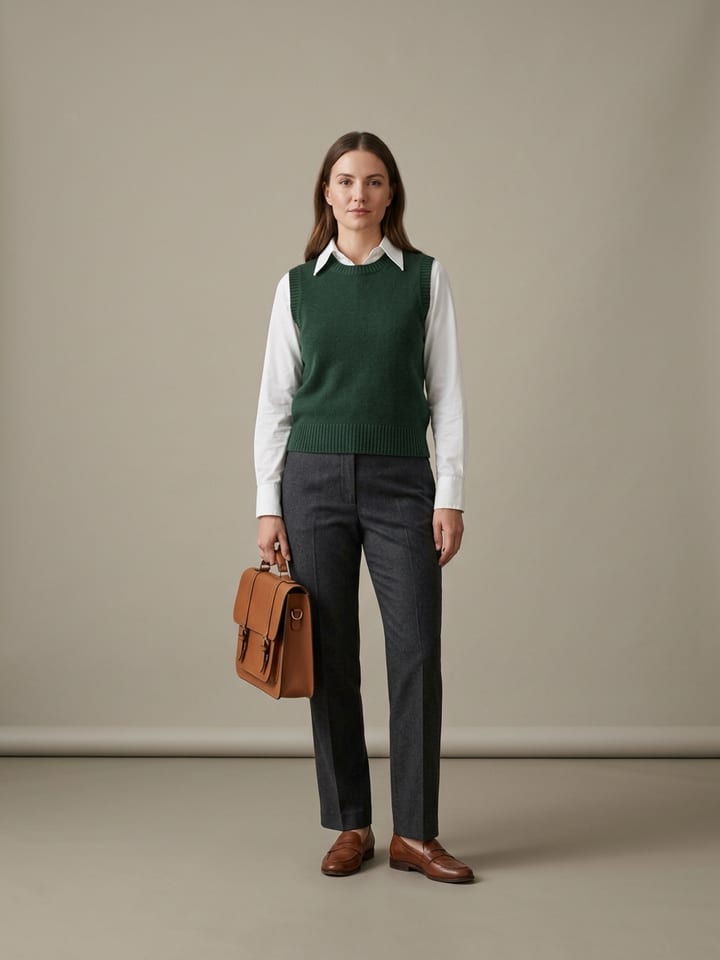
A forest knit vest over a white shirt, with wool trousers.
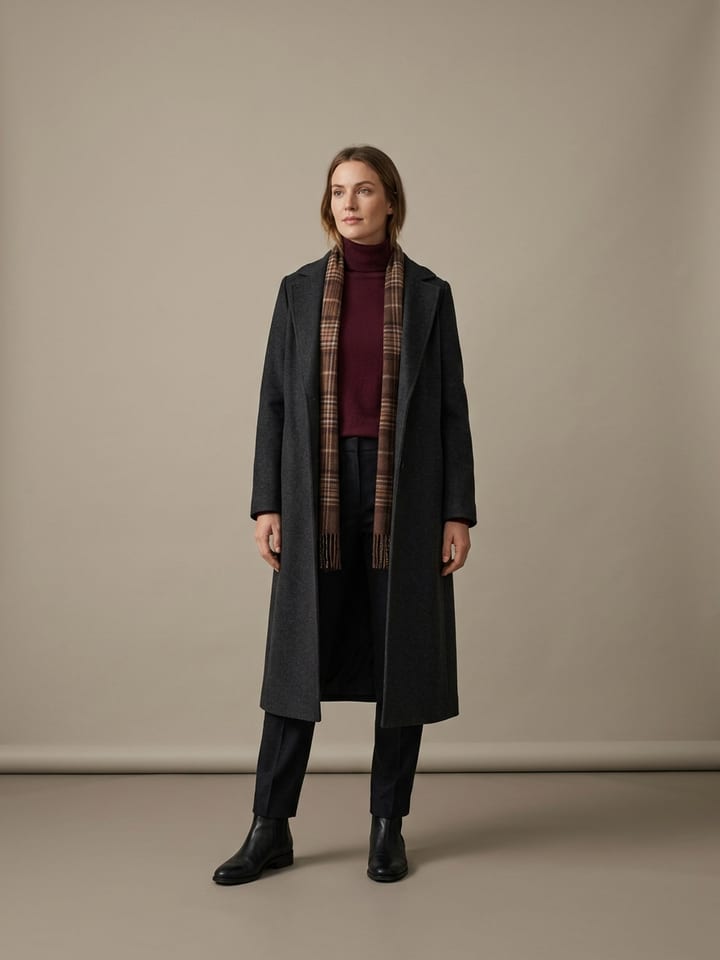
A long charcoal coat over a turtleneck, with a plaid scarf.
→ 06 / Key pieces · Women
→ 07 / Starter capsule
→ 08 / Palette & fabrics
Cool, bright and shiny. Pastels, electric blue and anything neon fight the whole autumnal register, and satin or sequins pull it toward evening glamour. Pure white as a large block is also too stark here — cream and ecru sit better against brown.
→ 09 / Across the seasons
Drop the coat, keep the blazer, and let the shirt collar sit outside the knit. Cream can enter the palette; nothing brighter should.
The hard season. Cotton and linen in the same dark colors, short sleeves with a collar, and flats instead of boots — never shorts, never neon.
Everything works at once: tweed, corduroy, wool pleats, boots and a scarf. If the style has a home, this is it.
A long wool coat over the same tailoring, with heavier knits underneath. Add gloves and a scarf and change nothing else.
→ 10 / Where it goes wrong
Costume over clothing. A cape, a pocket watch and a candle-lit photo are an aesthetic mood board, not an outfit you can wear to class.
Instead: Keep the tailoring and lose the props. A tweed blazer with jeans is dark academia; a cloak is Halloween.
One-note brown. Head-to-toe mid-brown in flat fabric goes muddy and shapeless in daylight, which is the opposite of the intended severity.
Instead: Vary the texture and the depth: tweed against smooth wool, chocolate against cream, one near-black anchor in every outfit.
Blazers that don’t fit at the shoulder. A too-big vintage jacket with the sleeve past the knuckles reads as borrowed, and not in a charming way.
Instead: Buy for the shoulder and pay to have the sleeves shortened. It’s the cheapest alteration there is and it fixes most thrifted tailoring.
Treating it as a winter-only wardrobe. Wearing heavy tweed through summer is how people conclude the style is unwearable.
Instead: Translate rather than abandon: same colors, same collars, in cotton and linen. The palette is doing more work than the fabric weight.
→ 11 / How to start this week
→ 12 / Style icons, and what they actually wore
Sharp menswear tailoring, a white shirt buttoned to the collar and a blunt dark bob, worn consistently for decades. She wrote the novel that defined the aesthetic and then dressed the part for the rest of her career.
Camel coat, knit hat, layered sweaters and plaid over a collared shirt on a cold campus. The 1970 film is where most of the softer, warmer end of this style is quietly borrowed from.
High-waisted wool trousers, flat oxford shoes and a shirt with the sleeves rolled, decades before it was acceptable. The proof that severe tailoring on women reads as authority, not costume.
→ 13 / This might be you if...
→ 15 / Mixes well with
→ 16 / FAQ
Dark Academia for women is scholarly dressing: tweed, turtlenecks, pleated wool, oxfords, and autumn colors that look like a library even in July.
Do wear a tweed blazer, a dark turtleneck, a pleated midi, and loafers or oxfords. Do carry a satchel if you want the cue. Do layer knits over shirts.
Don’t brighten it into preppy red-and-white. Don’t wear trail runners. Don’t add glitter coquette bows as the hero.
Women can wear Dark Academia to study, creative offices, autumn cities, museums, and cool-weather days. It is heavy for beaches and nightclubs.
Typical colors are brown, charcoal, forest green, burgundy, and black, in tweed, wool, and corduroy. Women’s dark-academia palettes stay autumnal all year.
A common Dark Academia mistake for women is costume Hogwarts: a cape, a fake satchel, and a pleated skirt with sneakers. Commit to wool and a real shoe.
The quiz takes two minutes and tells you whether Dark Academia is genuinely your Style DNA — or an autumn mood you visit for three months a year.
Take the style quizYou are cordially invited
Modesona is your personal stylist — free, instant, and built around everything already hanging in your wardrobe.


Free · No card required · iOS & Android