← Occasions

→ 01 / Short answer

What to wear to the office

Build around a dependable third piece: blazer, overshirt, cardigan, or trench. Keep the base simple and vary shoes, color, and texture through the week.

→ 02 / 3 complete outfits

Office outfits by dress code

Start with the office you actually work in. Pick the closest level below, then repeat it with small changes through the week.

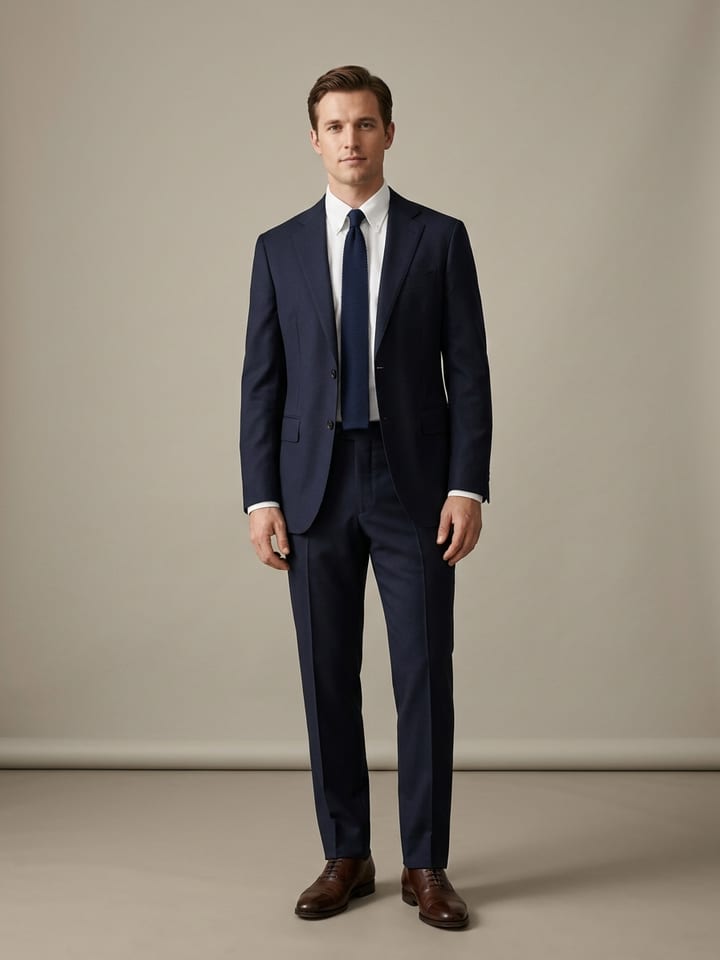
  1. Man wearing a navy two-piece suit with a white oxford shirt and a dark navy knit tie, in polished dark brown oxford shoes.

    Option 01 / Corporate, finance, and client offices

    Business Professional / Formal

    Navy two-piece suit, white Oxford shirt, dark navy knit tie, and polished dark brown oxfords.

    Why it works
    A dark suit and restrained accessories remove guesswork in offices where a jacket is the everyday norm.
    Adjust it
    Skip the tie only when senior colleagues do, and keep a second shirt so the suit can repeat without looking worn.
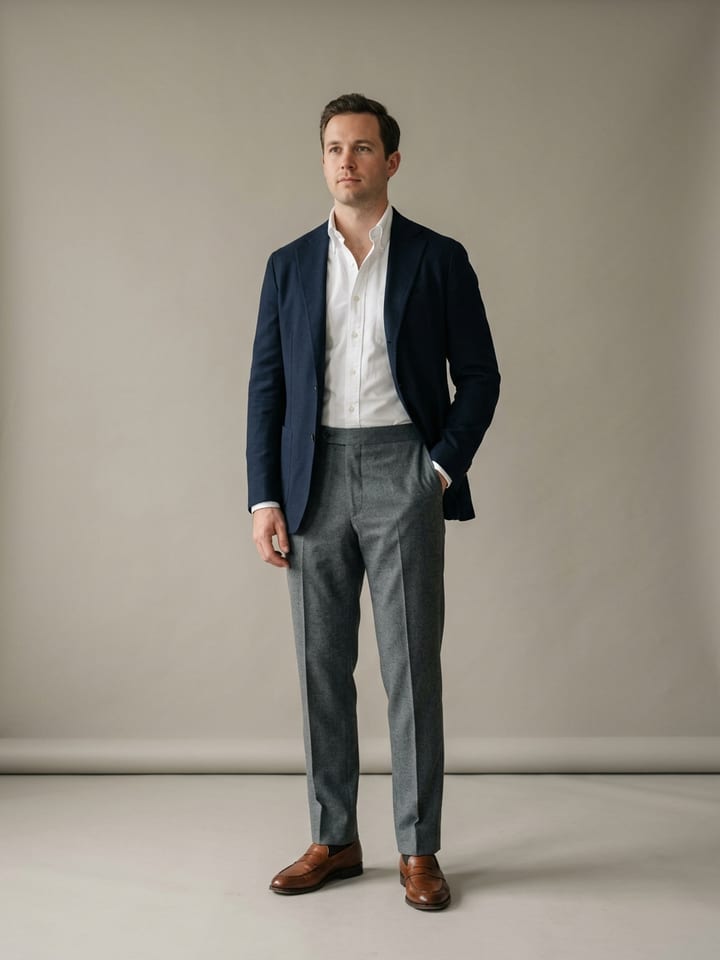
  2. Man in grey wool trousers and a white oxford shirt under an open unstructured navy blazer, wearing brown leather loafers.

    Option 02 / Tech, marketing, and flexible offices

    Business Casual

    Unstructured navy blazer, white Oxford shirt, grey wool trousers, and brown leather loafers.

    Why it works
    A blazer and open collar look prepared for a flexible office without the tie a formal suit would add.
    Adjust it
    Button one more shirt button on client days, and keep the blazer rather than switching to a full suit.
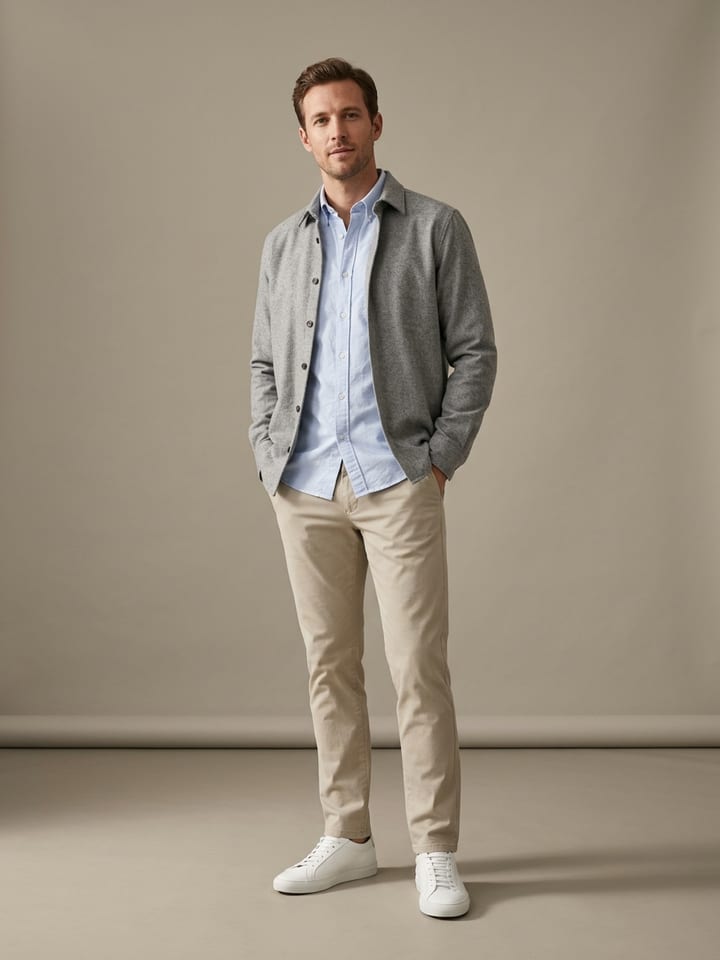
  3. Man in stone chinos and a pale blue oxford shirt under an open grey wool overshirt, wearing clean white leather sneakers.

    Option 03 / Studios, startups, and relaxed teams

    Smart Casual / Casual

    Grey wool overshirt, pale blue Oxford shirt, stone chinos, and clean white leather sneakers.

    Why it works
    The overshirt keeps a comfortable uniform looking considered in an office that does not require a jacket.
    Adjust it
    Swap the sneakers for loafers when you have clients, and keep the shirt tucked if the team is only slightly relaxed.

→ 03 / Choose the level

How to choose your office dress code

The industry is only a starting point. Use what people actually wear to meetings, then stay one step inside that range so the outfit can repeat.

  1. 01

    Watch the office, not the industry

    Team photos, the employee handbook, and what people wear to internal meetings matter more than a generic label. Match the closest level you can repeat all week.

  2. 02

    Pick one level and repeat it

    Business professional, business casual, and smart casual should not change every day. Keep the same shoe and silhouette, then vary the shirt, knit, or color.

  3. 03

    Save the step up for clients

    Add the blazer, tie, or smarter shoe when the day includes a client or a presentation. The everyday outfit should still look acceptable if that meeting appears late.

→ 04 / Format and forecast

Adjust for the office and the commute

Keep the dress-code level, then change the fabric, the layer, and the shoe for the building and the route in.

  1. 01

    Cold offices and air conditioning

    Keep a knit, blazer, or coat at your desk in the same palette. A layer you can add at your chair is more useful than a heavy coat you wear all day.

  2. 02

    Heat and a warm commute

    Choose breathable cotton or lightweight wool that still holds a crease. Carry the blazer and put it on before you reach the floor, not on the crowded train.

  3. 03

    Rain and a long route in

    Use a weatherproof coat over the outfit and shoes that can handle the pavement. Keep a dry pair at the office when the commute regularly soaks the ones you wear in.

→ 05 / Final check

Before the week

Set the uniform once, then the weekday choices stay small. Check the pieces you will actually repeat.

  • Sit, stand, and commute once in the outfit you plan to repeat.
  • Confirm the level against how the team dresses for ordinary meetings.
  • Keep two shirts or knits that work with the same trousers and shoe.
  • Steam the jacket or coat and check it for lint in daylight.
  • Leave loud logos, gym layers, and untested shoes out of the rotation.
  • Pack a compact bag that fits a laptop without crushing the jacket.

→ 06 / What to skip

Mistakes to avoid

  • Buying separate “work clothes” that combine with nothing else you own.
  • Letting casual Friday become worn-out shoes and gym clothes.
  • Ignoring office temperature when a light layer solves it.

→ 07 / Office questions

Frequently asked questions

What should I wear to a business-professional office?

Wear a suit or a blazer with matching or tailored trousers, a clean shirt or blouse, and a polished closed shoe. A tie is the safer choice for men when colleagues wear jackets to ordinary meetings.

What should I wear for business casual?

Wear tailored trousers or chinos with a button-down, blouse, or fine knit, plus a blazer you can add. Loafers, derbies, or pointed flats are the usual shoe. The outfit should look ready for a meeting without a full suit.

What should I wear for smart casual at the office?

A knit, overshirt, or clean shirt with trousers or chinos is enough when the office is relaxed. Keep the shoes fresh. Add one structured layer if you are unsure, rather than dropping straight to gym clothes.

Can I wear sneakers to the office?

Clean, minimal sneakers can work in a clearly casual office. If clients visit or the dress code is uncertain, choose loafers, derbies, or flats. Keep the sneaker leather or canvas unmarked and free of loud branding.

Can I wear jeans to the office?

Wear jeans only when the team already does on ordinary days. Choose a dark, unripped pair and combine it with a shirt, knit, blazer, or overshirt. In a business-professional office, trousers are the safer default.
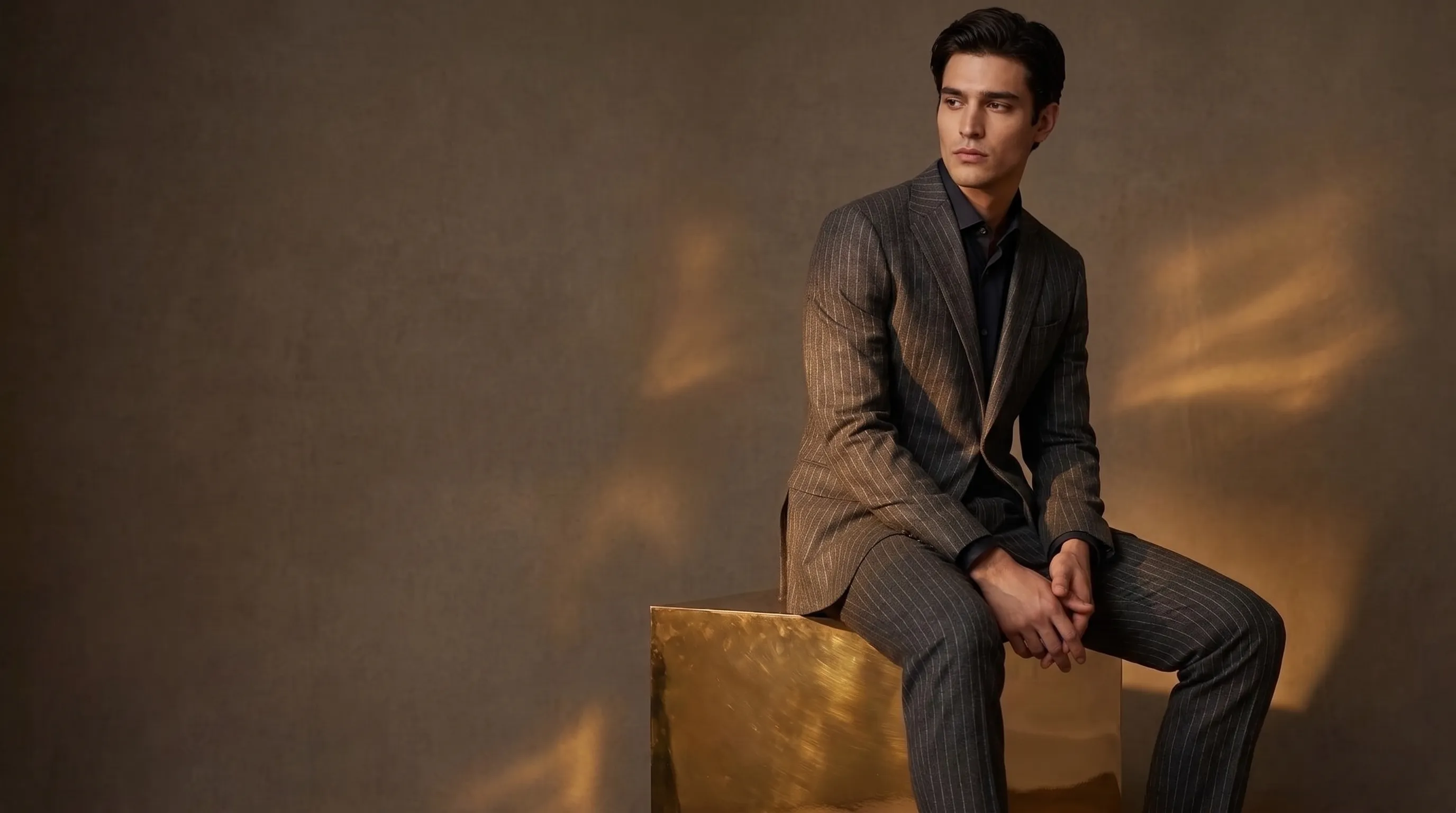
Man in a grey pinstripe suit seated on a brass cube against a warm taupe plaster wall
Man in a cream pinstripe suit and open shirt, seated on a faceted gold block against a sunlit studio wall

Modesona · Your wardrobe

You already own
these looks.

Modesona reads the pieces you already own and builds the office looks like these from your own wardrobe.

Create these looks with clothes from your closet.