→ 01 / Short answer
What to wear to a wedding
Follow the invitation first, then choose a polished outfit you can sit, eat, and dance in. Keep white and anything bridal-looking for the couple.
→ 02 / 5 complete outfits
Wedding outfits by dress code
Start with the words on the invitation. Pick the closest level below, then adjust the shoes and the layer for the venue.
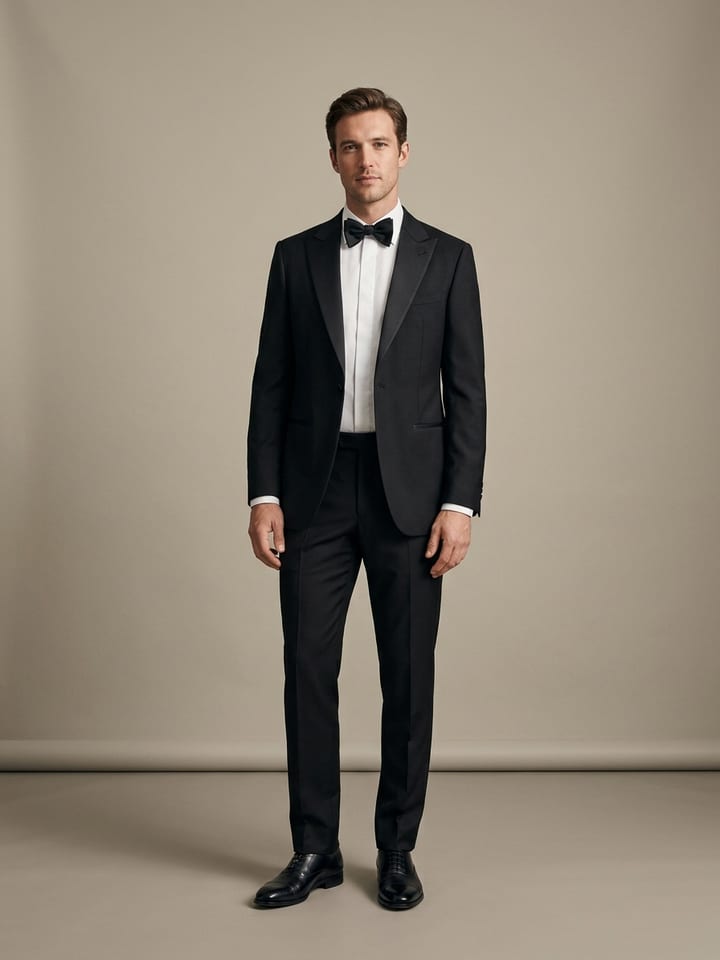
Option 01 / Evening ballroom and state receptions
White Tie
Black dinner jacket with satin lapels, white dress shirt, black bow tie, and polished black oxfords.
- Why it works
- White tie is the most formal Western dress code: a black tailcoat, black trousers with a double braid stripe, a stiff white piqué shirt, and a white piqué bow tie. A green jacket breaks that black-and-white rule and belongs to black-tie optional or a cocktail party instead.
- Adjust it
- The dinner jacket and black bow tie shown here are the closest set most guests own. For the invitation itself, change them for the tailcoat, a white waistcoat, and a white piqué bow tie. Save a dark green jacket for black-tie optional.
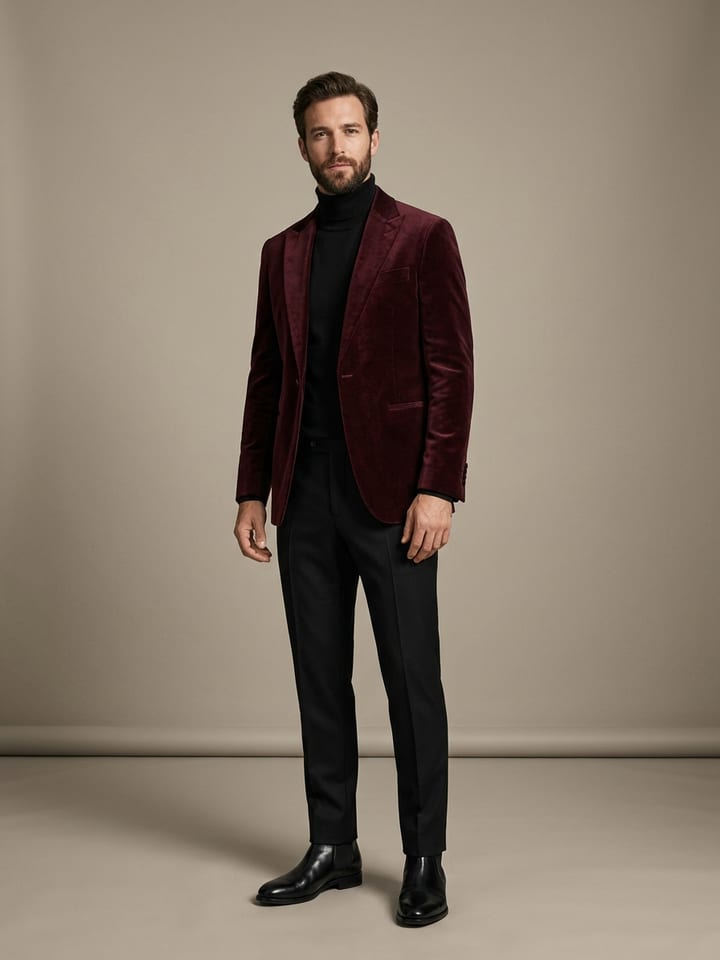
Option 02 / Evening ceremony or hotel ballroom
Black Tie
Burgundy velvet dinner jacket, black fine-gauge rollneck, black tailored trousers, and polished chelsea boots.
- Why it works
- Velvet and a dark column read as eveningwear when black tie is requested and a standard tuxedo is unavailable.
- Adjust it
- Swap the rollneck for a white dress shirt and black bow tie when the host expects a traditional tuxedo.
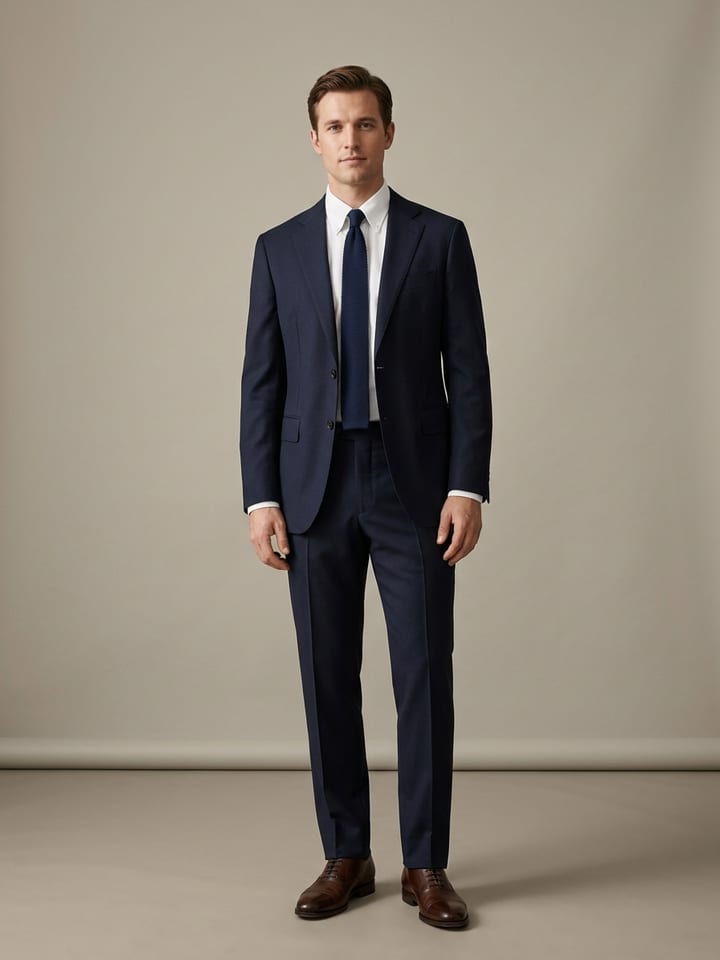
Option 03 / Church, hotel, or formal daytime
Formal
Navy two-piece suit, white Oxford shirt, dark navy knit tie, and polished dark brown oxfords.
- Why it works
- A dark suit with a tie covers formal daytime weddings and most ceremonies without looking like eveningwear.
- Adjust it
- Choose charcoal or black for an evening formal invitation, and keep the tie on through the ceremony.
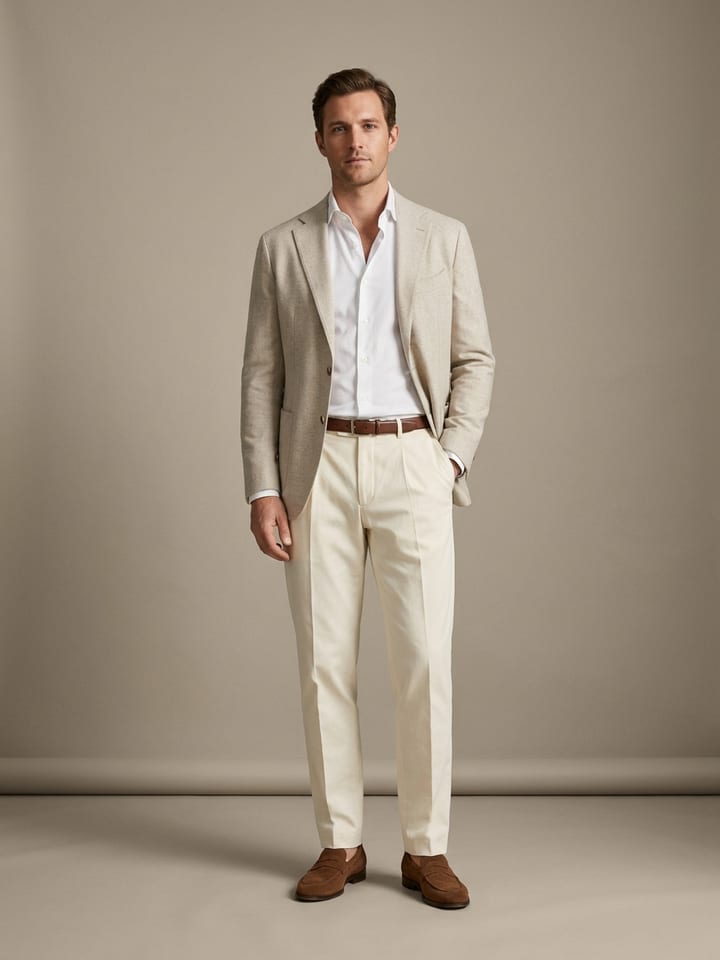
Option 04 / Afternoon reception or city venue
Semi-formal
Unlined oatmeal blazer, white fine cotton shirt, pleated cream trousers, and brown suede loafers.
- Why it works
- An open-collar blazer and trousers look dressed for a semi-formal wedding without the suit a formal invitation would expect.
- Adjust it
- Swap the suede loafers for leather shoes if the ground is wet, and choose a darker trouser when the invitation is closer to formal.
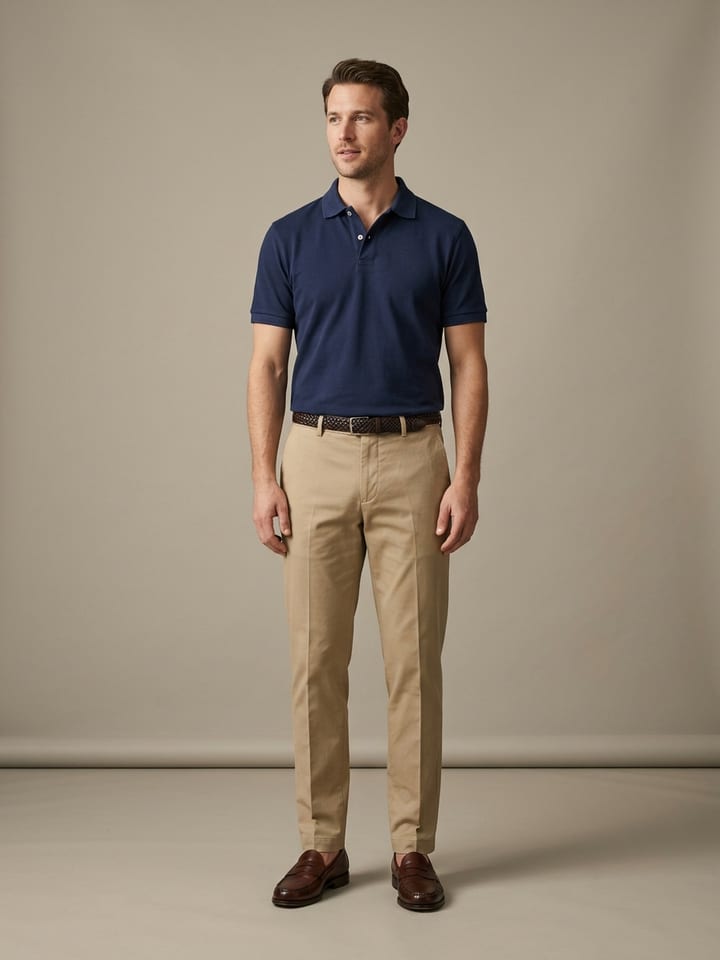
Option 05 / Backyard, beach, or daytime picnic
Casual
Navy piqué polo, khaki chinos, brown penny loafers, and a woven leather belt.
- Why it works
- A collared knit and chinos stay neat at a relaxed wedding without looking like office wear or a suit.
- Adjust it
- Add a linen or cotton blazer if the venue is a restaurant, and keep sneakers for the trip there only.
→ 03 / Choose the level
How to choose the right wedding dress code
The invitation decides the level. Use the words, the hour, and the venue before you choose a color or a style.
01
Read the invitation literally
White tie, black tie, formal, semi-formal, and casual are different requests. If the card is silent, use the venue and start time, and ask the couple rather than guessing upward.
02
Match the hour and the setting
Evening ballrooms sit at the top of the list. A daytime church or hotel is usually formal or semi-formal. A backyard, beach, or picnic can be casual and still look considered.
03
Stay a step below the couple
Guests should look polished without matching bridal white, a gown train, or the couple’s own level of decoration. One evening texture is enough.
→ 04 / Format and forecast
Adjust for the venue and the weather
Keep the dress-code level, then change the fabric, the shoes, and the outer layer for the ground and the forecast.
01
Grass, gravel, and long ceremonies
Test the shoes on a similar surface. A block heel, wedge, or polished flat is safer than a stiletto, and formal shoes should be worn in before a long standing ceremony.
02
Heat and outdoor afternoons
Choose breathable cotton, linen, or lightweight wool in the same silhouette. Carry a jacket or cardigan for an air-conditioned room and put it on before photographs.
03
Evening chill and a late reception
Add a coat you can check, not a sporty shell over evening clothes. Darker colors and covered shoulders travel better from the ceremony to dancing.
→ 05 / Final check
Before the wedding
Try the outfit the day before, including the shoes and the bag, so the clothes do not become the distraction.
- Sit, stand, and walk in the complete outfit, including the shoes.
- Check the invitation again for the dress code, the venue, and the start time.
- Keep white, ivory, and bridal-looking details out of the outfit.
- Steam the clothes and look for lint, stains, or loose hems in daylight.
- Pack a compact bag that leaves your hands free for greetings and photographs.
- Bring a layer for cold rooms without covering a formal outfit in casual outerwear.
→ 06 / What to skip
Mistakes to avoid
- Ignoring the dress code or venue listed on the invitation.
- Wearing stilettos to grass, gravel, or a long standing ceremony.
- Choosing white, ivory, or a look that photographs as bridal.
→ 07 / Guest questions
Frequently asked questions
White tie is the most formal dress code in Western fashion. For women, that means a floor-length gown, traditionally worn with long white opera gloves. For men, the palette stays black and white: a black tailcoat, black trousers with a double braid stripe, a stiff white piqué shirt, a white waistcoat, and a white piqué bow tie. A green jacket fits black-tie optional or a cocktail party, not white tie. If you do not own the full uniform, wear the closest dark evening outfit and ask the hosts before inventing a costume.
Black tie is eveningwear: a tuxedo or an equivalent dark evening outfit. Formal can be a dark suit or a polished midi look, especially during the day. When the card says black tie, a navy suit without evening details is a step too relaxed.
A dark suit is the backup when you do not own a tuxedo, not the first choice. Wear a white shirt and a conservative tie or bow tie, and skip casual knits, sneakers, and loud accessories.
Leave white, ivory, and champagne looks that read as bridal to the couple. Guests can wear black, navy, jewel tones, and prints that fit the dress code on the invitation.
Casual still means a considered outfit: neat trousers or a dress, a clean shoe, and no gym clothes. A polo with chinos, or a knit with tailored trousers, fits a backyard or beach wedding better than jeans and sneakers.

Modesona · Your wardrobe
You already own
these looks.
Modesona reads the pieces you already own and builds wedding looks like these from your own wardrobe.
Create these looks with clothes from your closet.