3-Day Trip Packing List: A City Weekend Capsule Wardrobe
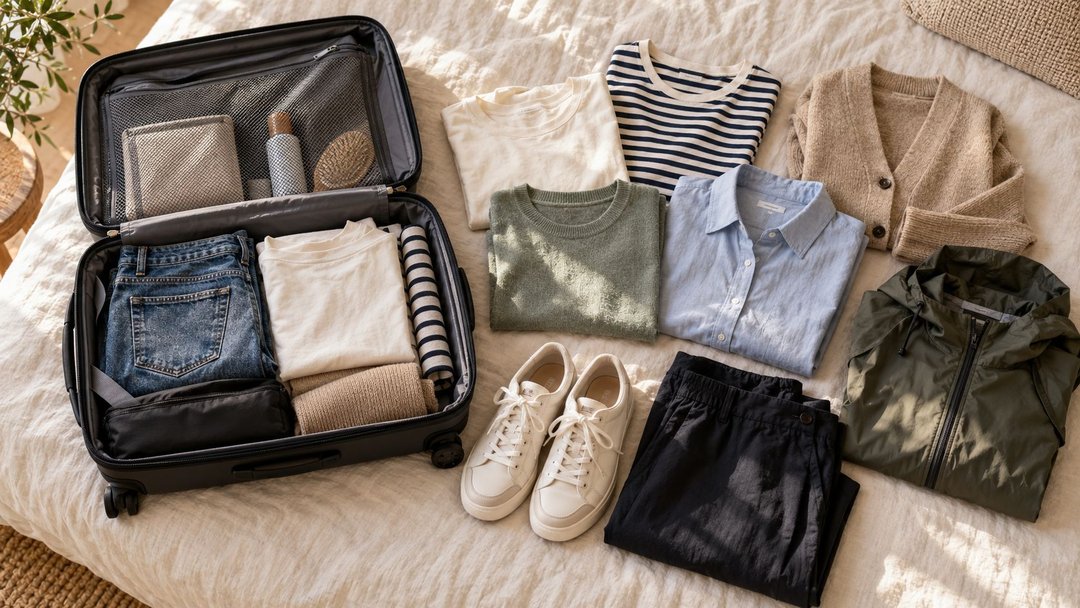
For a three-day city trip, start with outfits for your actual plans, then count the clothes those outfits need. In the example below, four tops, two bottoms, a cardigan, a weather-appropriate jacket, and one pair of walking shoes cover three days and two nights, including a fresh top for dinner.
That count includes what you wear while traveling. Underwear, socks, sleepwear, toiletries, and other personal essentials are additional.
Use this packing list as a worked example, not a required wardrobe. Substitute clothes you already own and adjust for the forecast, your activities, and how often you want to change.
The trip this packing list covers
Imagine a Friday-to-Sunday city weekend:
-
Friday: travel, check in, take a short walk, and have a casual meal.
-
Saturday: visit a museum, explore a neighborhood, and return to your accommodation before dinner.
-
Sunday: have breakfast, take another walk, and travel home.
The example assumes mild weather, cooler evenings, a possible shower, and no formal events. You won’t need to wash clothes during the trip. Pants and outer layers are reused when they remain clean and comfortable.
A hot weekend, winter visit, workout, or formal reservation changes the requirements. Make those adjustments before copying the list.
For the broader planning process, see our guide to building a travel capsule wardrobe with an app.
Your clothing selection for three days
Choose familiar pieces whose comfort you already know.
| Category | Example items | Why they’re included |
|---|---|---|
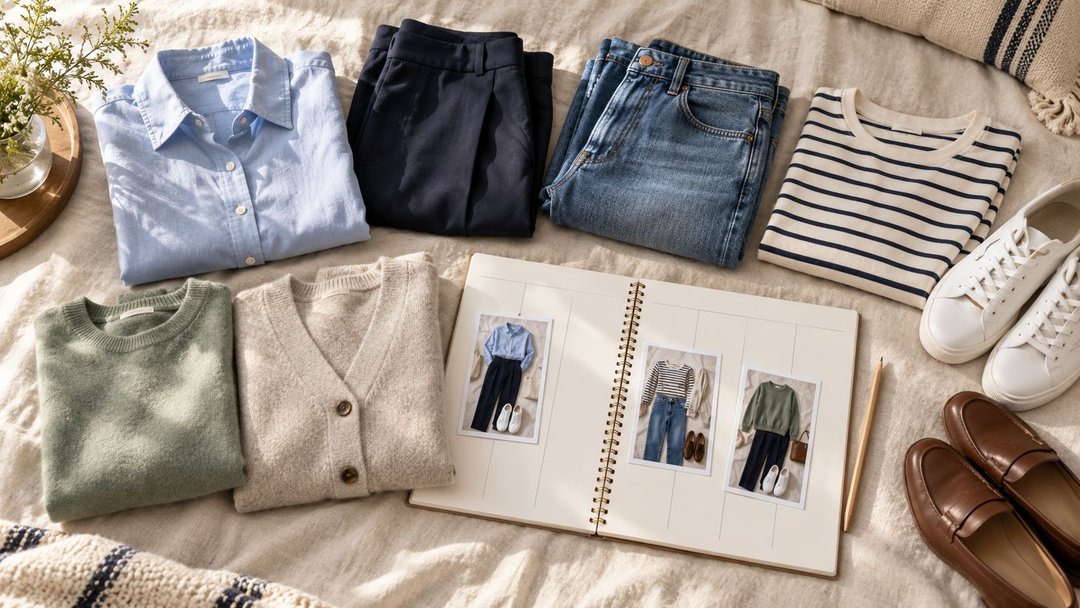
| Three everyday tops | Cream T-shirt, striped T-shirt, green knit top | One fresh daytime top for each day |
| One dinner top | Blue button-down shirt | A fresh change after Saturday’s sightseeing |
| Two bottoms | Jeans and dark relaxed pants | Alternate across travel, walking, and dinner |
| One warm layer | Cardigan | Cooler mornings, evenings, or indoor spaces |
| One weather layer | Rain jacket suitable for the forecast | Outdoor protection when needed |
| One pair of shoes | Comfortable walking sneakers | All planned activities in this example |
That is eight clothing pieces and one pair of shoes, including the travel outfit. It is not the total number of items in your luggage.
The colors are illustrative. Use combinations you already enjoy: bright tops, patterned pants, or a different mix of neutrals can work just as well.
The dinner shirt is a deliberate extra change. If you don’t need it, remove it and wear your daytime outfit to dinner. If you expect to change more often, bring additional tops.
Day-by-day outfits
Friday: travel and arrival
Cream T-shirt + jeans + sneakers, with the cardigan when needed.
Choose jeans you can sit in comfortably for the journey. If you prefer soft pants, use those instead.
Keep the rain jacket accessible if the forecast calls for it. There’s no need to wear every layer just to keep it out of the bag.
This outfit also covers a short walk and an informal meal. If you prefer a fresh top after traveling, add one explicitly to your checklist rather than borrowing Sunday’s top without replacing it.
Saturday daytime: sightseeing
Striped T-shirt + dark relaxed pants + sneakers.
Use the cardigan or rain jacket as conditions require.
Check the pants with your walking shoes before leaving. A hem that works with a higher heel may drag with sneakers. Try sitting, climbing a few steps, and reaching forward while wearing the complete outfit.
Bring the day bag you normally find comfortable for your essentials. It doesn’t need to be a new travel-specific purchase.
Saturday evening: dinner
Blue button-down + the same dark pants + sneakers, with the cardigan if useful.
This example assumes a restaurant where those shoes and clothes are appropriate. Check the setting before relying on the combination.
The fresh shirt changes the outfit without requiring another pair of pants. Try it tucked or untucked, depending on its length and your preference.
If you want ideas for varying a familiar shirt, explore five ways to style the same button-down.
If dinner requires different clothing or footwear, include it. A capsule wardrobe should cover the reservation you actually have.
Sunday: breakfast, a walk, and the trip home
Green knit top + jeans + sneakers, with the cardigan when needed.
The fresh top is reserved for the final day. Rewear Friday’s jeans if they are still suitable; the dark pants provide another option if clean and comfortable.
Before checkout, separate worn clothing from clean pieces. Keep any layer you may need during the journey easy to reach.
What to wear and what to pack
Separating these two groups prevents double-counting.
Wear on departure
-
Cream T-shirt.
-
Jeans.
-
Walking sneakers.
-
Underwear and socks.
-
Any bra or other undergarments you use.
-
Cardigan, if comfortable for the temperature.
If you don’t wear the cardigan, put it in the bag.
Pack the remaining core clothing
-
Striped T-shirt.
-
Green knit top.
-
Blue button-down shirt.
-
Dark relaxed pants.
-
Rain jacket appropriate for the forecast.
-
Cardigan, if not worn.
Add fresh essentials
For this three-day, two-night example, a starting point is:
-
Two additional pairs of underwear, plus a spare if useful.
-
Two additional pairs of socks, plus extras if you expect wet conditions or more changes.
-
Bras, undershirts, or other base layers according to your needs.
-
Sleepwear for two nights.
-
Any extra top or clothing change required by your routine.
-
A separate bag or pouch for worn clothing.
These quantities are planning examples. Adjust them for comfort, activities, weather, and your preferred changing routine.
Check non-clothing essentials separately
-
Identification and any travel documents you need.
-
Booking details and tickets.
-
Phone, charger, and required cables.
-
Regular medications and personal health supplies.
-
Toiletries and personal care items.
-
Glasses or contact lens supplies, if used.
-
A day bag.
-
Weather-related accessories, such as sunglasses or an umbrella, when useful.
This is a reminder list, not an exhaustive list for every traveler. If flying, check the current baggage allowance and relevant security requirements for your journey.
Adapt the capsule to your trip
If you prefer dresses or skirts
Replace one pair of pants with a skirt that works with the selected tops and shoes.
A dress can replace one planned top-and-bottom outfit. Update the checklist afterward so you don’t accidentally keep every original piece as an extra.
If the weather will be hot
Swap heavier tops and jeans for lighter clothes you already wear comfortably.
Bring enough fresh tops for the heat and your activities. Reusing pants may still work for you, but don’t assume that every item will remain comfortable to wear again.
If the weather will be cold or wet
Replace the light weather layer with outerwear suited to the conditions. Add necessary base layers, socks, or weather-appropriate footwear.
Try the layers together. A coat that fits over a T-shirt may feel restrictive over the shirt and cardigan.
The mild-weather list is not a winter packing prescription.
If you need another pair of shoes
Add a second pair when it serves a real purpose: a dress requirement, a specific activity, or a useful alternative for your feet.
For the base example, one tested pair covers the itinerary. That does not make one pair a rule for every trip.
Build in flexibility without packing another wardrobe
Before adding a complete backup outfit, look for alternatives within the selection.
If the cardigan feels too warm, can you leave it off? If the jeans become uncomfortable, can the dark pants cover the remaining plans? If dinner becomes more casual, can you keep the daytime outfit?
Then identify any genuine gap.
A spare top for a likely change is different from several unrelated outfits for activities that aren’t planned. Necessary items can have only one use and still deserve space.
If matching the selected clothes is the difficult part, our guide to creating outfits from clothes you already own can help with the combinations.
Save the outfits before you zip the bag
Photograph the complete outfits, including shoes and layers. Label them by use:
-
Friday — travel.
-
Saturday — sightseeing.
-
Saturday — dinner.
-
Sunday — return.
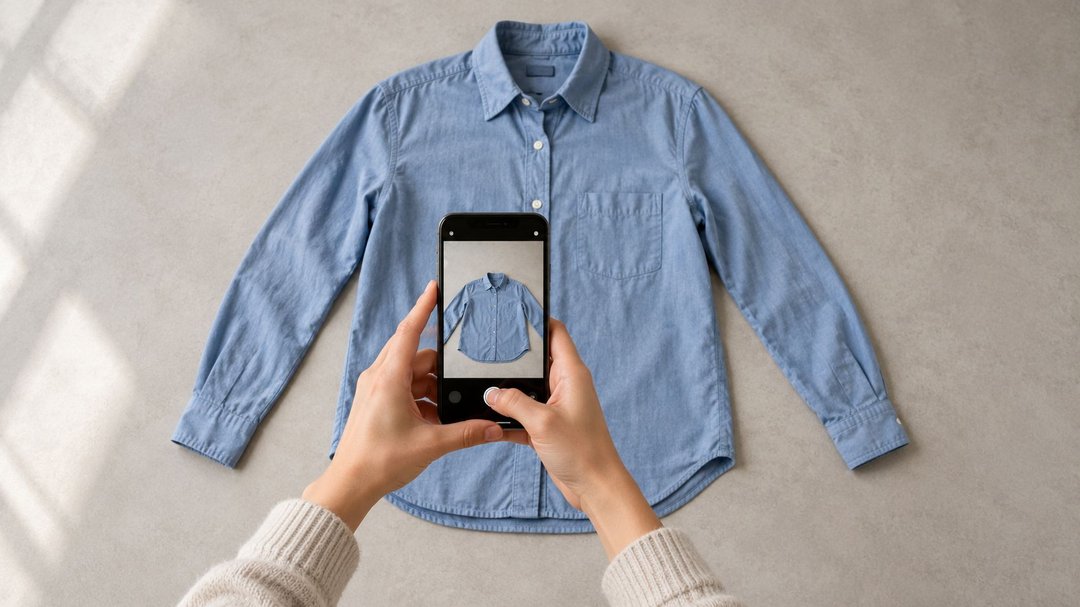
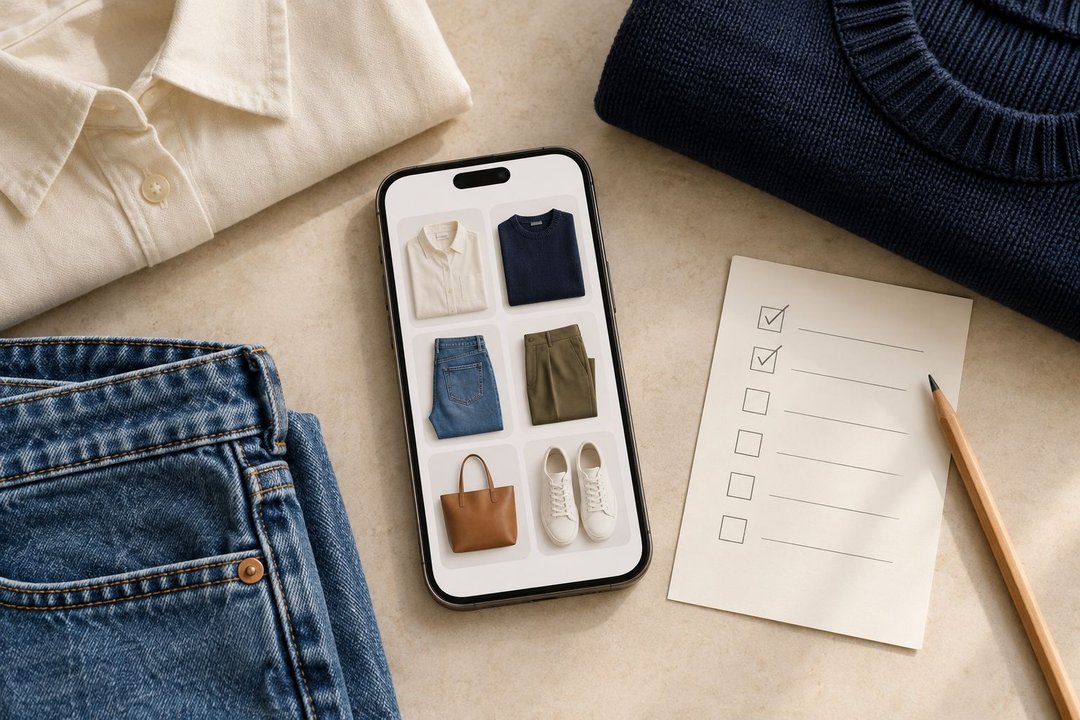
A phone album is enough. If you prefer keeping individual clothing photos, you can start a digital closet with a small selection.
Review the photos and count each physical item once. The dark pants appear twice in the schedule, but only one pair goes in the bag.
Finally, pack the actual selection with your toiletries and other essentials. A short clothing list doesn’t guarantee that everything fits within a particular bag or airline allowance.
Frequently asked questions
How many outfits do I need for a three-day trip?
Plan for your activities and changing preferences. This example uses three daytime outfits and one dinner variation. It reuses bottoms, layers, and shoes while providing fresh tops.
Do I need to do laundry on a weekend trip?
Not for this example: the list includes fresh daytime tops and a separate dinner shirt. If your activities require more changes, add them rather than depending on uncertain laundry access.
Can I use this as a carry-on packing list?
Yes, as a starting point. Whether the complete selection fits depends on clothing bulk, other essentials, your bag, and the allowance attached to your booking.
Do all the pieces need to match each other?
No. You need complete outfits for your plans and useful alternatives. A weather layer or event-specific item can be necessary even if it has only one role.
Pack for the weekend you’ve planned
Start with your itinerary, choose comfortable clothes you already own, and assign them to the moments when you’ll need them.
Separate what you’ll wear from what you’ll pack, add fresh essentials, and try the outfits before leaving. You’ll have a clear plan to adapt when the weekend begins.
Explore Modesona and make your existing wardrobe the starting point for your next trip.